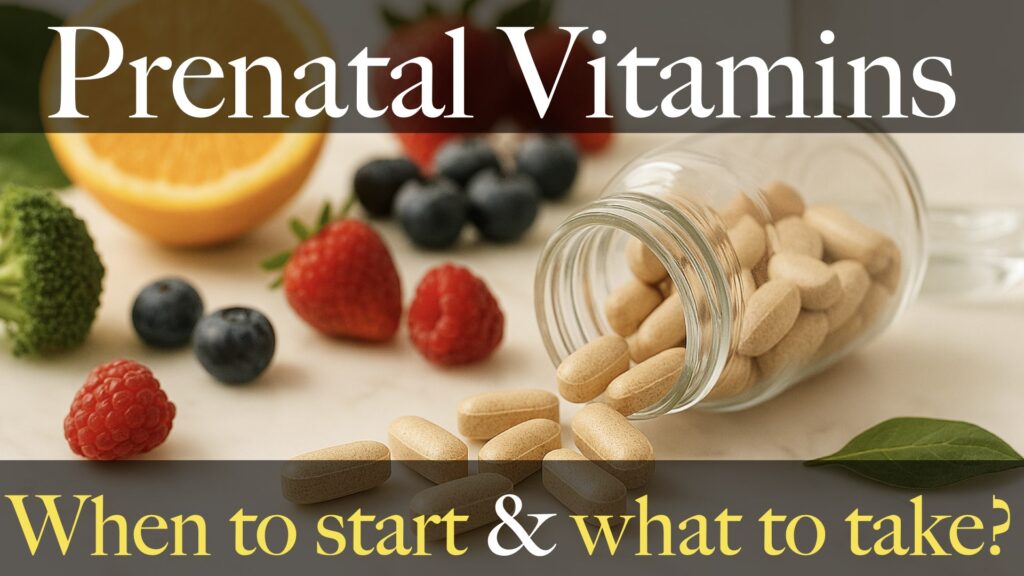
Prenatal Vitamins: When to Start and What to Take
One of the first things my doctor recommended when we decided to try for a baby was to start taking prenatal vitamins — not after I got pregnant, but before. This surprised me at first, but it turns out there’s solid science behind starting early.
I started my prenatal multivitamins about four months before we conceived, continued throughout pregnancy, and kept taking them for six months after giving birth. Looking back, I’m glad I followed this advice — it gave me peace of mind knowing I was giving my body (and eventually my baby) the nutrients we needed.
In this post, I’ll share what I learned about prenatal vitamins, when to start them, what to look for, and my personal experience — including a side effect issue I faced and how we solved it.
Why Prenatal Vitamins Matter
Prenatal vitamins are specifically formulated to support a woman’s body before, during, and after pregnancy. While a healthy diet is essential (and we focused heavily on fertility-boosting foods), it can be difficult to get all the necessary nutrients from food alone.
According to the Centers for Disease Control and Prevention (CDC), taking folic acid before and during early pregnancy can prevent up to 70% of neural tube defects, which are serious birth defects of the brain and spine. This is why starting prenatal vitamins before conception is so important — the neural tube develops in the first 28 days of pregnancy, often before a woman even knows she’s pregnant.
The American College of Obstetricians and Gynecologists (ACOG) recommends that all women of reproductive age take a daily supplement containing 400 micrograms of folic acid, and that women planning pregnancy should ideally start at least one month before conception.
When to Start Prenatal Vitamins
The short answer: start before you’re pregnant.
I started taking my prenatal multivitamins about four months before we conceived. My doctor recommended starting as soon as we decided to try for a baby, and I’m glad I did.
Before Pregnancy (Preconception)
Ideally, start prenatal vitamins at least 1-3 months before trying to conceive. This allows your body to build up stores of essential nutrients, particularly folic acid, which is crucial for early fetal development.
Since about half of all pregnancies are unplanned, many health organisations recommend that all women of childbearing age take folic acid daily — just in case.
During Pregnancy
Continue taking prenatal vitamins throughout your entire pregnancy. Your nutrient needs increase significantly during pregnancy — you need more iron, calcium, folic acid, and other vitamins to support your growing baby.
During my second trimester, my doctor added a separate iron supplement to my routine (more on that below). Your doctor may adjust your supplements based on blood tests and how your pregnancy is progressing.
After Pregnancy (Postpartum)
I continued taking prenatal vitamins for six months after giving birth. This is especially important if you’re breastfeeding, as your body needs extra nutrients to produce milk and recover from pregnancy and delivery.
Many doctors recommend continuing prenatal vitamins for as long as you breastfeed, or at least for the first few months postpartum.
What Should Prenatal Vitamins Contain?
Not all prenatal vitamins are created equal. Here are the key nutrients to look for, based on what my prenatal multivitamin contained and what doctors generally recommend:
Folic Acid (Folate) — 400-800 µg
This is the most important nutrient in prenatal vitamins. Folic acid helps prevent neural tube defects like spina bifida. My supplement contained 400 µg, which is the minimum recommended amount. Some doctors recommend 800 µg, especially for women with certain risk factors.
You can also get folate naturally from foods like spinach and other leafy greens, but a supplement ensures you’re getting enough consistently.
Iron — 20-30 mg
Iron supports the increased blood volume during pregnancy and helps prevent anemia. My prenatal vitamin contained 20 mg of iron. During my second trimester, my doctor added a separate iron supplement because my levels needed a boost.
Note: Iron supplements can cause constipation in some women (more on my experience with this below).
Vitamin D — 400-600 IU (10-15 µg)
Vitamin D supports calcium absorption and bone health for both mother and baby. My supplement contained 400 IU (10 µg). This is particularly important if you live in a region with limited sunlight — like in Europe, vitamin D supplementation is common for everyone, not just pregnant women.
My husband also took vitamin D supplements (his only supplement) because of our location where sunlight is limited for much of the year.
Calcium
Calcium is essential for your baby’s bone and teeth development. Many prenatal vitamins don’t contain the full daily requirement (1000 mg) because calcium tablets would be too large. You may need to get additional calcium from dairy products, fortified foods, or a separate supplement.
Iodine — 150-200 µg
Iodine supports thyroid function and brain development. My prenatal vitamin contained 200 µg. Not all prenatal vitamins include iodine, so check the label.
B Vitamins (B1, B2, B3, B6, B12)
The B vitamins support energy production, nervous system development, and help reduce pregnancy nausea (especially B6). My supplement included a full range of B vitamins.
Other Important Nutrients
My prenatal vitamin also contained:
- Vitamin C (120 mg) — immune support and iron absorption
- Vitamin E (15 mg) — antioxidant protection
- Magnesium (180 mg) — muscle function and may help with leg cramps
- Zinc (15 mg) — immune function and cell growth
- Selenium (60 µg) — antioxidant and thyroid support
- Copper (1 mg) — iron absorption and connective tissue
- Biotin (30 µg) — cell growth and metabolism
My Experience with Iron Supplements: A Side Effect and How We Solved It
I want to share something that might help other expecting mothers: my experience with iron supplements and a common side effect.
During my second trimester, my doctor recommended adding a separate iron supplement because my iron levels needed support. The prenatal vitamin I was taking contained iron, but I needed more.
The first iron supplement I took caused constipation — a very common side effect of iron tablets. It was uncomfortable and frustrating. I mentioned this to my doctor, and we switched to a different brand. The new one was more expensive, but the constipation issue went away.
The lesson: If you experience side effects from any supplement, don’t just suffer through it. Talk to your doctor. There are often alternative formulations that your body may tolerate better. The costlier option was worth it for my comfort and well-being.
When and How to Take Prenatal Vitamins
I took my prenatal vitamin after breakfast every day. Taking it with food helped with absorption and reduced any stomach discomfort.
Here are some tips for taking prenatal vitamins effectively:
Take with food: This helps with absorption, especially for fat-soluble vitamins like D and E, and reduces nausea.
Be consistent: Take your vitamin at the same time each day to build a habit. I found that after breakfast worked best for me.
Don’t take with calcium-rich foods: Calcium can interfere with iron absorption. If you’re taking a separate iron supplement, take it at a different time than dairy products.
Stay hydrated: Drinking plenty of water helps with absorption and can reduce constipation from iron.
What About Vitamins for Partners?
While prenatal vitamins are formulated for women, what about the male partner?
Our doctor didn’t recommend any specific supplements for my husband during our first year of trying. The focus was entirely on a healthy lifestyle — good nutrition, exercise, sleep, and stress management. You can read more about this in our post on male fertility and how partners can prepare.
The one exception was vitamin D. We live in a European country where sunlight is limited, especially in winter. Vitamin D supplementation is common here for everyone — it’s not specific to fertility, it’s just part of living in a Nordic country. My husband took vitamin D regularly.
If your doctor recommends specific supplements for your partner based on their health needs or test results, follow that guidance. But for us, the approach was food first, supplements only if necessary.
Do You Really Need Prenatal Vitamins?
You might wonder: if I eat a healthy diet, do I really need prenatal vitamins?
The answer, according to most medical professionals, is yes — especially for folic acid. Even with a perfect diet, it’s difficult to get enough folic acid from food alone to meet the increased demands of early pregnancy. And since folic acid is most critical in the first weeks (often before you know you’re pregnant), supplementation is the safest approach.
That said, prenatal vitamins are meant to supplement a healthy diet, not replace it. We focused heavily on eating nutritious foods throughout our journey. The vitamins were an insurance policy, not a substitute for real food.
For more on what we ate while trying to conceive, check out our guide on the best foods to boost fertility naturally.
Final Thoughts
Starting prenatal vitamins was one of the first concrete steps I took when we decided to try for a baby. It felt proactive — like I was already doing something to support my future pregnancy.
Looking back, I’m glad I started early (four months before conceiving), continued throughout pregnancy, and kept taking them postpartum. Combined with our focus on lifestyle changes, stress management, and healthy eating, prenatal vitamins were an important part of our preparation.
If you’re thinking about starting a family, talk to your doctor about prenatal vitamins. Start early, choose a comprehensive formula, and remember — if you experience side effects, there are usually alternatives that might work better for you.
Frequently Asked Questions
When should I start taking prenatal vitamins?
Ideally, start taking prenatal vitamins at least 1-3 months before trying to conceive. This allows your body to build up folic acid stores, which are crucial for early fetal development. I started four months before we conceived. Since neural tube development happens in the first 28 days of pregnancy — often before you know you’re pregnant — starting early is important.
What is the most important nutrient in prenatal vitamins?
Folic acid (folate) is considered the most critical nutrient. The CDC states that taking 400 µg of folic acid daily before and during early pregnancy can prevent up to 70% of neural tube defects. Look for a prenatal vitamin with at least 400-800 µg of folic acid.
Can prenatal vitamins cause side effects?
Yes, some women experience side effects, particularly from iron. Constipation is common with iron supplements. I experienced this and had to switch to a different brand, which solved the problem. Other possible side effects include nausea and stomach upset. Taking vitamins with food usually helps, and if side effects persist, talk to your doctor about alternatives.
Should I continue prenatal vitamins after pregnancy?
Yes, especially if you’re breastfeeding. Your body needs extra nutrients to produce breast milk and recover from pregnancy. I continued taking prenatal vitamins for six months after giving birth. Many doctors recommend continuing for as long as you breastfeed.
What’s the best time of day to take prenatal vitamins?
Take your prenatal vitamin with a meal to improve absorption and reduce stomach upset. I took mine after breakfast every day. Fat-soluble vitamins (A, D, E, K) absorb better with food containing some fat. If nausea is an issue, some women find taking vitamins at night works better.
Do men need to take prenatal vitamins?
Prenatal vitamins are formulated for women, but men may benefit from certain supplements for fertility, such as zinc, folic acid, and antioxidants. Our doctor didn’t recommend specific supplements for my husband — the focus was on healthy diet and lifestyle. The only supplement he took was vitamin D due to our location where sunlight is limited.
Can I get enough nutrients from food instead of prenatal vitamins?
While a healthy diet is crucial, most medical professionals recommend prenatal vitamins, especially for folic acid. It’s difficult to consistently get 400 µg of folic acid from food alone. Prenatal vitamins act as nutritional insurance. They should supplement, not replace, a healthy diet rich in fruits, vegetables, lean proteins, and whole grains.
Are expensive prenatal vitamins better?
Not necessarily. The most important thing is that the vitamin contains the key nutrients, especially 400+ µg of folic acid. However, formulation matters for tolerability. When I experienced constipation from one iron supplement, switching to a more expensive brand solved the issue. Sometimes paying more means better absorption or fewer side effects, but check ingredients rather than just price.
Disclaimer
This article is based on personal experience and general information. It is not a substitute for professional medical advice, diagnosis, or treatment. Always consult your doctor, midwife, or qualified healthcare provider with any questions about your health or pregnancy.
Related Articles
Pregnancy Hub Posts (linked in article):
- Best Foods to Boost Fertility Naturally
- Male Fertility: How Partners Can Prepare
- Lifestyle Changes to Improve Fertility
- How Stress Affects Fertility
Other Existing Posts: