Understanding Your Ovulation Cycle: A Complete Guide
When my husband and I decided to start trying for a baby, I realised that despite being a grown woman, I didn’t know as much about my own ovulation cycle as I probably should have. Sure, I understood the basics from school biology — but the practical details of when I was actually fertile each month? That was a different story.
We were fortunate that my cycles were regular, which made understanding and tracking ovulation much easier. Over the course of about four months of trying — during which we learned a lot about timing and fertility — we conceived our daughter. Looking back, taking the time to truly understand my ovulation cycle was one of the most empowering steps in our journey.
In this post, I’ll explain everything you need to know about the ovulation cycle: what happens in your body, when you’re most fertile, the signs to look for, and practical tips based on our experience. Whether you’re just starting to think about conceiving or you’ve been trying for a while, understanding your cycle is the foundation of it all.
What Is the Ovulation Cycle?
Your ovulation cycle — also called your menstrual cycle — is the monthly process your body goes through to prepare for a potential pregnancy. It’s controlled by hormones and involves your ovaries, uterus, and various glands working together in a carefully orchestrated sequence.
According to the American College of Obstetricians and Gynecologists (ACOG), a typical menstrual cycle lasts between 21 and 35 days, with the average being about 28 days. However, “normal” varies widely from woman to woman — what matters most is that your cycle is consistent for you.
Ovulation is the star of the show when it comes to fertility. It’s the moment when a mature egg is released from your ovary and becomes available for fertilization. Understanding when this happens is key to maximizing your chances of conceiving.
The Four Phases of Your Menstrual Cycle
Your menstrual cycle is divided into four distinct phases. Understanding each phase helps you know where you are in your cycle and when conception is most likely.
Menstrual Phase (Days 1-5)
This is your period — day 1 of your cycle is the first day of menstrual bleeding. During this phase, the uterine lining that built up during the previous cycle sheds because pregnancy didn’t occur. This phase typically lasts 3-7 days.
For me, the first day or two usually came with some discomfort — cramping and general fatigue. But the pain would go away on its own without needing any medication. I found that staying hydrated and getting enough rest during this time helped me feel better.
Follicular Phase (Days 1-13)
The follicular phase overlaps with menstruation and continues until ovulation. During this time, your pituitary gland releases follicle-stimulating hormone (FSH), which signals your ovaries to prepare eggs for release.
Several follicles (fluid-filled sacs containing eggs) begin to develop, but usually only one becomes dominant and matures fully. Meanwhile, rising estrogen levels cause your uterine lining to thicken, preparing for a potential pregnancy.
Ovulation Phase (Day 14)
Ovulation is the main event. A surge in luteinizing hormone (LH) triggers the release of the mature egg from the dominant follicle. The egg travels down the fallopian tube, where it can be fertilized by sperm.
This is your fertile window. According to research published in the New England Journal of Medicine, the probability of conception is highest when intercourse occurs in the 1-2 days before ovulation. The egg survives only 12-24 hours after release, but sperm can live in the female reproductive tract for up to 5 days — which is why the days leading up to ovulation are so important.
In a textbook 28-day cycle, ovulation occurs around day 14. But this varies. If your cycle is shorter or longer than 28 days, your ovulation day will shift accordingly.
Luteal Phase (Days 15-28)
After ovulation, the empty follicle transforms into the corpus luteum, which produces progesterone. This hormone maintains the uterine lining in case the egg is fertilized and implants.
If fertilization doesn’t occur, the corpus luteum breaks down, progesterone levels drop, and the uterine lining begins to shed — starting your next period and a new cycle.
The luteal phase is relatively consistent at about 14 days for most women. This is useful to know because if your cycle varies in length, it’s usually the follicular phase that changes — not the luteal phase.
When Are You Most Fertile?
Your fertile window is the period during which you can conceive — typically about 6 days per cycle. This includes the 5 days before ovulation and the day of ovulation itself.
Here’s why: sperm can survive inside the female reproductive tract for up to 5 days, waiting for an egg. But once the egg is released, it only survives 12-24 hours. So the best chances of conception come from having sperm already present when ovulation occurs.
A landmark study published in Human Reproduction found that the probability of conception peaks at about 25-30% per cycle when intercourse occurs in the 2 days before ovulation. After ovulation, the probability drops rapidly.
My husband and I tracked my cycle carefully during our trying-to-conceive journey. We used a combination of a calendar app and mental counting to know roughly when I was approaching ovulation. Having regular cycles made this easier — I could tentatively predict when my fertile window was coming, even if I couldn’t pinpoint the exact day with 100% certainty.
Signs and Symptoms of Ovulation
Your body gives you clues when ovulation is approaching or happening. Learning to recognize these signs can help you identify your fertile window.
Cervical Mucus Changes
One of the most reliable signs of approaching ovulation is changes in cervical mucus. As you near ovulation, cervical mucus becomes clearer, more slippery, and stretchy — often described as having an “egg white” consistency. This type of mucus helps sperm survive and travel toward the egg.
After ovulation, mucus typically becomes thicker, cloudier, and less abundant.
Basal Body Temperature Shift
Your basal body temperature (BBT) — your temperature when fully at rest — rises slightly (about 0.5-1°F) after ovulation due to increased progesterone. By tracking your BBT daily over several cycles, you can identify patterns and confirm that ovulation has occurred.
The limitation of BBT tracking is that it confirms ovulation after the fact, rather than predicting it. It’s most useful for understanding your cycle patterns over time.
Ovulation Pain (Mittelschmerz)
Some women experience a twinge or cramp on one side of the lower abdomen around ovulation. This is called mittelschmerz (German for “middle pain”) and is caused by the egg being released from the ovary.
I experienced some mild discomfort during my cycle, mostly at the start during menstruation. The pain wasn’t severe and always went away on its own — I never needed medication for it. Some women feel ovulation pain distinctly, while others don’t notice it at all. Both are normal.
Other Signs
Additional signs that may indicate ovulation is approaching include:
- Increased libido (your body’s way of encouraging reproduction)
- Breast tenderness
- Light spotting
- Heightened sense of smell
- Bloating or mild water retention
Not everyone experiences all these signs, and they can vary from cycle to cycle. I noticed some mood swings during certain parts of my cycle, but nothing abnormal or concerning. It’s about learning what’s normal for your body.
How to Calculate Your Ovulation Day
If you have regular cycles, you can estimate your ovulation day using a simple calculation:
Ovulation Day = Cycle Length – 14
For example, if your cycle is 28 days, you likely ovulate around day 14. If your cycle is 30 days, you likely ovulate around day 16. If your cycle is 26 days, ovulation is probably around day 12.
This works because the luteal phase (after ovulation) is relatively constant at about 14 days for most women. What varies is the follicular phase (before ovulation).
My cycles were regular, which made this calculation reliable for me. I used a period tracking app to log my cycle lengths, and after a few months, I had a good sense of when to expect ovulation. We combined this knowledge with careful attention to the calendar — and to each other — to avoid missing opportunities for conceiving.
Our Experience: What Worked for Us
When my husband and I started trying to conceive, we approached understanding ovulation as a team effort. I explained how my cycle worked, and he listened and understood. We were both equally involved in tracking and planning.
Here’s what worked for us:
Used multiple tracking methods: I used a period tracking app as my primary tool, but I also kept a mental count and noted dates on a calendar. Having multiple references helped me stay aware of where I was in my cycle.
Consulted our doctor early: Before we started trying, we visited a gynecologist together and briefly discussed the menstrual cycle and fertile window. This gave us confidence and cleared up any questions we had.
Didn’t stress over exact timing: We knew roughly when my fertile window was, but we didn’t obsess over pinpointing the exact hour. The fertile window spans several days, so we focused on being consistent during that time rather than stressing over perfection.
Treated it as a normal process: One of the best pieces of advice I can give is to view ovulation and fertility as natural, normal bodily functions — not as something to stress about. We approached the whole journey calmly, which I believe helped both our mental health and our chances of conceiving.
It took us about four months to conceive, which felt like a reasonable timeline. We didn’t use ovulation predictor kits or basal body temperature tracking — the calendar method combined with awareness of my cycle was enough for us.
Factors That Can Affect Ovulation
Several factors can influence when — or whether — you ovulate:
Stress: High stress can delay or even prevent ovulation by disrupting the hormonal signals from your brain. This is why managing stress is so important when trying to conceive. We made deliberate efforts to reduce stress during our journey — daily walks, limited work hours, and plenty of time together. You can read more about this in our post on how stress affects fertility.
Weight: Both being significantly underweight and overweight can affect ovulation. Body fat plays a role in hormone production, so maintaining a healthy weight supports regular cycles.
Nutrition: What you eat matters for hormonal balance and reproductive health. We focused on whole, home-cooked foods during our trying-to-conceive period. For detailed information on fertility nutrition, read our guide on the best foods to boost fertility naturally.
Age: As women age, the frequency and regularity of ovulation can decrease. Fertility naturally declines with age, particularly after 35.
Medical conditions: Conditions like polycystic ovary syndrome (PCOS), thyroid disorders, and premature ovarian insufficiency can affect ovulation. If you suspect an issue, consult with a healthcare provider.
Exercise: Moderate exercise supports fertility, but excessive intense exercise can disrupt ovulation. Balance is key — I stuck to gentle exercises like yoga, stretching, and daily walks during our trying-to-conceive period.
When to Seek Help
If you’re having trouble understanding your cycle or suspect you might not be ovulating regularly, it’s worth consulting a healthcare provider. Signs that warrant a doctor’s visit include:
- Highly irregular cycles (varying by more than 7-9 days from month to month)
- Very short cycles (less than 21 days) or very long cycles (more than 35 days)
- No period for 3 or more months (and you’re not pregnant)
- Extremely painful periods that interfere with daily life
- Trying to conceive for 12 months without success (or 6 months if you’re over 35)
Our doctor advised us to try naturally for at least 6 months to a year before worrying about fertility issues. This is standard advice for healthy couples. We conceived in four months, but everyone’s timeline is different — and that’s completely normal.
If you have doubts or concerns about your cycle, my advice is simple: consult a doctor rather than surfing the internet for solutions. A medical professional can give you personalised guidance based on your specific situation.
Final Thoughts
Understanding your ovulation cycle is one of the most valuable things you can do when trying to conceive. It transforms something that might feel mysterious or random into a process you can understand and work with.
For us, the key was keeping it simple. We didn’t invest in expensive gadgets or stress over daily temperature readings. A calendar app, regular cycles, and open communication between my husband and me were enough to help us identify our fertile window and conceive within a few months.
Remember that ovulation is a natural process — something your body does every month as part of its normal rhythm. Don’t over-stress about it. Stay healthy, stay informed, and trust your body. If questions arise, your doctor is always the best resource.
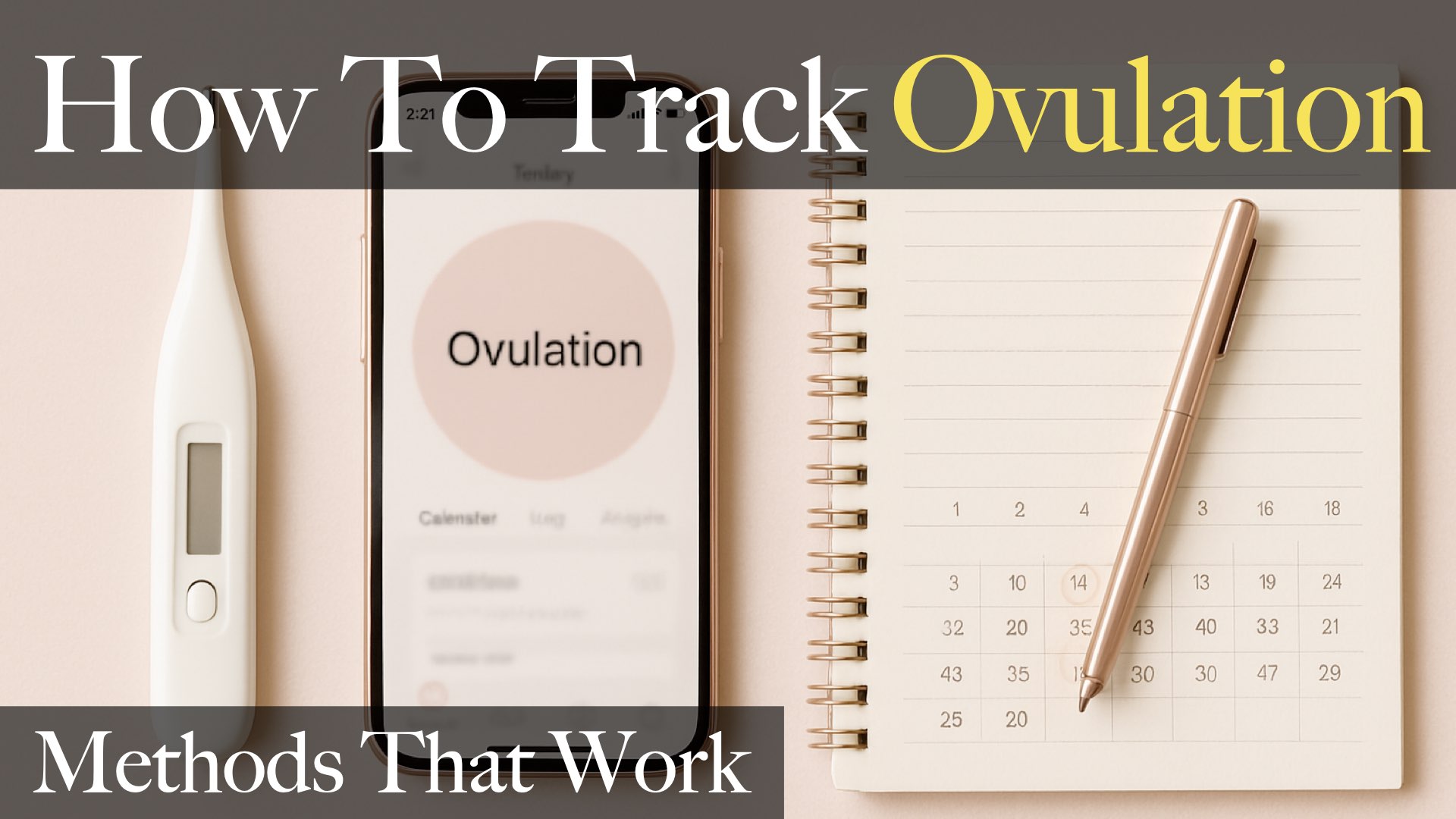
For more information on tracking your fertile days, read our upcoming guide on how to track ovulation: methods that work. And if you’re just beginning your trying-to-conceive journey, our comprehensive guide on how to prepare your body for pregnancy covers everything you need to get started.
Frequently Asked Questions
How long is the ovulation cycle?
A typical menstrual cycle (which includes ovulation) lasts 21-35 days, with an average of 28 days. Ovulation itself is a single event lasting 12-24 hours, occurring roughly in the middle of your cycle. The exact timing depends on your individual cycle length — if your cycle is 28 days, you likely ovulate around day 14.
What are the signs of ovulation?
Common signs of ovulation include changes in cervical mucus (becoming clearer, stretchy, and egg-white like), a slight rise in basal body temperature after ovulation, mild pelvic pain on one side (mittelschmerz), increased libido, and breast tenderness. Not all women experience all signs, and intensity varies from person to person.
How many days after your period do you ovulate?
This varies based on your cycle length. In a 28-day cycle, ovulation typically occurs around day 14 — about 7-10 days after your period ends (assuming a 5-day period). The formula is: Ovulation Day = Cycle Length – 14. So for a 30-day cycle, you’d ovulate around day 16; for a 26-day cycle, around day 12.
Can you get pregnant outside your fertile window?
Pregnancy is only possible during the fertile window — typically 5 days before ovulation through 1 day after. Outside this window, there’s no egg available for fertilization. However, because ovulation timing can vary and sperm can survive up to 5 days, it’s difficult to know exactly when you’re outside the fertile window without tracking.
How can I track my ovulation cycle?
Methods to track ovulation include: calendar/app tracking (logging cycle dates to predict ovulation), monitoring cervical mucus changes, basal body temperature charting, and using ovulation predictor kits (OPKs) that detect the LH surge. Many women use a combination of methods. We used a period tracking app combined with calendar awareness, which was effective for us.
Does irregular ovulation mean I can’t get pregnant?
Irregular ovulation doesn’t necessarily mean you can’t conceive, but it can make timing more challenging. If your cycles are irregular, ovulation predictor kits can help identify when you’re actually ovulating. If irregularity persists, consult a doctor — there may be underlying causes that can be addressed to improve your fertility.
What’s the best time to have intercourse for conception?
Research shows the highest probability of conception occurs when intercourse happens in the 1-2 days before ovulation. This timing ensures sperm are present and waiting when the egg is released. Having intercourse every 1-2 days during your fertile window (the 5 days before ovulation through ovulation day) maximises your chances.
Disclaimer
This article is based on personal experience and general information. It is not a substitute for professional medical advice, diagnosis, or treatment. Always consult your doctor, midwife, or qualified healthcare provider with any questions about your health or pregnancy.
Related Articles
Hub Pages:
- Pregnancy & Parenting Hub
- Trying to Conceive – All Articles
Trying to Conceive Series:
- How to Prepare Your Body for Pregnancy
- Best Foods to Boost Fertility Naturally
- Prenatal Vitamins: When to Start and What to Take
- Lifestyle Changes to Improve Fertility
- Male Fertility: How Partners Can Prepare
- How Stress Affects Fertility and What to Do About It
Related Health Articles:
- Spinach: Nutrition, Health Benefits, Risks & Uses
- Top 10 Health Benefits of Green Tea
- Morning Routine: Top 21 Steps for a Productive Day