What Happens During a C-Section, Step by Step
Key takeaways
- Most caesareans use a spinal or epidural anaesthetic, numbing you from the waist down while you stay awake — general anaesthesia is only used when that isn't possible.
- The incision is usually 10-20cm, horizontal, and just below the bikini line.
- The baby is typically delivered within 5-10 minutes of the procedure starting; the whole surgery takes about 40-50 minutes.
- Your birth partner can usually stay with you throughout if you're awake for a spinal or epidural, but not if general anaesthesia is needed.
- A C-section was a real, live possibility during our own labour, though we ended up not needing one — this piece is written from research, not personal experience.
Our own daughter was born vaginally, but a caesarean was genuinely on the table for hours during our labour when dilation stalled. I wanted to understand exactly what that path would have looked like, and I think it’s worth writing up properly for anyone whose path leads there — whether it’s planned in advance or decided during labour.
Before the surgery
Most caesareans use a spinal or epidural anaesthetic, which numbs the lower half of your body while you stay fully awake. General anaesthesia — where you’re asleep for the whole procedure — is only used when a spinal or epidural isn’t possible or appropriate for your situation. Either way, you’ll typically have a catheter placed to keep your bladder empty during the surgery, and a screen is put up so you don’t see the procedure itself while it’s happening.
The incision and delivery
The NHS describes the incision as usually 10-20cm long and horizontal, just below the bikini line — though a vertical cut below the belly button is sometimes used instead, depending on your specific situation. From that opening, your baby is typically delivered within 5-10 minutes of the procedure starting. You’ll usually be able to see your baby lifted up right away, and in many cases, brought to you for skin-to-skin contact soon after.
How long the whole thing takes
The full procedure, from the first incision to the final stitches, generally takes around 40-50 minutes — considerably shorter than most people picture, given how significant the surgery is. After the baby is delivered, you’ll be given an injection to help your womb contract and reduce bleeding, and the womb itself is closed with dissolvable stitches. Your abdominal incision is closed with either dissolvable stitches or staples, which are removed later if needed.
Your birth partner’s role
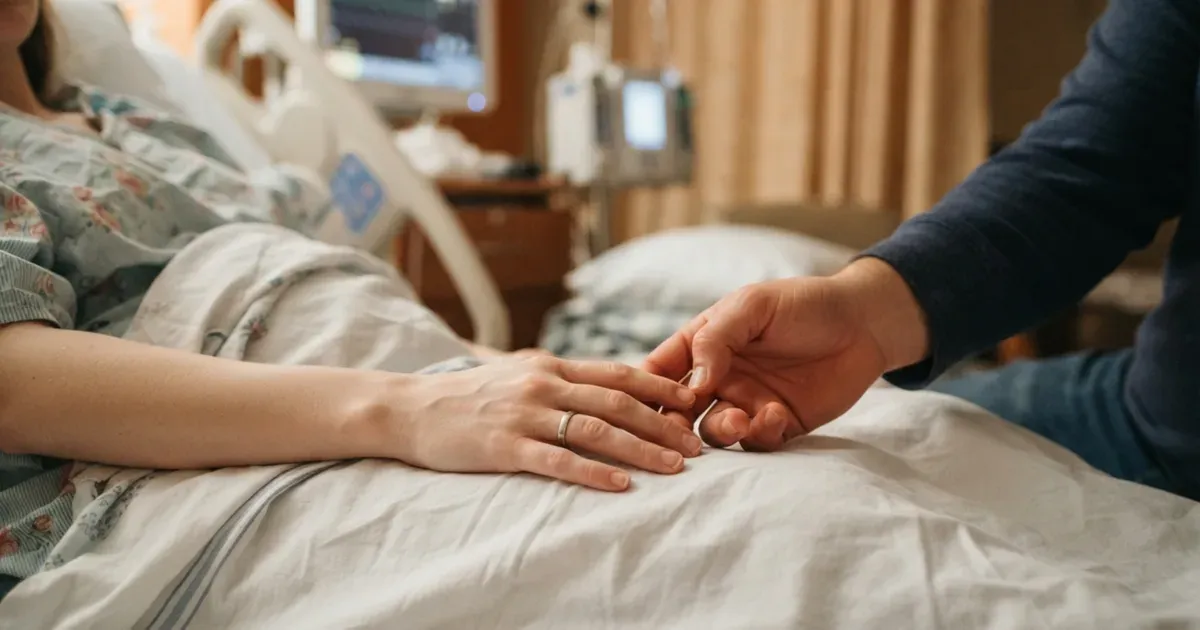
If you’re awake for a spinal or epidural anaesthetic, your birth partner can generally stay with you for the entire procedure, sitting near your head, away from the surgical field itself. If general anaesthesia becomes necessary, your birth partner typically won’t be present in the room, which is worth knowing in advance if it’s a scenario you’re preparing for — it can be a genuinely disorienting difference from what most people picture when they imagine their partner’s role during birth.
Right after birth
Once your baby is delivered, the immediate priority is much the same as after a vaginal birth — checking the baby over, and skin-to-skin contact where possible, often while the surgical team finishes closing the incision. You’ll then move to a recovery area, where you’ll be monitored as the anaesthetic wears off, before being reunited fully with your baby and partner if there’s been any separation during the procedure itself.
What I’d want to know if it happens to me
Coming as close as we did to needing one, the thing I found most reassuring in hindsight was simply understanding the timeline — that it’s a relatively short procedure, that being awake for it is the norm rather than the exception, and that your partner is very likely to be right there with you throughout. If a caesarean becomes your path, whether decided weeks in advance or in the middle of labour, knowing the actual steps ahead of time makes it feel far less like an unknown and more like simply a different route to the same moment.
Frequently asked questions
Will I be awake during my C-section?
In most cases, yes — a spinal or epidural anaesthetic numbs you from the waist down while you stay conscious. General anaesthesia is reserved for situations where that isn’t possible.
Can my partner be in the room?
Usually, yes, if you’re awake for a spinal or epidural. If general anaesthesia is needed, your partner typically won’t be present, which is worth knowing in advance.
How long does a C-section actually take?
The full procedure is generally around 40-50 minutes, with the baby usually delivered within the first 5-10 minutes.
Will I be able to hold my baby right away?
Often yes, including skin-to-skin contact soon after delivery, though this can depend on your specific situation and your baby’s condition at birth.
What kind of scar will I have?
Most incisions are horizontal, around 10-20cm, just below the bikini line, closed with dissolvable stitches or staples that fade to a scar over time.
References
- NHS — Caesarean section: What happens. nhs.uk
Found this helpful?