Pumping and Storing Breast Milk: A Practical Guide
Key takeaways
- Expressed milk keeps for up to 8 days in the fridge (3 days if you're not sure of the temperature), 2 weeks in an ice compartment, and up to 6 months in a freezer.
- Freshly expressed milk kept at room temperature is fine for up to 6 hours.
- Never use a microwave to warm or defrost breast milk — it heats unevenly and can create hot spots that burn a baby's mouth.
- Defrost slowly in the fridge when possible, or in a jug of warm water or under running warm water if you need it sooner.
- For us, pumping wasn't a lifestyle choice — our daughter had real difficulty latching, and expressing became a genuinely necessary way to keep feeding her.
Pumping and storing milk sounds like it should be simple bookkeeping, but the actual rules — how long milk keeps, how to warm it safely — matter enough to be worth getting right, especially if you’re relying on expressed milk more than you originally planned to.
Why we needed to pump
For us, expressing wasn’t a convenience choice made in advance — our daughter had real difficulty latching in the early weeks, and pumping became a genuinely necessary way to keep her fed while we worked through it. If you find yourself expressing for the same reason, it’s worth knowing it’s a common, valid response to a latch problem, not a sign that breastfeeding itself has failed.
How long expressed milk actually keeps
- Fridge (4°C or lower): up to 8 days — but only 3 days if you’re not confident the fridge is consistently cold enough.
- Ice compartment of a fridge: up to 2 weeks.
- Freezer (-18°C or lower): up to 6 months.
- Room temperature, freshly expressed: up to 6 hours, at home or out and about.
- Cool bag with ice packs: up to 24 hours, useful if you’re expressing away from home.
Storing it properly
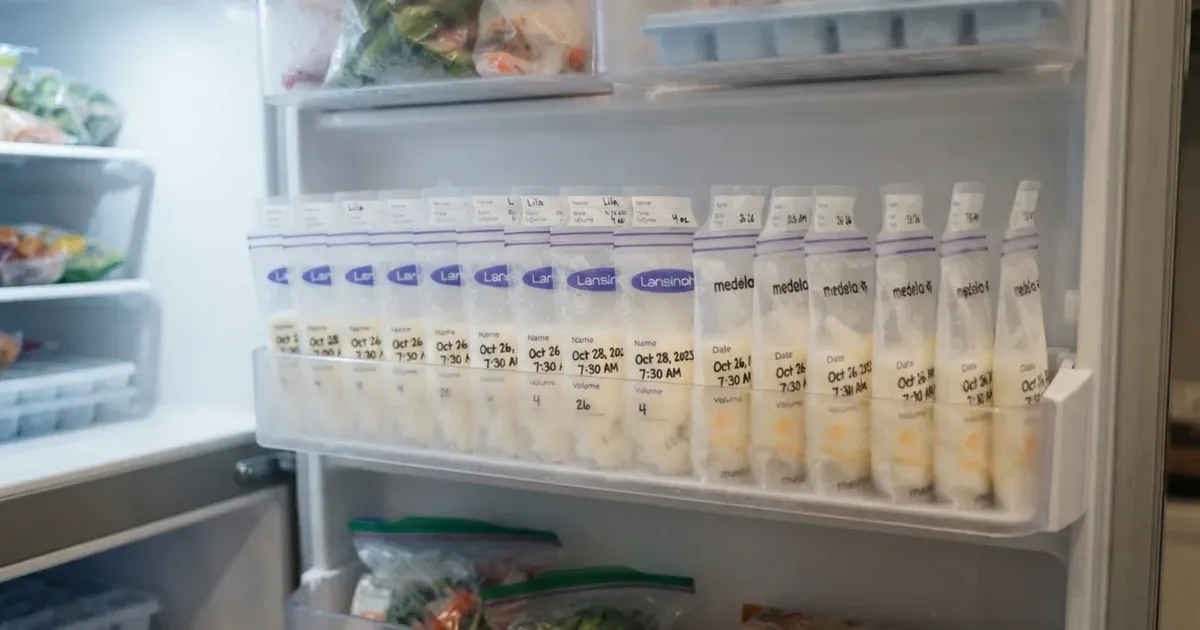
Store milk in small quantities rather than one large batch, since you can only use what you defrost once — this avoids wasting milk you’ve worked to express. Label each container or bag with the date (and your name, if it’s going anywhere shared, like a hospital fridge), and keep it at the back of the fridge rather than in the door, where the temperature fluctuates more. Keep it away from raw meat, eggs, or other uncooked foods, and get it into the fridge or freezer as soon as reasonably possible after expressing.
Warming and defrosting, done safely
The single most important rule: never use a microwave to warm or defrost breast milk. Microwaves heat unevenly and can create hot spots that feel fine on the outside of a bottle but can genuinely burn a baby’s mouth. Instead, defrost frozen milk slowly in the fridge when you have time to plan ahead. If you need it sooner, place the sealed container in a jug of warm water, or hold it under running warm water, until it reaches a comfortable temperature. Once milk has been defrosted, use it and don’t refreeze it — and once your baby has started drinking from a bottle, any leftover milk should be used within about an hour rather than saved for later.
What genuinely helped us
Warming milk gradually in a container of warm water, rather than direct heat of any kind, became a completely normal part of our routine — slower than a microwave would have been, but a habit that removed any worry about accidentally overheating a bottle. Once we settled into a rhythm of expressing, storing in small labeled amounts, and warming this way, it stopped feeling like an extra burden on top of feeding and just became part of how we fed her, alongside the flexible approach we took to her wider routine more generally.
A well-fed baby also tends to have a calmer follow-on sleep pattern, so getting the feeding-and-storage logistics right paid off well beyond the feed itself.
Frequently asked questions
How long does expressed breast milk actually last in the fridge?
Up to 8 days at 4°C or lower, though only 3 days if you’re not certain the fridge is reliably cold enough throughout.
Is it ever okay to microwave breast milk to warm it?
No — never. Microwaves heat unevenly and can create hot spots that burn a baby’s mouth, even if the bottle feels an even temperature on the outside.
What’s the best way to warm refrigerated or frozen breast milk?
Defrost slowly in the fridge if you have time. For quicker warming, place the container in a jug of warm water or hold it under running warm water — gradual, indirect heat, never direct heat or a microwave.
Can I refreeze breast milk once it’s been thawed?
No — once it’s defrosted, use it within the recommended window and don’t refreeze it.
Is pumping a sign that breastfeeding isn’t working?
Not at all. Difficulty latching is a common, solvable problem, and expressing milk is a genuine, valid way to keep feeding a baby while working through it — that was exactly our own experience.
References
- NHS — Expressing and storing breast milk. nhs.uk
Found this helpful?