Mango Smoothie Recipe: Creamy, Simple, and Ready in 5 Minutes
Key takeaways
- Ready in 5 minutes with no cooking — just a blender.
- Greek yogurt adds protein and body, which is what separates a smoothie from a shake.
- Frozen mango works just as well as fresh, and skips the peeling step entirely.
- Swap the yogurt for extra milk and you've made a mango shake instead — see the variation below.
- Naturally gluten-free; easy to make dairy-free with almond milk and a plant-based yogurt.
Ingredients
Check off ingredients as you go
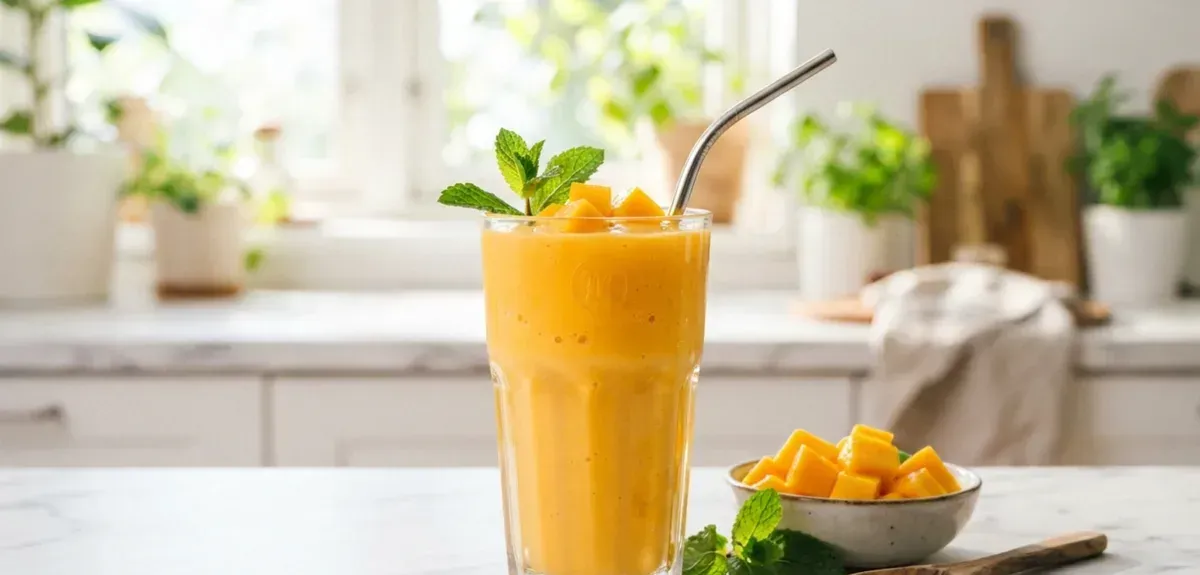
Mango season in Helsinki is basically nonexistent, so I lean on good frozen mango chunks most of the year — and honestly, they blend better than fresh anyway. This is the smoothie I make when my daughter asks for “the orange one,” which is most mornings between June and September when the fresh mangoes finally show up at the market.
What makes this a smoothie, not a shake
The distinction actually matters for how the drink turns out. A shake is built on milk and sugar — creamy, sweet, thinner. A smoothie leans on yogurt, which is what gives this one real body and enough protein to function as breakfast rather than dessert. If you’ve ever wondered why two “mango drinks” can taste so different, it’s almost always the yogurt.
Mango itself does a lot of the work here too. It’s genuinely one of the better fruits for vitamin A — USDA data puts a 100g serving at well over 100% of the daily value — and its polyphenols, including quercetin and mangiferin, have been studied for their antioxidant and anti-inflammatory properties. None of that is a reason to eat mango instead of vegetables, but it’s a nice bonus in a drink that already tastes good.
Ingredients
Use the checklist above. A couple of notes: plain Greek yogurt (not the sweetened kind) keeps you in control of how sweet the final smoothie is. If your mangoes are very ripe and sweet already, you can often skip the honey entirely.
How to make it
Follow the steps above — blend the mango, yogurt, and milk first, then adjust sweetness before adding ice. Adding ice at the end, after tasting, means you’re not diluting a smoothie that might not have needed sweetening in the first place.
My tip: If your mango isn’t quite ripe enough to be fragrant, add an extra teaspoon of honey rather than more mango — under-ripe mango can turn the whole smoothie slightly tart instead of sweet.
If it comes out thicker than you’d like, thin it with a splash more milk rather than water — water dilutes the flavour, milk just loosens the texture. If it’s thinner than you’d like, that usually means the mango wasn’t fully ripe, or you added the ice too early and it partly melted before blending — next time, blend the fruit and yogurt first, then add ice right before serving.
Variations
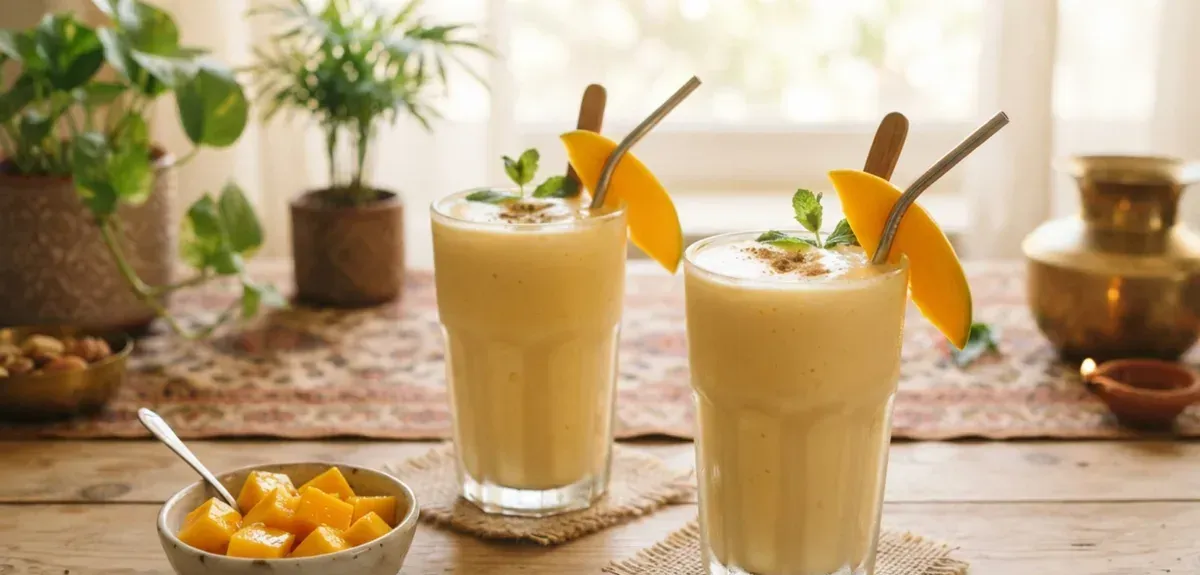
Mango shake, the classic way. Skip the Greek yogurt entirely and use 1½ cups (360ml) of whole milk instead. Add a pinch of cardamom powder and blend the same way. This is the thinner, sweeter, milkshake-style version you’ll find at Indian juice stalls — same fruit, completely different drink. It’s genuinely worth trying both to see which you prefer.
Higher protein. Add a scoop of vanilla or unflavoured protein powder along with the yogurt. Useful post-workout, and it doesn’t noticeably change the flavour if you use a mild powder.
Dairy-free. Swap the Greek yogurt for a plant-based yogurt (coconut or almond-based work well) and use almond or oat milk. The texture is slightly thinner but still good.
Storage
This is best drunk fresh — the texture holds up for a few hours in the fridge, covered, but the mango will start to separate slightly after that. If you want to prep ahead, freeze pre-portioned mango, yogurt won’t freeze well in the mix, so add that fresh at blending time.
Frequently asked questions
Can I use frozen mango instead of fresh?
Yes, and it often works better — frozen mango is usually picked and frozen at peak ripeness, and it means you don’t need ice, which keeps the smoothie less watered down.
Is this smoothie good for kids?
Yes. It’s naturally sweet, has real protein from the yogurt, and doesn’t need any added sugar if your mangoes are ripe. I skip the honey entirely for my daughter’s serving.
What’s the actual difference between this and a mango lassi?
A lassi is yogurt-forward with just a touch of mango for flavour, often with a pinch of cardamom or saffron, and traditionally thinner. This smoothie is closer to equal parts mango and yogurt, with milk added for consistency, making it fuller and more breakfast-like.
Can I make it without a blender?
Not really — you need something that can break down the mango fibres and yogurt into a smooth consistency. A hand/immersion blender in a tall container works if you don’t have a full blender.
How many calories is this smoothie, roughly?
As written, this recipe works out to around 180 calories per serving (serves 2), mostly from the mango’s natural sugar and the yogurt’s protein. Swapping in the mango shake variation raises the sugar and calorie count somewhat, since it leans on milk rather than protein-rich yogurt.
Can I double the recipe for a crowd?
Yes, it scales cleanly — just double every ingredient and blend in two batches if your blender jug is on the smaller side. It doesn’t keep well pre-blended for more than a few hours, so it’s better to blend fresh in batches than to make a big jug ahead of time.
Source: USDA FoodData Central
Found this helpful?