Banana Milkshake: The Simple, Milk-Forward Version
Key takeaways
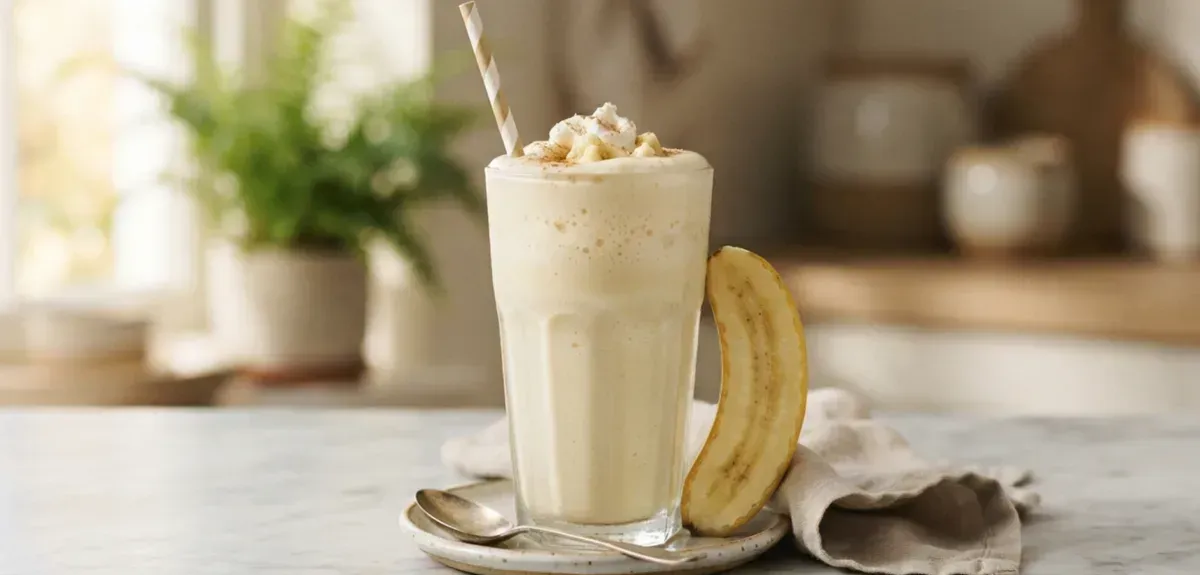
- A milkshake and a smoothie made from the same fruit are genuinely different drinks — this one is milk-forward and thin enough to sip through a straw, not built around yogurt or add-ins for staying power.
- Frozen banana slices (instead of fresh banana plus ice cubes) give a thicker, colder shake without diluting the flavour as the ice melts.
- Riper bananas need less added sweetener — taste before reaching for honey or sugar.
- For a thicker, more filling, protein-forward version of this same base, that's really a smoothie rather than a milkshake — see the recipe link below.
Ingredients
Check off ingredients as you go
My daughter’s version of “help me make a snack” is usually a request for this exact drink, and it’s genuinely one of the few things in the kitchen she can help blend from start to finish without much supervision.
Why this recipe works — and how it’s actually different from a smoothie
It’s worth being precise about the difference, since “milkshake” and “smoothie” get used almost interchangeably online despite being different drinks. A milkshake is milk-forward and thinner — it’s meant to be sippable through a straw, sweet, and more of a treat than a meal. A smoothie is usually built around yogurt or other thickeners, often has added protein or fibre (nut butter, oats, seeds), and is meant to be filling enough to stand in for a small meal. Both use the same core fruit, but they’re not the same drink wearing different names — see our banana smoothie recipe if what you actually want is the thicker, more filling version.
For the fuller nutritional picture of the banana itself, see our banana nutrition guide — this milkshake carries that nutrition along with the milk’s own protein and calcium, but it’s a lighter, sweeter drink than a smoothie, not a more filling one.
Ingredients and how to make it
Follow the checklist and steps above. Riper bananas mean less need for added honey or sugar — taste the blended shake before sweetening it further.
Frozen banana slices are a genuinely useful swap for fresh banana plus ice cubes: you get the same thick, cold texture without the flavour-diluting effect of ice melting into the drink as you sip it.
My tip: Blend just until smooth and stop. Over-blending for too long actually warms the mixture slightly from the blender’s motor and friction, which can take the edge off how cold and thick it tastes.
Variations
Chocolate banana. A tablespoon of cocoa powder blended in turns this into a genuine chocolate-banana milkshake with almost no extra effort.
Frozen version. Use frozen banana slices instead of fresh banana and ice cubes for a thicker, milkshake-parlour texture.
Spiced. A pinch of cinnamon or nutmeg blended in adds warmth without changing the basic method.
Storage
Best drunk immediately, while cold and freshly blended — banana milkshakes separate and the texture turns watery within a few hours. If you must, it keeps in the fridge for up to 24 hours; give it a good re-blend or shake before drinking.
Frequently asked questions
How is this different from a banana smoothie?
This milkshake is milk-forward, thinner, and sweeter — meant as a quick treat. Our smoothie version is built around yogurt and often protein or fibre add-ins, meant to be more filling.
Can I use frozen bananas instead of fresh?
Yes — frozen banana slices actually work better here than fresh banana plus ice cubes, giving a thicker, colder shake without watering down the flavour.
Is this a good drink for kids?
Yes, in moderation — it’s essentially milk and fruit, though the added sweetener (if used) puts it closer to a treat than an everyday drink.
Can I make it dairy-free?
Yes — any plant-based milk works well in place of dairy milk, with only minor differences in creaminess.
Do I need to add honey or sugar?
Not necessarily — ripe bananas are often sweet enough on their own. Taste first before adding anything.
Source: USDA FoodData Central
Found this helpful?