Banana Nutrition: Health Benefits, Risks, and How Many to Eat a Day
Key takeaways
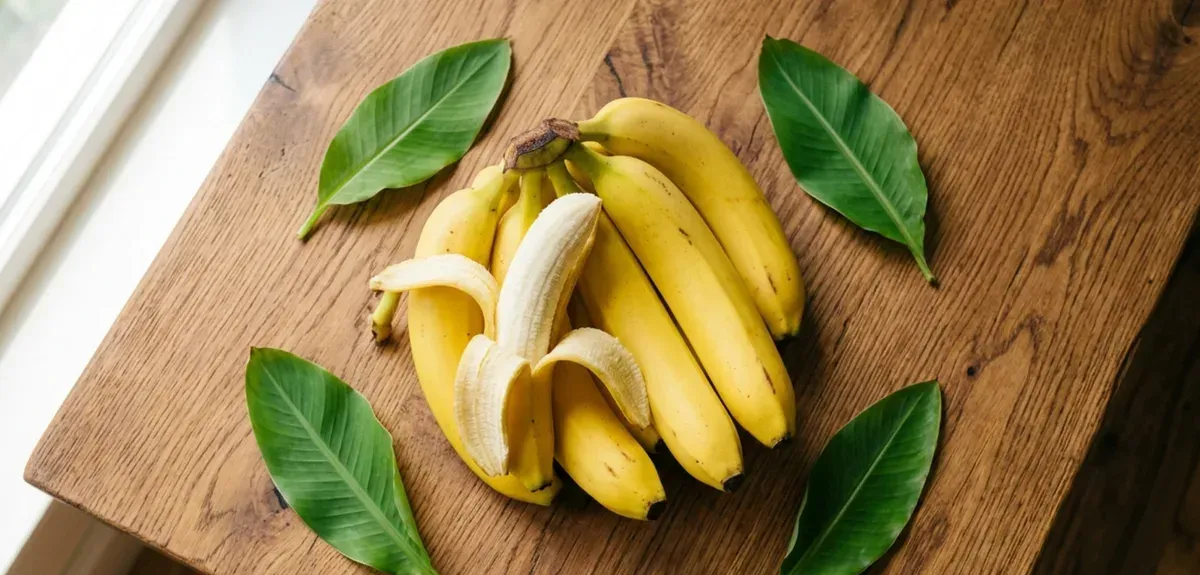
- One medium banana has about 105 calories, 3g of fibre, and more potassium than most fruits.
- Greener bananas are higher in resistant starch, a gut-friendly fibre that turns to sugar as the fruit ripens.
- Vitamin B6 may ease pregnancy nausea; potassium supports healthy blood pressure.
- If you're on blood pressure medication, ask your doctor before eating bananas daily — potassium can interact.
- One to two bananas a day is a sensible amount for most healthy adults.
Source: USDA FoodData Central
My daughter will only eat a banana if it still has a faint green tinge at the stem — anything spottier and she calls it “too soft.” I used to think that was just a fussy toddler thing, until I looked into how much a banana’s nutrition actually changes as it ripens. Turns out we were both a little right.
What’s actually in a banana
The nutrition label above is for a raw banana per 100g. In real terms, a medium banana (about 118g) works out to roughly 105 calories, 27g of carbohydrate, 1.3g of protein, and just over 3g of fibre — most of it in the peel-adjacent flesh rather than spread evenly through the fruit.
The number that matters most, though, doesn’t have its own row on a standard nutrition label: potassium. A medium banana carries around 422mg of it, close to 10% of what most adults need in a day. Harvard’s Nutrition Source lists bananas among the most reliable everyday sources of it, alongside potatoes and leafy greens — and potassium is genuinely undersupplied in most Western diets.
Why potassium is the headline nutrient
Potassium works against sodium to help regulate blood pressure, and it keeps nerve signals and muscle contractions — including the ones that keep your heart beating in rhythm — running smoothly. A large systematic review published in the BMJ found that higher potassium intake measurably lowered blood pressure and was linked to a 24% lower risk of stroke. That’s not a banana-specific finding, but bananas are one of the easiest, cheapest ways to move the needle on potassium without changing your whole diet.
The fibre story: why a green banana isn’t just underripe
Here’s what I didn’t know until I actually read into it: unripe bananas are unusually high in resistant starch, a type of fibre that passes through the small intestine mostly undigested and feeds the bacteria in your gut instead — acting almost like a prebiotic. As the banana ripens, enzymes convert that resistant starch into simple sugars, which is exactly why a spotty banana tastes sweeter and digests more easily than a green one.
Neither stage is “better” outright. If you want more of the gut-health angle, a firmer, greener banana does more of that work. If you want something gentle and easy to digest — which is often what you want when you’re not feeling well, or feeding a small child — a fully ripe one is the better choice.
Steady energy without the crash
Bananas combine natural sugar with fibre, so the sugar hits your bloodstream more slowly than a straight glucose source would. That’s part of why they’ve become a fixture in gym bags and marathon aid stations. A study in PLOS ONE had cyclists fuel a 75km time trial on either bananas or a standard sports drink, and found no meaningful difference in blood glucose or performance between the two — a reasonable case for reaching for real food over a bottle of flavoured sugar water.
Bananas are also one of the better dietary sources of vitamin B6, which your body uses to make serotonin and dopamine. It’s not a mood supplement, but it’s one more reason a banana is a smarter 4pm snack than most alternatives.
Bananas during pregnancy, and at other life stages
Bananas came up constantly for me during both trimesters of nausea. Vitamin B6 has real, clinically supported evidence for easing pregnancy nausea, and potassium helps manage the blood pressure shifts that come with pregnancy — which is one reason you’ll see bananas mentioned again and again in guidance on foods to prioritise during pregnancy. Folate also plays a role in early neural tube development, though a banana alone won’t cover your folate needs — that’s what prenatal vitamins are for.
Outside of pregnancy, the same nutrients do different jobs at different ages: the fibre and potassium support digestion and healthy blood pressure in older adults, and the natural sugars make bananas one of the easiest fruits to get a fussy toddler to actually eat. As always, talk to your midwife or GP about what’s right for your specific situation.
The risks worth knowing
Bananas are low-risk for most people, but a few things are worth flagging honestly, since most banana articles skip straight past them.
Medication interactions. If you’re on ACE inhibitors or potassium-sparing diuretics for blood pressure, your body may already be retaining more potassium than usual. Mayo Clinic notes that combining these medications with a high-potassium diet can push levels too high — a condition called hyperkalemia, which affects heart rhythm. This isn’t a reason to avoid bananas, but it’s a reason to mention them to your doctor if you’re on this kind of medication.
Allergic reactions. True banana allergies are uncommon, but people with a latex allergy sometimes react to bananas too, because the two share some of the same proteins. Symptoms are usually mild — itching or tingling in the mouth — but can occasionally be more serious.
Overdoing it. Even without a medication interaction, eating an unusually large number of bananas in a day can push potassium intake higher than your kidneys can comfortably handle, especially if you already have reduced kidney function.
The biggest misconception about bananas and blood sugar
The most common thing I hear is “bananas are too sugary.” A ripe banana does have more sugar than a green one, but its glycemic index still sits in the low-to-medium range, and the fibre content slows sugar absorption meaningfully. Pairing a banana with a source of protein or fat — a spoon of peanut butter, a handful of nuts — flattens the blood sugar response even further. For most people without diabetes, a banana is not the dietary red flag it’s sometimes made out to be. If you do have diabetes or are managing blood sugar closely, it’s worth discussing portion and timing with your care team rather than avoiding bananas altogether.
How I actually use bananas at home
The very ripe, spotty ones — the ones my daughter rejects — are exactly what I want for baking, because the extra sugar and softness mean less added sugar and better moisture. That’s when a batch of banana bread or banana pancakes happens in our kitchen. For a quick breakfast, I’ll blend one into a banana smoothie with oats and a spoon of yoghurt — filling enough to actually carry me to lunch.
My tip: Keep bananas away from other fruit on the counter. They release ethylene gas as they ripen, which speeds up ripening in anything nearby — useful if you want to ripen an avocado fast, less useful if you’re trying to keep your fruit bowl from turning over in two days.
How many bananas should you eat a day
There’s no single right number, but one to two bananas a day is a reasonable amount for most healthy adults — enough to get a real potassium and fibre benefit without overdoing natural sugar intake. If you have diabetes, kidney disease, or you’re on blood-pressure medication, it’s worth checking with your doctor about what fits your specific situation rather than following a generic rule.
Frequently asked questions
Are bananas good for weight loss?
They can support it indirectly — the fibre content promotes fullness, which can help with appetite control. Bananas aren’t a weight-loss food on their own, but they’re a reasonable, filling snack within a balanced diet.
Can pregnant women eat bananas every day?
For most pregnant women, yes. Bananas provide B6, potassium, and some folate, all of which are useful during pregnancy. If you have gestational diabetes or another condition affecting blood sugar, check with your midwife or OB-GYN about portioning.
Are bananas safe if I’m on blood pressure medication?
Often yes, in normal amounts, but it depends on the specific medication. ACE inhibitors and potassium-sparing diuretics can raise blood potassium levels, and combining them with a high-potassium diet needs medical oversight. Ask your doctor rather than guessing.
Why do bananas turn brown so fast, and should I refrigerate them?
Bananas ripen through ethylene gas production, which accelerates once the peel is broken or bruised. Refrigeration slows ripening — the flesh stays fine even as the peel darkens — so it’s a good option once a banana is at the ripeness you want.
What’s the best time of day to eat a banana?
Whenever suits you. Before exercise, the natural sugars give a quick energy source; as an afternoon snack, the fibre and B6 make it a steadier option than most packaged snacks.
References
- Aburto NJ, et al. (2013). Effect of increased potassium intake on cardiovascular risk factors and disease: systematic review and meta-analyses. BMJ. pubmed.ncbi.nlm.nih.gov
- Nieman DC, et al. (2012). Bananas as an Energy Source during Exercise: A Metabolomics Approach. PLOS ONE. journals.plos.org
- USDA FoodData Central — Bananas, raw. fdc.nal.usda.gov
- Harvard T.H. Chan School of Public Health — Bananas. nutritionsource.hsph.harvard.edu
- Mayo Clinic — ACE inhibitors and potassium interactions. mayoclinic.org
Found this helpful?