Dates: Nutrition, Benefits, and the Real Story on Blood Sugar
Key takeaways
- Dates have about 277 calories and 75g of carbohydrate per 100g — genuinely calorie-dense, closer to dried fruit than fresh fruit.
- Despite tasting intensely sweet, dates have a real glycemic index in the low-to-moderate range (roughly 42-50 depending on variety), largely because of their fibre content.
- A 2022 randomised clinical trial found eating 3 dates a day for 12 weeks didn't worsen blood sugar control in people with type 2 diabetes — but it also found no special cholesterol or blood-sugar-improving benefit, contrary to some overstated claims.
- Dates are a genuinely good source of potassium and a reasonable source of iron for a fruit.
- Because they're so calorie-dense, 2-3 dates is a sensible everyday portion, not a handful.
Source: USDA FoodData Central
Dates were the go-to answer whenever anyone needed a quick, natural sweetener at home growing up — stuffed into laddoos, blended into shakes, or just eaten a couple at a time as a snack. They taste like candy, which made me genuinely curious what the actual research says about a fruit this sweet.
What’s actually in a date
Dates are calorie-dense in a way fresh fruit generally isn’t — about 277 calories and 75g of carbohydrate per 100g, closer to other dried fruit than to something like an apple or orange. Alongside that, they carry a genuinely useful 7g of fibre per 100g, around 696mg of potassium, and roughly 0.9mg of iron — a meaningful amount for a fruit, though not a substitute for iron-rich foods like lentils or leafy greens if iron intake is a specific concern.
The glycemic index surprise
This is the fact worth knowing: despite tasting intensely sweet, dates have a real glycemic index in the low-to-moderate range — commonly cited around 42 to 50 depending on the variety — largely because their fibre content slows how quickly the sugar is absorbed. This runs against the instinctive assumption that something this sweet must spike blood sugar sharply. It doesn’t mean dates are a “free food” for blood sugar purposes, but the sweetness itself is a genuinely misleading guide to their actual glycemic impact.
What a real clinical trial actually found — and didn’t find
A 2022 randomised trial gave people with type 2 diabetes either 3 dates a day or a glycemically-matched amount of raisins for 12 weeks, then measured blood sugar markers (HbA1c, fasting glucose), cholesterol, triglycerides, and insulin resistance. The honest result: neither dates nor raisins worsened blood sugar control over the 12 weeks — genuinely reassuring for people who’ve been told to avoid dates outright. But the same trial found no significant improvement in cholesterol, blood pressure, or insulin sensitivity either, in contrast to some more enthusiastic claims about dates’ cholesterol-lowering benefits that circulate online. The honest takeaway is “safe in moderation,” not “actively therapeutic” — a meaningfully different, more accurate claim than what a lot of casual health content repeats.
Other things worth knowing
Portion size matters more than for fresh fruit. Because dates are so calorie-dense, 2 to 3 dates is a realistic everyday portion — treating them like you would fresh fruit and eating a large handful adds up quickly in both sugar and calories.
Dates as a natural sweetener. Blending dates into a shake or paste is a genuinely reasonable way to reduce added sugar in a recipe, since you’re getting fibre and micronutrients alongside the sweetness — but it’s still a concentrated source of sugar, not a “sugar-free” swap.
Dates during pregnancy. Dates are a traditional recommendation in many cultures for the final weeks of pregnancy, and some research has looked at a possible link to labour progression, though the evidence is still developing rather than settled. If you’re managing gestational diabetes, portion matters more here than with most fruit — our guide to foods and drinks to limit or avoid during pregnancy covers the broader sugar-management picture.
The biggest misconception about dates
The assumption that “very sweet” automatically means “spikes blood sugar badly” doesn’t hold up against the actual glycemic index research — fibre content changes the picture meaningfully. That said, the opposite overcorrection — treating dates as an actively therapeutic superfood for diabetes — isn’t well supported by the actual clinical trial data either. The honest middle ground: a genuinely nutrient-dense fruit that’s safe in sensible portions, not a food to fear or a treatment to rely on.
How I actually use dates at home
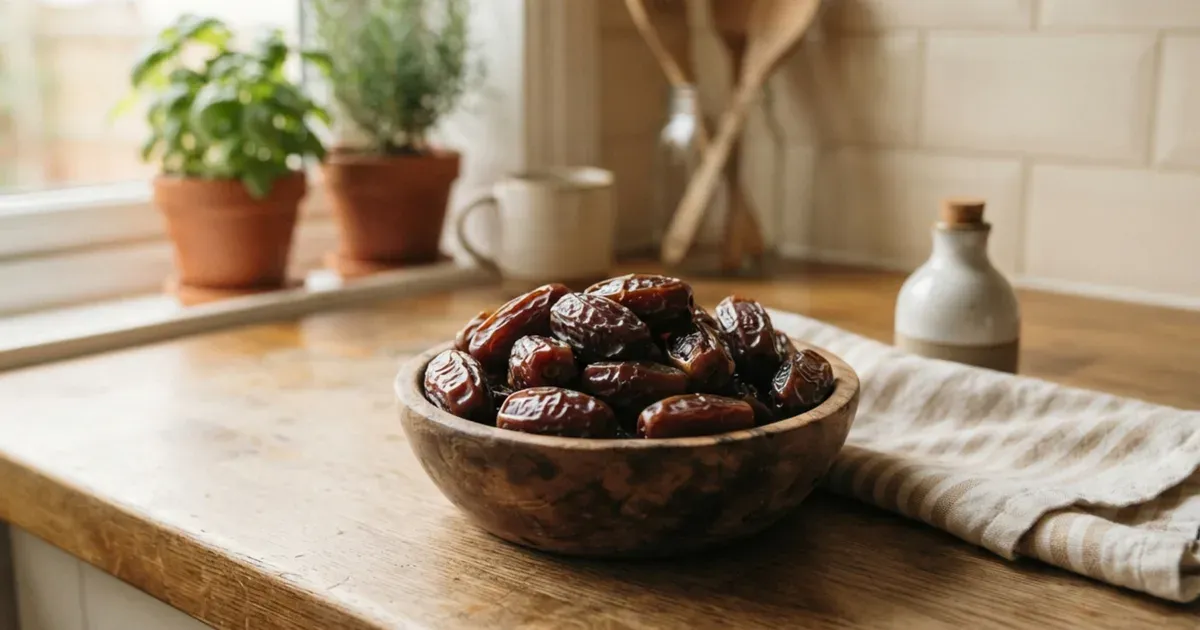
A couple of dates, pitted and stuffed with a walnut half, is the easiest not-really-a-recipe snack I keep around — no prep beyond removing the pit. When I want something smoother, blending 2-3 dates into a smoothie in place of added sugar works well, especially in something like a mango lassi if I want it a little sweeter without reaching for sugar directly.
My tip: If a date feels unusually hard, soak it in warm water for 10 minutes before eating or blending — it softens without needing to cook it, and blends far more smoothly into a shake.
Frequently asked questions
Do dates spike blood sugar because they’re so sweet?
Less than their sweetness suggests — dates have a real glycemic index in the low-to-moderate range, largely due to their fibre content. Portion still matters, since they’re calorie-dense, but the sweetness itself isn’t a reliable guide to blood sugar impact.
Are dates actually good for managing diabetes?
A real clinical trial found dates didn’t worsen blood sugar control in people with type 2 diabetes over 12 weeks — genuinely reassuring — but the same trial found no meaningful improvement in cholesterol or blood sugar markers either. “Safe in moderation” is the accurate claim, not “actively therapeutic.”
How many dates is a reasonable daily amount?
2 to 3 dates is a sensible everyday portion, given how calorie-dense they are compared to fresh fruit.
Are dates a good source of iron?
They carry a reasonable amount of iron for a fruit, but not enough to substitute for iron-rich foods like lentils or leafy greens if iron intake is a specific concern.
Can I use dates as a natural sugar substitute in recipes?
Yes, reasonably — blending dates into a recipe adds fibre and micronutrients alongside the sweetness, which is a genuine improvement over refined sugar. They’re still a concentrated sugar source, though, not a sugar-free swap.
References
- USDA FoodData Central — Dates, medjool.
- Alkhalidy H, et al. Effect of Date Fruit Consumption on the Glycemic Control of Patients with Type 2 Diabetes: A Randomized Clinical Trial. Nutrients, 2022. pmc.ncbi.nlm.nih.gov
Found this helpful?