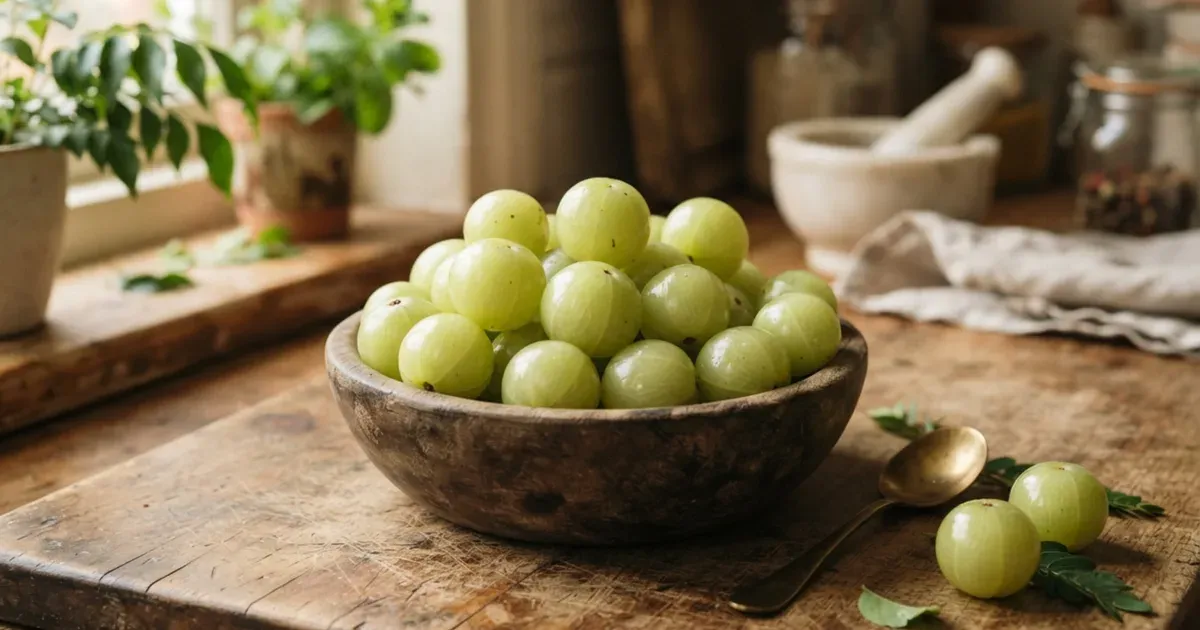
Amla (Indian Gooseberry): Nutrition and Real Benefits
Key takeaways
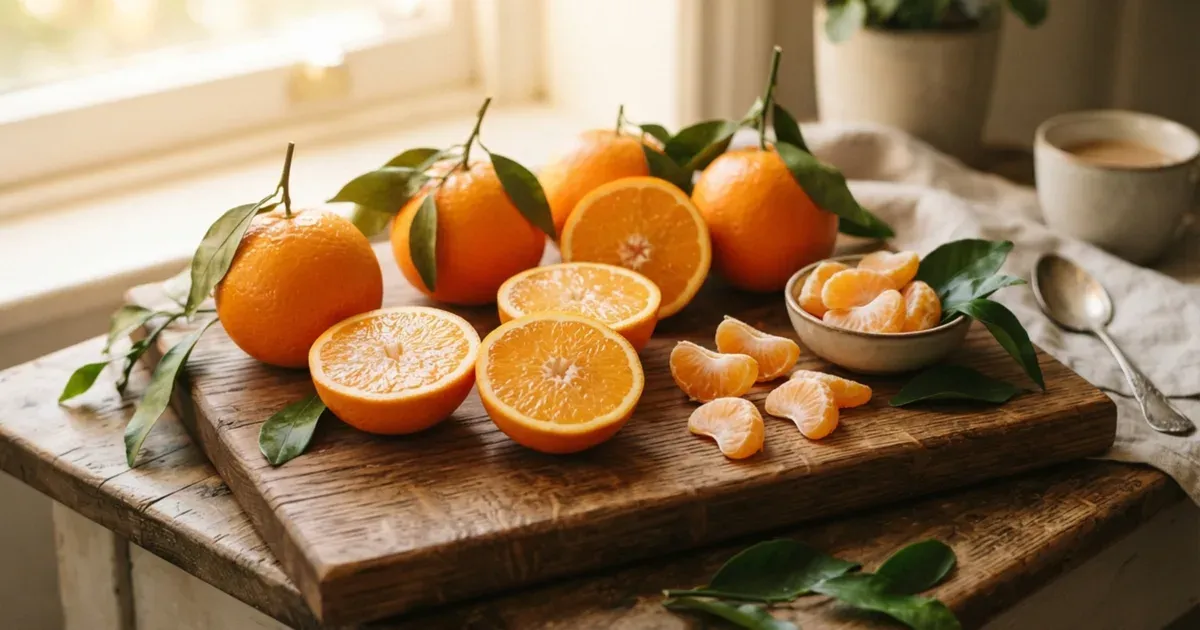
- Fresh amla has roughly 500-600mg of vitamin C per 100g — around 10 times more than an orange.
- Unusually for a fruit, amla's vitamin C is genuinely heat-stable, largely surviving cooking and drying, unlike most vitamin C sources which degrade with heat.
- This stability comes from amla's tannins binding to the vitamin C and slowing its breakdown — even dried amla powder retains a meaningful fraction of the original amount.
- Amla also carries genuine fibre and a notable amount of calcium and iron for a fruit.
- Amla's natural taste is sharply sour and astringent — most traditional preparations (murabba, candy, juice with jaggery) exist specifically to make it palatable, not to disguise poor quality.
Source: USDA FoodData Central
Amla was one of those fruits that showed up constantly growing up — as murabba in the fridge, as a powder my mother kept for hair oil, occasionally just eaten raw with a pinch of salt to cut the sourness — without anyone explaining exactly why it mattered nutritionally beyond “it’s good for you.” Looking into the actual research, it turns out the reputation is unusually well deserved.
What’s actually in an amla
Fresh amla has around 44-58 calories per 100g depending on the source, alongside roughly 3.4g of fibre, 50mg of calcium, and 1.2mg of iron — a genuinely well-rounded profile for a small fruit. But the number that stands out is vitamin C: fresh amla carries somewhere in the range of 500 to 600mg per 100g, compared to about 53mg in an orange — roughly ten times more vitamin C, in a fruit a fraction of the size.
The detail that makes amla genuinely unusual
This is the part worth knowing, because it separates amla from almost every other high-vitamin-C food: vitamin C is normally quite heat-sensitive, breaking down significantly when a food is cooked, dried, or stored. Amla’s vitamin C behaves differently — its natural tannins bind to the ascorbic acid and measurably slow its degradation, so cooked preparations like murabba and even dried amla powder retain a meaningful share of the original vitamin C rather than losing most of it, unlike what happens when you cook or juice most citrus fruit. Dried amla powder, for instance, still typically retains somewhere around 200-300mg of vitamin C per 100g even after processing — still several times more than a fresh orange, despite having gone through drying.
Why this actually matters practically
Most advice about preserving vitamin C revolves around eating things raw and fresh, since cooking usually destroys it. Amla is a genuine exception to that general rule — you don’t lose most of its vitamin C benefit by turning it into murabba, pickle, or powder, which is exactly why traditional preparations that involve real cooking or drying time (rather than eating it raw) have remained such a consistent part of how amla is actually used, rather than being a compromise that loses the point of eating it.
Other things worth knowing
Amla is genuinely sour. Its natural taste is sharply astringent and sour — traditional preparations like murabba (cooked in sugar syrup), candied amla, or juice blended with jaggery exist specifically to make it palatable for regular eating, not to disguise a lower-quality product. If raw amla tastes unpleasantly harsh to you, that’s completely normal, not a sign you’ve picked a bad one.
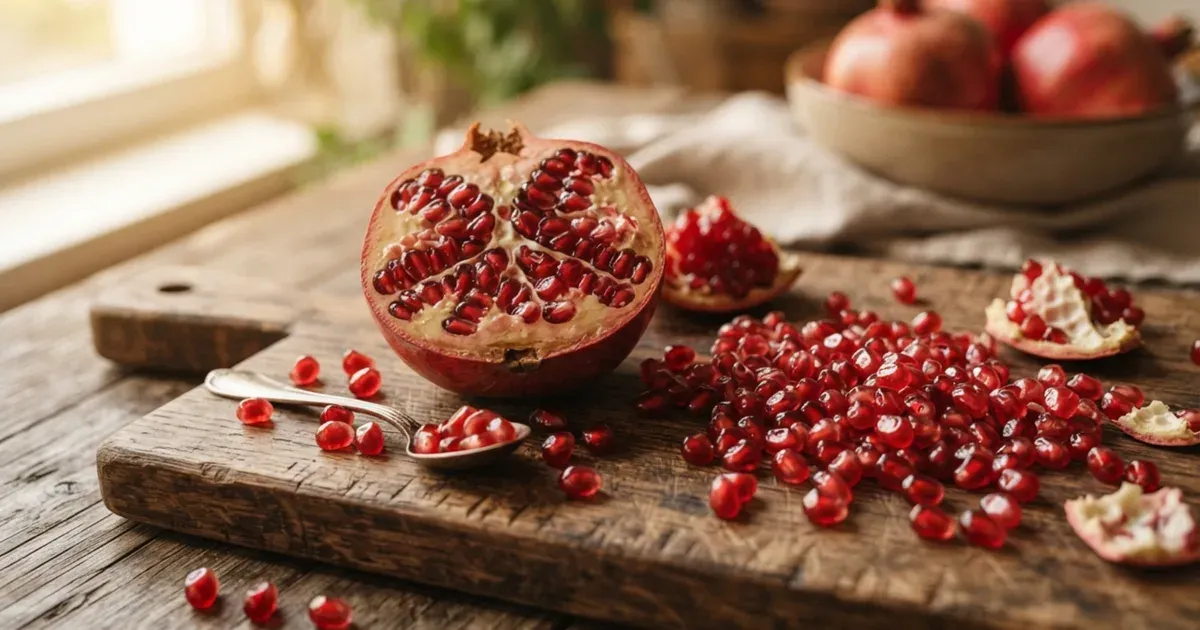
Amla and iron absorption. Given its substantial vitamin C content, amla is a genuinely useful pairing with iron-rich foods like lentils or leafy greens — the same absorption mechanism that makes orange or pomegranate useful alongside a dal-based meal, just with a considerably higher vitamin C dose behind it.
Amla during pregnancy. Amla’s vitamin C content makes it a genuinely useful pregnancy fruit for supporting iron absorption, though its natural acidity and sourness can worsen nausea or heartburn for some people, particularly in the first trimester — worth introducing gradually rather than in a large amount if you’re not used to it.
The biggest misconception about amla
There’s a tendency to treat amla purely as a “traditional remedy” ingredient — good for hair, good for immunity, in a vague, unverifiable way — rather than recognising it as a genuinely well-researched, nutritionally exceptional fruit on its own numbers. The actual vitamin C content and its unusual heat stability are real, measurable facts, not folk claims that need faith to accept.
How I actually use amla at home
Amla murabba, a spoonful with breakfast, is the easiest way I keep it in a regular rotation — genuinely more approachable than eating it raw, and the vitamin C holds up well through the cooking process for exactly the reason covered above. Fresh amla juice, blended with a small amount of jaggery or honey to cut the sourness, is a good alternative if murabba feels like too much sugar for a daily habit.
My tip: If raw amla is too sour to manage, a thin slice dipped in a small amount of salt and roasted cumin powder makes it noticeably more approachable — a common way it’s eaten as a quick snack rather than only in cooked preparations.
Frequently asked questions
How much vitamin C does amla actually have compared to an orange?
Roughly ten times more — fresh amla carries somewhere around 500-600mg of vitamin C per 100g, compared to about 53mg in an orange.
Does cooking amla destroy its vitamin C, like it does with most fruit?
Not to the same degree — amla’s natural tannins bind to its vitamin C and slow its breakdown, so cooked preparations like murabba and even dried amla powder retain a meaningful share of the original vitamin C content.
Why does amla taste so sour and astringent?
That’s its genuine natural taste, not a sign of poor quality — traditional preparations like murabba, candy, or jaggery-sweetened juice exist specifically to make it palatable for regular eating.
Is amla actually good for iron absorption?
Yes, indirectly — its substantial vitamin C content genuinely helps absorb non-heme iron from foods like lentils or leafy greens eaten in the same meal.
Is amla safe to eat during pregnancy?
Generally yes, and its vitamin C content is genuinely useful for iron absorption — though its acidity can worsen nausea or heartburn for some people, so it’s worth introducing gradually if you’re not already used to it.
References
- ICMR — Indian Food Composition Tables, 2017.
- Ashish Anjankar — Amla’s Unique Biochemistry. ashishanjankar.com
Found this helpful?