Spinach: Nutrition Facts, Health Benefits, and How to Use It
Key takeaways
- A cup of raw spinach is about 7 calories but carries real amounts of iron, folate, and vitamin K.
- Spinach's nitrates have real, trial-backed evidence for modestly lowering blood pressure.
- It's also one of the biggest dietary sources of oxalate, which matters if you're prone to kidney stones.
- If you're on blood-thinning medication like warfarin, consistent (not zero) vitamin K intake is what matters.
- Cooking briefly — sautéing or steaming — improves iron and calcium absorption compared to eating it raw.
Source: USDA FoodData Central
The first time I cooked spinach for my Finnish mother-in-law, I made the mistake every beginner makes — I boiled a full bag of it and ended up with about two tablespoons of sad green mush. Back in my mother’s kitchen, spinach was always cooked fast, in a hot pan with garlic, never dropped into a pot of boiling water. That one difference in method taught me more about vegetables than any nutrition label has.
What’s actually in spinach
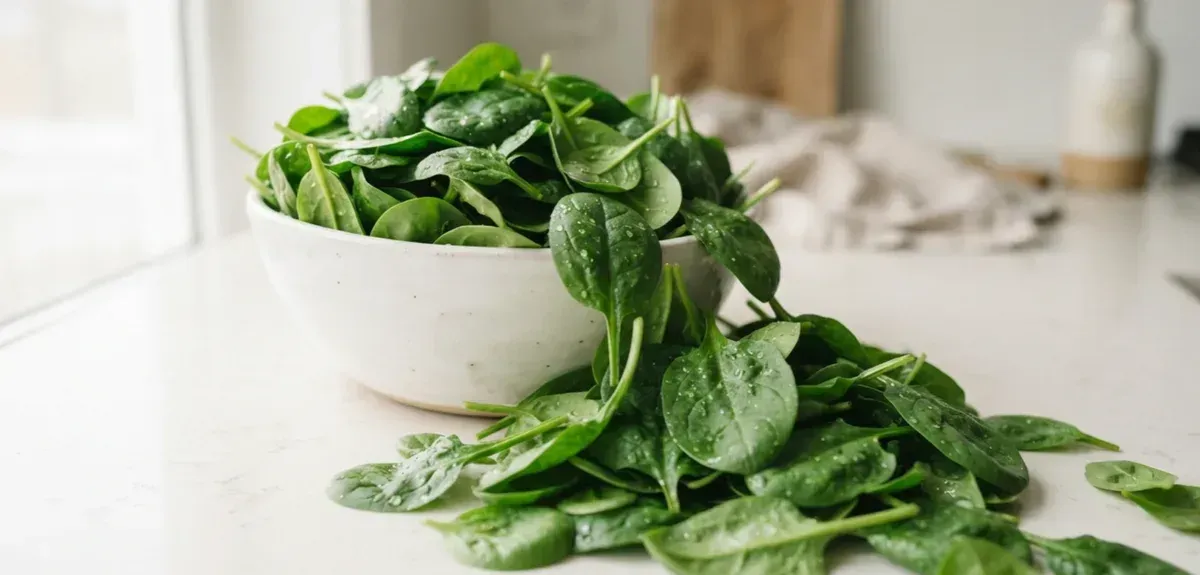
The numbers above are for raw spinach, and they’re almost deceptively modest — a cup of raw leaves is around 7 calories. What spinach is genuinely good at is nutrient density relative to its weight: real iron, a large share of your daily vitamin K, a meaningful amount of folate, and a decent hit of vitamin C in something you can eat by the handful. It’s not a “superfood” in the marketing sense — no single vegetable fixes your diet — but the numbers hold up.
The heart-health angle that’s actually backed by research
Spinach is naturally high in dietary nitrates, and this is one of the few vegetable health claims that’s been tested properly in randomized trials rather than just assumed. A controlled trial published in Free Radical Biology and Medicine found that nitrate-rich spinach measurably increased nitric oxide markers and improved endothelial function — a real, mechanistic effect on how well your blood vessels dilate, not just a correlation. It won’t replace blood pressure medication, but it’s a rare case where “eat this vegetable, it’s good for your heart” is more than a slogan.
Iron, and why pairing matters more than quantity
Spinach’s iron is non-heme iron, the plant-based kind, which your body absorbs less efficiently than the iron in meat. This is the detail most “spinach is high in iron” claims skip. What actually helps: eating spinach alongside a source of vitamin C — a squeeze of lemon, a handful of bell pepper, a glass of orange juice — which meaningfully improves how much iron your body can take up in that meal. Cooking spinach also helps, for a related reason covered below.
Folate, and why it matters beyond pregnancy
Spinach is one of the better plant sources of folate, which is essential for cell division and particularly important in early pregnancy for neural tube development. It matters outside pregnancy too — folate plays a role in red blood cell formation and general cell repair. If you’re trying to conceive or are newly pregnant, spinach is a genuinely useful food to have in regular rotation, alongside — not instead of — a prenatal vitamin.
The risks worth knowing, honestly
Most spinach content skips straight to benefits. Here’s what’s actually worth knowing.
Oxalates and kidney stones. Spinach is one of the single largest dietary sources of oxalate. A large, long-running study across three cohorts — tracking over 45,000 men and nearly 200,000 women — found that people eating eight or more servings of spinach a month had roughly a 30% higher relative risk of kidney stones than those eating less than one serving a month, and spinach alone accounted for over 40% of dietary oxalate intake in the study population. That’s a real, measured effect — if you have a personal or family history of kidney stones, it’s worth moderating spinach intake and pairing it with enough fluids, rather than eating it in unlimited quantities.
Vitamin K and blood thinners. Spinach is rich in vitamin K, which plays a direct role in blood clotting. If you’re on warfarin or a similar blood-thinning medication, this matters — but not in the way people assume. Mayo Clinic’s guidance is clear that you don’t need to avoid vitamin K-rich vegetables; what matters is keeping your intake consistent week to week, so your medication dose stays properly calibrated. Sudden increases or drops are the actual problem, not spinach itself.
Goitrogens and thyroid function. Spinach contains compounds that can mildly interfere with iodine uptake in large, regular amounts. Cooking reduces this effect substantially, which is one more reason cooked spinach is the more practical everyday choice over large amounts of raw spinach for most people.
Raw or cooked — it genuinely depends what you want
Raw spinach keeps more of its vitamin C, which breaks down with heat. Cooked spinach releases more of its iron and calcium, and reduces both oxalates and goitrogens in the process. Neither is objectively better — it depends whether you’re optimizing for vitamin C in a salad or for iron and calcium in a cooked dish. In practice, I do both: raw in salads and smoothies, quickly sautéed everywhere else.
My tip: Cook spinach hot and fast, not low and slow. A hot pan, a minute or two, done — that’s the difference between vibrant green spinach and the grey, waterlogged version most people grew up avoiding.
How I actually cook it
Sautéing is the method I use most: olive oil, a smashed garlic clove, spinach added in batches (it cooks down dramatically), off the heat within two minutes. Steaming is the gentler alternative if you want to preserve more of the colour and texture for a side dish. For soups and stews, frozen spinach works just as well as fresh and is often better value — stir it in during the last few minutes of cooking.
Raw spinach earns its place in smoothies too. It blends into fruit-based smoothies without noticeably changing the flavour — our mango spinach smoothie is the version I make most, especially useful if you want a folate and iron boost without eating a plate of greens.
For how spinach compares to kale and other leafy greens, see our guide to the vegetables worth eating most often.
Frequently asked questions
Is spinach actually as high in iron as people say?
It’s a genuinely good plant source of iron, but the non-heme iron in spinach is absorbed less efficiently than the iron in meat or fish. Pairing it with vitamin C, and cooking it, both improve how much your body actually takes up.
Can I eat spinach every day?
For most people, yes, as part of a varied diet. If you have a history of kidney stones, it’s worth moderating how much spinach specifically you eat regularly, given how concentrated its oxalate content is compared to other vegetables.
Is spinach safe during pregnancy?
Yes — its folate and iron content make it a genuinely useful food during pregnancy. As always, this supports but doesn’t replace a prenatal vitamin; talk to your midwife or OB-GYN about your specific nutritional needs.
Should I worry about spinach if I’m on blood thinners?
Not to the point of avoiding it. The real guidance from Mayo Clinic is to keep your vitamin K intake roughly consistent week to week rather than cutting it out — sudden swings are what actually affect medication dosing, not spinach itself.
Does cooking spinach destroy its nutrients?
Some — vitamin C decreases with heat. But cooking also increases how much iron and calcium your body can absorb, and lowers oxalate and goitrogen content. It’s a trade-off, not a straightforward loss.
References
- USDA FoodData Central — Spinach, raw. fdc.nal.usda.gov
- McCall DO, et al. (2012). Flavonoid-rich apples and nitrate-rich spinach augment nitric oxide status and improve endothelial function in healthy men and women. Free Radical Biology and Medicine. pubmed.ncbi.nlm.nih.gov
- Taylor EN, Curhan GC. (2007). Oxalate intake and the risk for nephrolithiasis. Journal of the American Society of Nephrology. pubmed.ncbi.nlm.nih.gov
- Mayo Clinic — Warfarin diet: What foods should I avoid? mayoclinic.org
Found this helpful?