Bottle Gourd (Lauki): Nutrition, and the Weight-Loss Juice Myth
Key takeaways
- Raw bottle gourd is about 14 calories per 100g and roughly 96% water — one of the lowest-calorie vegetables you'll regularly cook with.
- There's no research showing lauki juice burns fat or speeds up metabolism — its weight-loss reputation comes from its low calorie density, not any special compound.
- A bitter-tasting bottle gourd can genuinely be toxic — documented case reports describe severe vomiting, gastrointestinal bleeding, and hospitalisation from bitter lauki juice.
- If lauki or its juice tastes even slightly bitter, stop and discard it — the bitterness signals cucurbitacins, not just an off batch.
- Cooked lauki (sabzi, kofta, dal) gives you the same low-calorie, high-water nutrition as the juice, with far less safety risk and more actual food satisfaction.
Source: USDA FoodData Central
My mother-in-law’s first suggestion when anyone in the family wanted to “eat a bit lighter” was always the same: a glass of lauki juice, first thing in the morning, on an empty stomach. It’s one of the most repeated pieces of Indian home advice there is, and I never actually questioned it until I sat down to check what bottle gourd contains and what the weight-loss claim is actually based on.
What’s actually in bottle gourd
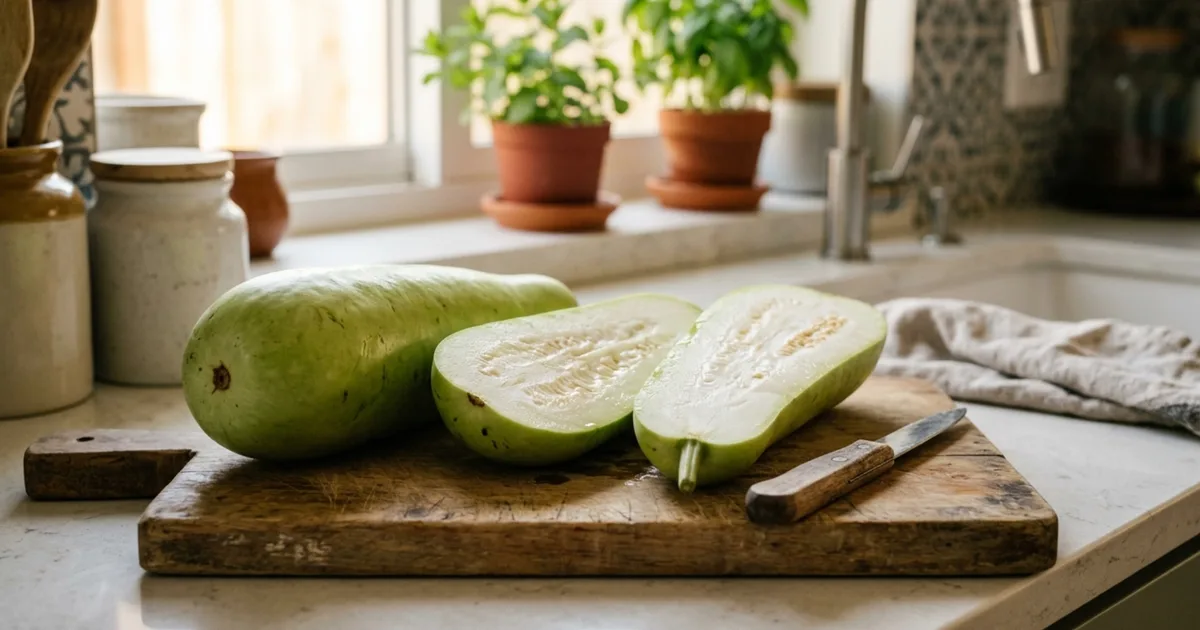
A 100g serving of raw bottle gourd has about 14 calories, 0.6g of protein, 3.4g of carbohydrates, and barely 0.1g of fat. It’s roughly 96% water by weight, with a modest 0.5g of fibre, about 10mg of vitamin C, and small amounts of potassium and calcium. There’s no dramatic nutrient here — no standout vitamin, no unusual antioxidant profile. What bottle gourd actually offers is volume and hydration for very few calories, which is a real thing, just a much simpler one than the health-drink reputation suggests.
The weight-loss claim, examined
The specific claim — that lauki juice burns fat, boosts metabolism, or melts belly fat if you drink it daily — doesn’t hold up against the evidence, because there isn’t evidence for it. No published research shows bottle gourd or its juice has any fat-burning or metabolism-boosting property. What’s true is something much more ordinary: at 14 calories per 100g and 96% water, lauki is extremely low in energy density, and low-energy-density foods genuinely help with weight management by filling you up on fewer calories. That’s a real, well-established mechanism — Mayo Clinic’s guidance on weight loss specifically points to high-water, high-volume foods as a way to feel full while eating fewer calories overall. But that mechanism applies to bottle gourd as a vegetable you eat, not specifically to drinking it as a juice on an empty stomach. Juicing actually strips out what little fibre it has, which is the part of the vegetable most directly tied to fullness in the first place.
Where the myth overreaches
The gap between “low-calorie, high-water vegetable that can support a weight-loss diet” and “morning juice ritual that burns fat” is the whole story here. The first part is genuinely true and unremarkable — most vegetables share this property to some degree. The second part isn’t supported by anything beyond tradition and repetition. If you’re drinking lauki juice specifically expecting it to accelerate fat loss beyond what its calorie content would predict, that expectation isn’t backed by research, and it’s worth adjusting rather than assuming the juice just hasn’t “worked yet.”
The safety issue that actually matters more
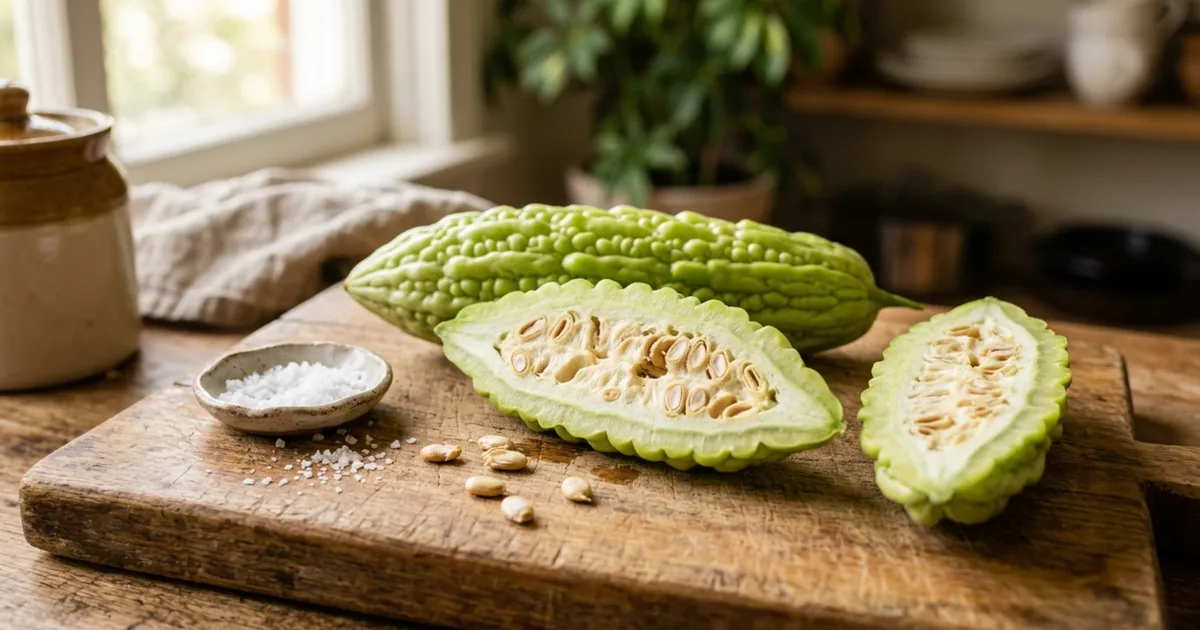
This is the part of the lauki story that deserves more attention than the weight-loss claim does. Bottle gourd belongs to the same plant family as bitter gourd and pumpkin, and under certain growing conditions it can develop high levels of compounds called cucurbitacins — the same bitter, toxic compounds found in ornamental gourds. Documented case reports describe people hospitalised after drinking bitter lauki juice, with symptoms including severe vomiting, abdominal pain, and gastrointestinal bleeding serious enough to need endoscopy and inpatient treatment. One published case series described patients developing these symptoms within 15 minutes to 6 hours of drinking bitter bottle gourd juice. This isn’t a rare, theoretical risk — it’s been documented repeatedly enough in medical literature that toxicologists specifically warn about it. The practical takeaway is simple: taste a small amount of raw lauki (or the juice) before drinking a full glass, and if it’s even slightly bitter, don’t drink it. A cooked dish made from the same bitter gourd carries the same risk, so the same rule applies there too. Sweetness is not a guarantee, but bitterness is a genuine warning sign your body is giving you.
How I actually cook with lauki at home
I almost never juice bottle gourd — I cook it, the way it’s used in most Indian kitchens. A simple lauki sabzi, cooked down with cumin, turmeric, and a little ginger until soft, is a regular weeknight side in my house. Lauki kofta, where the grated gourd is mixed with gram flour and lightly fried before going into a tomato-based gravy, turns the same low-calorie vegetable into something that actually feels like a proper meal rather than a health chore. It pairs well with the same garlic-and-onion base that starts most of my curries, and a good tomato gravy carries its mild flavour better than most other vegetables. Cooking it this way keeps the fibre intact, which the juiced version loses, and gives you something you’ll actually want to eat again rather than force down once for a health trend.
My tip: Buy lauki with the skin still slightly firm and pale green, and always cut a small piece from the stem end to taste raw before cooking the rest. If it’s bitter at all, the whole vegetable goes in the bin — cooking does not reliably destroy cucurbitacins, so heat is not a safety net here.
What lauki is genuinely good for
None of this means bottle gourd isn’t worth eating — it’s a genuinely useful vegetable for exactly what its nutrition profile suggests: a low-calorie, high-water, mild-tasting food that adds volume to a meal without adding much energy. If you’re working on sustainable weight management generally, vegetables like this one are a reasonable part of that picture, in the same unglamorous way the NHS’s “5 A Day” guidance points to vegetables broadly rather than any single miracle food. It’s also easy to digest, hydrating, and a common recommendation for people easing back into eating after a stomach upset. The honest version of lauki’s reputation is smaller than the folklore, but it’s still a real, useful vegetable — just not a magic one.
Frequently asked questions
Does lauki juice really help you lose weight?
Not in the way it’s usually claimed. Bottle gourd is genuinely low in calories and high in water, which supports weight management as part of an overall diet, but there’s no evidence it burns fat or boosts metabolism specifically as a juice.
Is bottle gourd juice actually dangerous?
It can be, if the gourd is bitter. Bitter bottle gourd contains cucurbitacins, and documented medical case reports describe people hospitalised with severe vomiting and gastrointestinal bleeding after drinking bitter lauki juice. Always taste a small piece raw before juicing or cooking a full batch.
How do I know if my bottle gourd is safe to eat?
Taste a small raw piece from the stem end before cooking or juicing the rest. If it tastes bitter at all, discard the entire vegetable — cooking does not reliably remove the toxic compounds responsible for the bitterness.
Is cooked lauki as healthy as the juice?
It’s arguably better. Cooked lauki keeps its fibre, which juicing removes, and carries a lower safety risk since you’re less likely to drink a large, concentrated dose quickly if something is wrong with the vegetable.
Can I eat bottle gourd every day?
In normal cooked portions, yes — there’s nothing in its nutrition profile that suggests a problem with regular consumption. The exception is always taste: never eat or drink bitter-tasting lauki, cooked or raw.
References
- Sheikh, S., et al. (2014). Bottle Gourd (Lagenaria siceraria) Toxicity: A “Bitter” Diagnostic Dilemma. Journal of Clinical and Diagnostic Research. pmc.ncbi.nlm.nih.gov
- Bitter bottle gourd poisoning: A case report and review of literature — pubmed.ncbi.nlm.nih.gov
- Mayo Clinic — Weight loss: Feel full on fewer calories. mayoclinic.org
- NHS — Why 5 A Day? nhs.uk
Found this helpful?