Tomatoes: Nutrition, and the Lycopene Cooking Effect
Key takeaways
- Tomatoes have about 18 calories per 100g, alongside a genuinely useful amount of vitamin C and potassium.
- Lycopene, tomato's best-known antioxidant, is absorbed 2.5 to nearly 4 times better from cooked tomatoes than raw ones.
- The fat matters as much as the cooking: a real study found cooking tomatoes in olive oil increased plasma lycopene by 82%, while cooking without oil barely increased it at all.
- This is exactly why a tomato-based tadka cooked in oil isn't just a flavour base in Indian cooking — it's genuinely close to the ideal way to get lycopene out of tomatoes.
- Lycopene is fat-soluble, meaning without any fat in the same meal, much of the lycopene released by cooking simply passes through unabsorbed.
Source: USDA FoodData Central
Tomato is the base of an enormous share of everyday Indian cooking — the tadka, the gravy, the simple onion-tomato masala underneath so many dishes — cooked in oil as a matter of routine rather than choice. Looking into the actual research, it turns out that routine happens to be close to nutritionally ideal.
What’s actually in a tomato
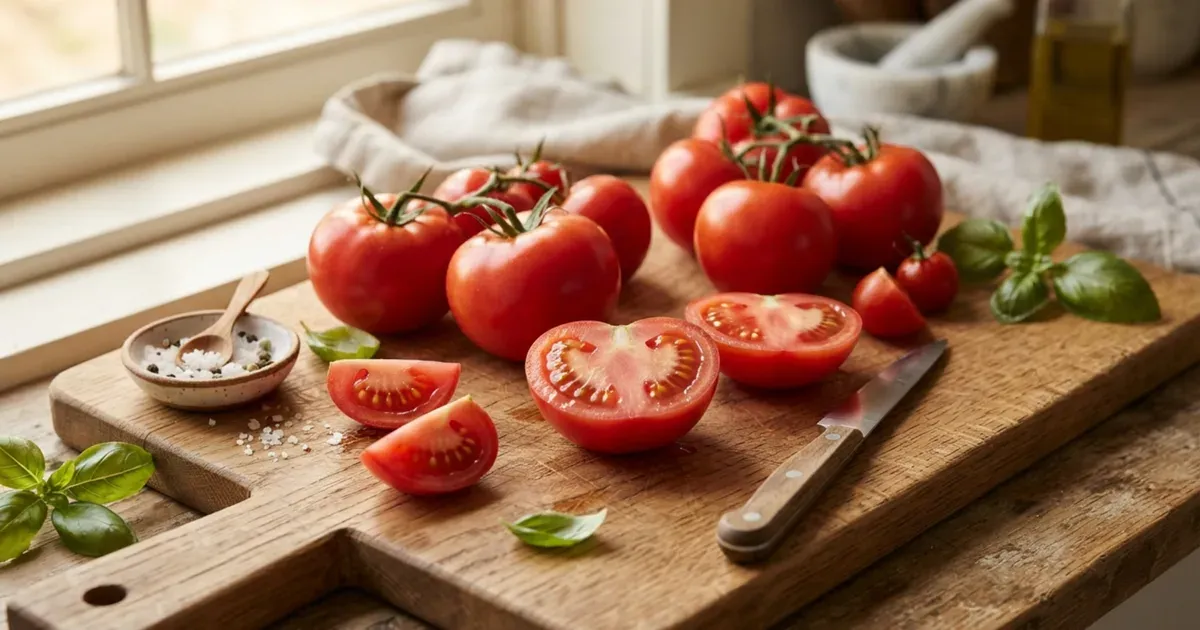
A 100g tomato has about 18 calories, 13mg of vitamin C, and 237mg of potassium — a genuinely useful, low-calorie nutritional package even before getting to lycopene, the compound tomatoes are best known for in research.
The cooking effect, with real numbers behind it
Lycopene absorption from cooked tomatoes is measurably better than from raw ones — research has found the bioavailability increase ranges from about 2.5 times at peak concentration to nearly 4 times in total absorption, compared to eating the same tomatoes raw. The mechanism is similar to what happens with carrots and beta-carotene: cooking breaks down the tomato’s cell structure, physically releasing lycopene that would otherwise stay locked inside cell walls your digestive system can’t easily access.
The detail that makes the biggest difference: fat
This is the part worth knowing precisely, because it changes how you’d actually cook tomatoes for this benefit. A controlled study measured plasma lycopene levels after people ate tomatoes cooked with olive oil versus tomatoes cooked without any oil at all. The results were striking: cooking with olive oil produced an 82% increase in one form of lycopene and a 40% increase in another, while cooking the same tomatoes without oil barely moved the needle — only about a 15% increase in one measure, and no significant change in the other. Lycopene is fat-soluble, so without fat present in the same meal, much of what cooking releases from the tomato’s cell structure simply passes through your digestive system unabsorbed rather than being taken up.
Why this validates a very old cooking habit
This is exactly why a tomato-onion base cooked properly in oil — the foundation of countless Indian curries and dals — isn’t just building flavour, it’s genuinely close to the ideal method for extracting and absorbing tomato’s lycopene. The traditional technique of cooking tomatoes down slowly in oil until the raw taste disappears long predates this specific research, but the research confirms it was doing something nutritionally meaningful the whole time, not just developing taste.
Other things worth knowing
Raw tomatoes aren’t wasted, just less optimal for lycopene specifically. A fresh tomato in a salad still delivers real vitamin C and potassium — it simply isn’t the best format for lycopene absorption specifically, the same nuance covered for carrots and beta-carotene.
Tomatoes during pregnancy. Tomatoes’ vitamin C content is genuinely useful during pregnancy, including for iron absorption from other foods in the same meal. Our guide to foods and drinks to limit or avoid during pregnancy covers general dietary guidance if you have other specific concerns.
The biggest misconception about tomatoes
Assuming a fresh tomato salad is automatically the more nutritious way to eat tomatoes, the same instinct that assumes raw vegetables always beat cooked ones, misses this specific and well-researched exception. For lycopene absorption in particular, a tomato cooked down properly in oil is the better-performing version, not a lesser, “processed” one.
How I actually cook with tomatoes at home
A tomato-onion base, cooked down properly in oil until it thickens and the raw tomato smell disappears, is the starting point for most of my everyday dal and vegetable dishes — the same technique used across Indian households for generations, which turns out to also be close to the ideal way to get real lycopene benefit from tomatoes.
My tip: Cooking tomatoes down slowly on a lower flame, rather than rushing on high heat, gives the oil more time to properly break down the tomato’s texture — worth the extra few minutes if lycopene absorption is specifically what you’re after, not just taste.
For how tomatoes compare to other vegetables on this list, see our guide to the vegetables worth eating most often.
Frequently asked questions
Are cooked tomatoes actually more nutritious than raw ones?
For lycopene specifically, yes — research shows 2.5 to nearly 4 times better absorption from cooked tomatoes compared to raw, the same kind of effect seen with carrots and beta-carotene.
Does cooking tomatoes in oil really make a measurable difference?
Yes, and a substantial one — a controlled study found tomatoes cooked with olive oil produced up to an 82% increase in plasma lycopene, while the same tomatoes cooked without oil showed barely any increase at all.
Why does fat matter so much for lycopene absorption?
Lycopene is fat-soluble. Without dietary fat present in the same meal, much of the lycopene that cooking releases from the tomato’s cell structure passes through your digestive system without being absorbed.
Is a fresh tomato salad still worth eating?
Yes — it still delivers real vitamin C and potassium. It simply isn’t the optimal format specifically for lycopene absorption, which is better from tomatoes cooked in oil.
Is a traditional tomato-onion cooking base actually good for nutrition, not just flavour?
Genuinely, yes — cooking tomatoes down properly in oil is close to the ideal method the research points to for lycopene absorption specifically, not just a flavour-building technique.
References
- USDA FoodData Central — Tomatoes, red, ripe, raw.
- Increases in plasma lycopene concentration after consumption of tomatoes cooked with olive oil. European Journal of Clinical Nutrition. researchgate.net
Found this helpful?