Carrots: Nutrition, and Why Cooked Actually Beats Raw
Key takeaways
- Carrots have about 41 calories per 100g and an exceptionally high beta-carotene content, which the body converts into vitamin A.
- A real human study found women absorbed roughly 3 times more beta-carotene from cooked carrots than from raw ones.
- The mechanism is genuine and well understood: cooking breaks down the plant cell walls holding beta-carotene, releasing it for your body to actually absorb.
- Chopping or pureeing carrots also improves absorption on its own, by mechanically breaking cell walls the same way cooking does — combining both effects works best.
- This runs directly against the common assumption that raw vegetables are always the more nutritious choice — for carrots specifically, it's genuinely the opposite.
Source: USDA FoodData Central
“Eat your vegetables raw for maximum nutrition” is common enough advice that it seemed worth checking whether it actually holds for every vegetable — and carrots turned out to be a clear, well-researched exception.
What’s actually in a carrot
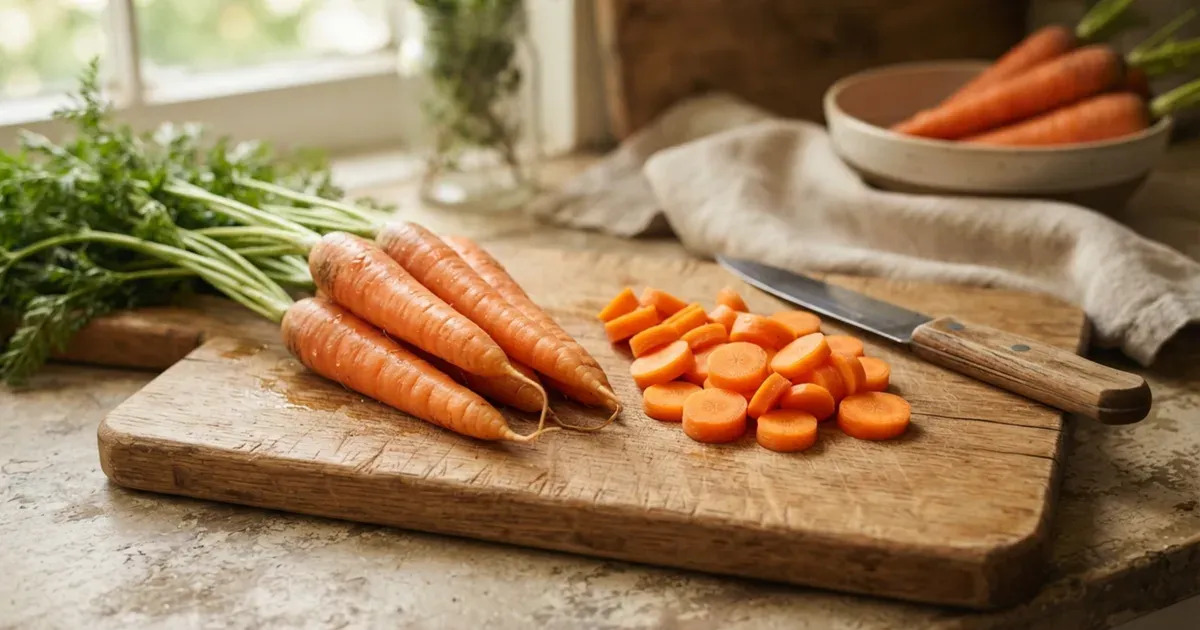
A 100g carrot has about 41 calories and a genuinely exceptional beta-carotene content — around 8,285mcg per 100g, which your body converts into vitamin A. Alongside that, carrots carry a reasonable 2.8g of fibre, making them a solid, low-calorie source of both.
The counter-intuitive research
This is worth stating directly, because it contradicts a common assumption: a real human study, published in The Journal of Nutrition, found that women absorbed roughly three times more beta-carotene from cooked carrots than from raw ones. A separate study measured this more precisely — around 65% of beta-carotene was absorbed from cooked, pureed carrot meals, compared to about 41% from raw, chopped carrots. Cooked carrots aren’t just easier to eat in larger amounts; they genuinely deliver more of their headline nutrient to your body.
Why this actually happens
The mechanism is well understood, not just an observed correlation: beta-carotene is held inside carrot cells by a fairly rigid cell wall structure. Cooking breaks that structure down, physically releasing the beta-carotene so your digestive system can actually access and absorb it. Mechanical breakdown — chopping finely or pureeing — does something similar on a smaller scale, which is part of why finely chopped raw carrot tends to be somewhat better absorbed than a whole raw carrot, even without any heat involved. Combining both — cooking and pureeing or mashing — produces the best absorption of all, since each addresses the same underlying cell-wall barrier from a different angle.
What this means practically
This doesn’t mean raw carrots are bad — they’re still a genuinely healthy, fibre-rich snack, and the beta-carotene you do absorb from them is real. But if getting the most vitamin A benefit from carrots specifically is your goal, cooked (and ideally at least roughly mashed or pureed) beats raw, which runs directly against the instinctive “raw must be more nutritious” assumption a lot of general vegetable advice leans on.
Other things worth knowing
Carrots and fat. Beta-carotene is fat-soluble, meaning it’s absorbed better alongside some dietary fat — cooking carrots in a little oil or ghee, as is common in many Indian preparations, genuinely helps for the same reason avocado boosts carotenoid absorption from a salad.
Carrots during pregnancy. Carrots’ vitamin A content is genuinely useful during pregnancy in food-form amounts, though very high-dose vitamin A supplements (not food) are a separate concern pregnant women are generally advised to avoid. Our guide to foods and drinks to limit or avoid during pregnancy covers the broader picture.
The biggest misconception about carrots
Treating “raw” as automatically the more nutritious way to eat any vegetable overlooks that different vegetables store their nutrients differently — carrots specifically hold beta-carotene behind a cell wall that cooking helps break down, while some other vegetables and nutrients genuinely do lose value with heat. The right advice depends on the specific vegetable and nutrient in question, not a blanket rule either way.
How I actually cook carrots at home
Carrots go into most of my everyday sabzi and dal preparations, cooked in oil with other vegetables rather than eaten raw as a primary way of having them — which, as it turns out, happens to be close to the ideal way to actually absorb their beta-carotene, even though that wasn’t the original reason for cooking them that way.
My tip: If you do want raw carrot for the crunch, grating it finely rather than eating it in large sticks improves absorption somewhat, by breaking down more of the cell structure mechanically before you even eat it.
For how carrots compare to other root vegetables, see our guide to the vegetables worth eating most often.
Frequently asked questions
Are cooked carrots actually more nutritious than raw ones?
For beta-carotene specifically, yes — a real study found roughly three times more absorption from cooked carrots compared to raw. This is a genuine, well-understood exception to the general “raw is more nutritious” assumption.
Why does cooking increase beta-carotene absorption?
Beta-carotene is held inside a rigid plant cell wall structure that cooking breaks down, physically releasing it so your digestive system can actually absorb it — not just a theoretical mechanism, but one that’s been directly measured.
Does chopping raw carrots finely help without cooking them?
Yes, to some degree — finely chopping or grating mechanically breaks down some of the same cell wall structure that cooking addresses with heat, though cooking has a larger overall effect.
Should I cook carrots in oil for the best nutrient absorption?
It genuinely helps — beta-carotene is fat-soluble, so a small amount of oil or ghee alongside cooked carrots improves how much your body actually absorbs.
Is it still worth eating raw carrots at all?
Yes — they’re still a genuinely healthy, fibre-rich food, and you still absorb real (just comparatively less) beta-carotene from them. Raw carrots aren’t a bad choice, cooked ones are simply the better one for this specific nutrient.
References
- USDA FoodData Central — Carrots, raw.
- Beta-carotene bioavailability from differently processed carrot meals in human ileostomy volunteers. European Journal of Nutrition. pubmed.ncbi.nlm.nih.gov
Found this helpful?