Avocado Nutrition: Benefits, and the Real Risk Nobody Mentions
Key takeaways
- Avocado is genuinely fatty for a fruit — about 160 calories and 15g of fat per 100g — but it's overwhelmingly monounsaturated, the same type found in olive oil.
- A real controlled study found adding avocado to a salad increased absorption of beta-carotene and lutein by 2.6 to 15 times compared to the same salad without it.
- Avocado also carries a genuinely notable amount of fibre (10g per 100g) and folate for a fruit.
- Cutting an avocado is a documented cause of real hand injuries — an estimated 50,000+ emergency room visits in the US between 1998-2017 alone, rising nearly 10-fold over that period.
- A safer cutting method (avoiding the 'hold it in your palm and stab toward your hand' technique most people use) removes almost all of this risk.
Source: USDA FoodData Central
Avocado wasn’t part of how I grew up eating — it showed up in my diet properly only once I moved to Finland, where it’s a fairly standard supermarket item. The fat content initially made me slightly wary, coming from a food culture where “fruit” and “high-fat” aren’t usually said in the same sentence — which is exactly what sent me looking into the actual research.
What’s actually in an avocado
Avocado genuinely is fatty for a fruit — about 160 calories and 15g of fat per 100g, a very different nutritional profile from something like an apple or orange. The fat, though, is overwhelmingly monounsaturated — the same broad category found in olive oil — rather than the saturated fat that’s more of a concern in excess. Alongside the fat, avocado carries a genuinely notable 10g of fibre per 100g and a solid amount of folate, making it a considerably more nutritionally rounded food than “high-fat fruit” alone suggests.
The vitamin-absorption effect that’s genuinely underrated
This is the fact worth knowing, because it changes how you might think about building a meal: a controlled study measured what happened when avocado was added to a salad or salsa alongside carotenoid-rich vegetables. The results were substantial — adding avocado to salsa increased lycopene and beta-carotene absorption by 2.6 to 4.4 times compared to the same salsa without it, and adding avocado to a salad increased alpha-carotene, beta-carotene, and lutein absorption by 5.1 to 15.3 times. The effect came specifically from the fat — avocado oil alone produced a similar boost to whole avocado, confirming it’s the fat content doing the work, not some other unique avocado compound. Practically, this means pairing avocado with a vegetable-heavy salad isn’t just a taste choice — it’s a genuine, measurable way to get more of the actual nutrients out of the vegetables you’re already eating.
The risk almost nobody warns you about
Cutting an avocado is a documented, tracked cause of real hand injuries — enough that hospital injury-surveillance data in the US recorded an estimated 50,000-plus emergency room visits for avocado-related knife injuries between 1998 and 2017, rising from around 650 a year to nearly 6,000 a year over that period, roughly a tenfold increase tracking rising avocado popularity. The pattern is specific: injuries cluster on the non-dominant hand, from the common technique of holding the avocado in one palm and stabbing a knife toward it to remove the pit — exactly the motion that goes wrong if the knife slips or the pit doesn’t come free cleanly.
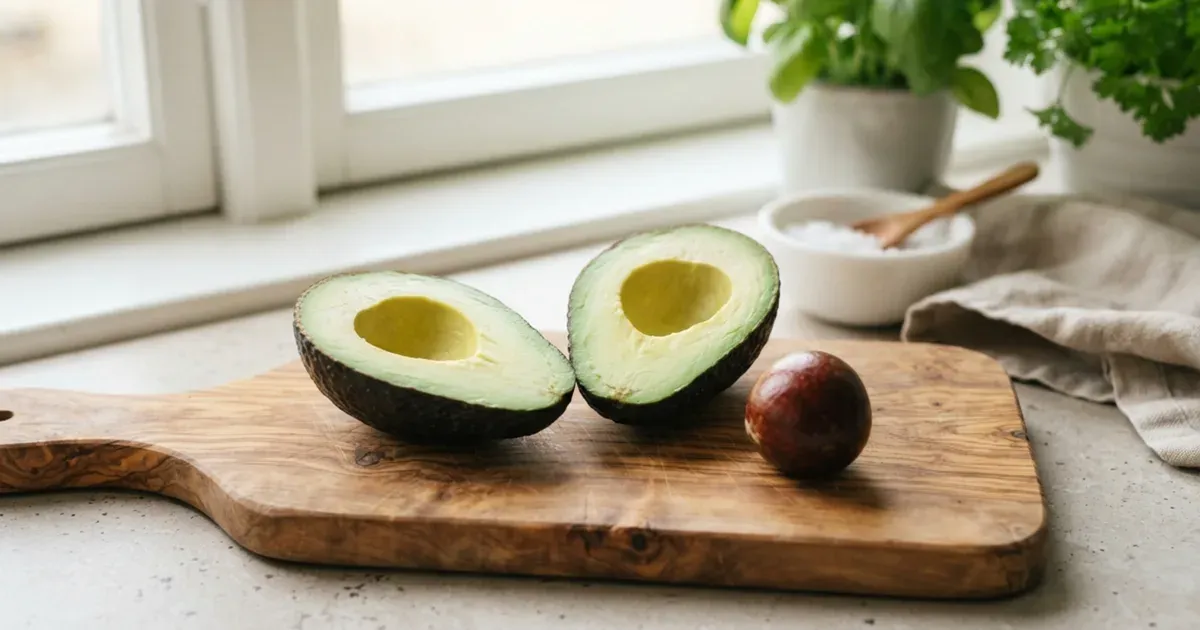
The fix is simple: cut the avocado on a cutting board rather than holding it in your hand, and remove the pit with a spoon rather than a knife strike wherever possible. It sounds almost too basic to need saying, but the injury data suggests a genuinely large number of people are still doing the riskier version out of habit.
Other things worth knowing
Latex-fruit cross-reactivity. Like banana and mango, avocado can trigger a mild reaction in people with a latex allergy, due to shared proteins — worth knowing if you have a diagnosed latex sensitivity.
Avocado during pregnancy. Avocado’s folate content is genuinely useful during pregnancy, and its fat can help absorb other fat-soluble nutrients from the same meal — the same mechanism behind the carotenoid-absorption research above. Our guide to foods and drinks to limit or avoid during pregnancy covers the broader picture on which fats and foods matter most.
The biggest misconception about avocado
Treating avocado as simply “a high-calorie food to limit” misses what the fat is actually doing — it’s not empty calories sitting alongside the fibre and folate, it’s actively helping your body absorb more of the beneficial plant compounds from whatever else is on the plate. That doesn’t mean unlimited portions are fine (calories still add up), but it’s a more useful way to think about avocado than treating it purely as a “diet food to be cautious with.”
How I actually use avocado at home
A simple mashed avocado with a squeeze of lime and a pinch of salt, on toast, is the easiest way I use it day to day — genuinely minimal effort. Added to a vegetable-heavy salad, it does real double duty: flavour and texture, plus the absorption boost covered above for whatever carotenoid-rich vegetables are in the same bowl.
My tip: To remove the pit safely, cut the avocado in half on a board first, then tap the pit gently with the heel of a chef’s knife and twist — no palm-holding or stabbing motion needed at any point.
Frequently asked questions
Is avocado’s fat content something to be concerned about?
Not particularly — it’s overwhelmingly monounsaturated fat, the same broad category found in olive oil, and it comes alongside genuine fibre and folate rather than being empty calories.
Does avocado actually help absorb nutrients from other foods?
Yes, measurably — a controlled study found adding avocado to a salad increased absorption of several carotenoids (including beta-carotene and lutein) by 2.6 to 15 times compared to the same meal without it.
Why do so many people injure themselves cutting an avocado?
The common technique of holding the avocado in one palm and striking toward it with a knife to remove the pit is the main cause — hospital data shows tens of thousands of documented injuries from exactly this motion. Cutting on a board and removing the pit with a spoon or a gentle twist avoids the risk almost entirely.
Can avocado trigger an allergic reaction?
It can cause a mild cross-reaction in people with a diagnosed latex allergy, similar to banana and mango, due to shared proteins.
Is avocado good to eat during pregnancy?
Yes — its folate content is genuinely useful, and its fat helps absorb other fat-soluble nutrients from the same meal.
References
- USDA FoodData Central — Avocados, raw, all commercial varieties.
- Unlu, N.Z., et al. Carotenoid Absorption from Salad and Salsa by Humans Is Enhanced by the Addition of Avocado or Avocado Oil. The Journal of Nutrition, 2005. pubmed.ncbi.nlm.nih.gov
- Sheu, J.J., et al. Avocado-related knife injuries: Describing an epidemic of hand injury. American Journal of Emergency Medicine, 2020. pubmed.ncbi.nlm.nih.gov
Found this helpful?