Bitter Gourd (Karela) and Blood Sugar: What the Research Really Shows
Key takeaways
- Bitter gourd is very low in calories (17 per 100g) and genuinely high in vitamin C and folate.
- Clinical research on bitter gourd and blood sugar is real, but a full meta-analysis found no significant effect on fasting glucose or HbA1c versus placebo.
- A few individual trials show modest short-term benefits, which is why the picture is 'promising but unproven,' not 'debunked.'
- Bitter gourd can add to the blood-sugar-lowering effect of diabetes medication, which is a genuine, documented safety concern, not a myth.
- It's a reasonable addition to a diabetes-friendly diet, but it is not a substitute for prescribed medication or monitoring.
Source: USDA FoodData Central
Karela was the vegetable I resisted longest as a child, and I know I’m not alone in that — bitterness is one of the few tastes we’re biologically wired to be suspicious of. What eventually won me over wasn’t the taste. It was learning, much later, why so many households in India keep cooking it anyway: there’s a genuine body of research behind the idea that bitter gourd affects blood sugar, and it’s worth taking seriously — with the right amount of nuance.
What’s actually in bitter gourd
Raw bitter gourd is remarkably low in calories — just 17 per 100g — with 1g of protein, 3.7g of carbohydrate, and 0.2g of fat. What stands out is the vitamin C content: 84mg per 100g, which is a genuinely high number for a vegetable, more than you’d get from an equivalent amount of orange. It also carries 2.8g of fibre and 72mcg of folate per 100g, a meaningful contribution toward daily folate needs. None of this alone explains the diabetes reputation — that comes from a different set of compounds entirely.
The blood sugar research, examined honestly
Bitter gourd contains several bioactive compounds — charantin, polypeptide-p, and vicine among them — that have shown blood-sugar-lowering activity in laboratory and animal studies. That part of the story is well established. Where it gets more complicated is translating that into a reliable effect in humans.
Individual clinical trials have shown some promise. A 12-week randomized, placebo-controlled study in adults with prediabetes found that bitter melon extract improved post-meal glucose handling on an oral glucose tolerance test compared to placebo, alongside some improvement in insulin resistance markers. That’s a genuine, well-designed trial with a real result.
But when researchers pooled the evidence together, the picture softened considerably. A 2024 systematic review and meta-analysis in Frontiers in Nutrition, covering nine randomized controlled trials and 414 patients, found no statistically significant difference between bitter melon and placebo for either fasting blood glucose or HbA1c. The authors were direct about it, concluding that “the meta-analysis of randomized, placebo-controlled trials does clearly not support the rationale of this practice” as a reliable glucose-lowering treatment — while also noting that most of the underlying trials were small and short, which limits how much weight any single conclusion can carry either way.
That’s the honest, unglamorous summary: there’s real biological plausibility and some genuinely positive individual trials, but the best available pooled evidence doesn’t show a dependable effect on the two numbers — fasting glucose and HbA1c — that actually matter for diagnosing and managing diabetes. This is a “promising, unproven, worth more research” situation, not a “cure” and not a “myth” either.
The medication interaction that’s actually real
This is the part that gets skipped in most karela write-ups, and it shouldn’t be. Because bitter gourd can lower blood glucose on its own, combining it — especially concentrated extracts, juice, or supplements — with diabetes medication such as insulin or sulfonylureas can have an additive effect and push blood sugar down further than intended. That’s not a theoretical caution; it’s a documented interaction, and it’s the reason anyone managing diabetes with medication should treat bitter gourd as something to discuss with their doctor, not something to add freely on top of a treatment plan. If you already eat karela regularly and take glucose-lowering medication, watch for symptoms of low blood sugar — shakiness, sweating, sudden fatigue, confusion — particularly if you increase your intake or switch to juice or extract form, which is far more concentrated than the vegetable on your plate.
How to actually cook it (and cut the bitterness)
The bitterness is the whole reason people avoid karela, so it’s worth being specific about what actually reduces it, because a few kitchen habits make a real difference.
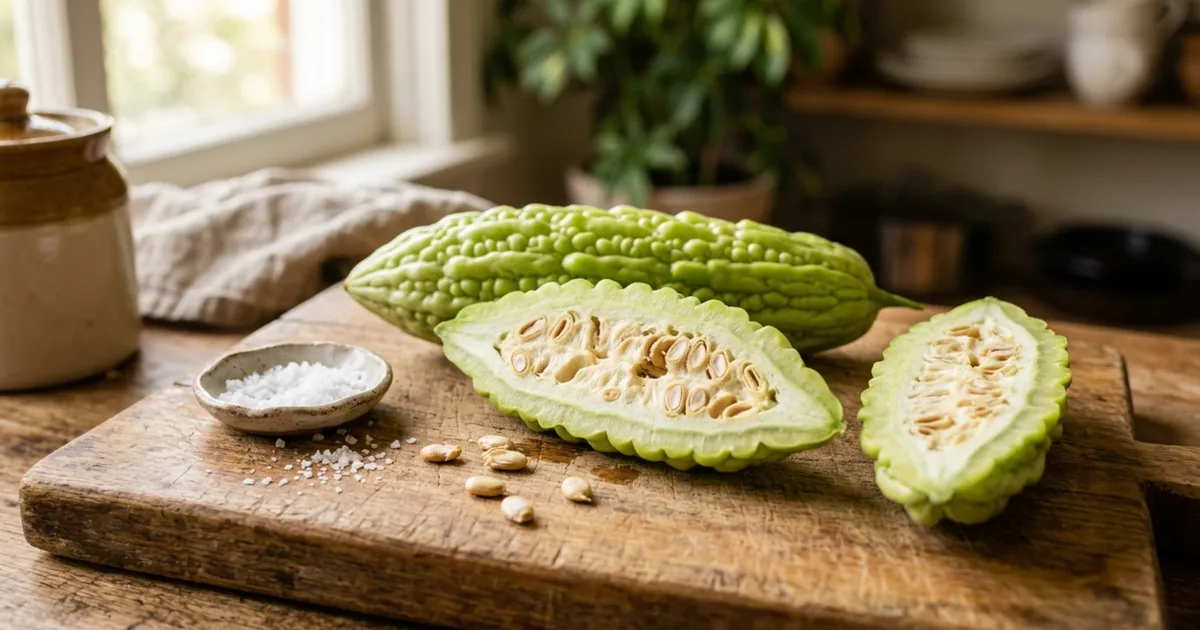
Salting is the most effective step. Slice the bitter gourd, remove the seeds and the white pith (a good amount of the bitterness lives there), rub it generously with salt, and let it sit for 20–30 minutes. Squeeze out the liquid that collects before cooking — a surprising amount of the bitterness leaves with that liquid. A brief soak in yoghurt or tamarind water before cooking does something similar.
Pairing it with something sweet or tangy balances what bitterness remains. In my kitchen, karela shows up most often stir-fried with onions and a pinch of jaggery, or stuffed with a spiced besan (gram flour) mixture and shallow-fried — the coating mellows the bitterness considerably. Deep-frying thin slices into crisp karela chips is the version most likely to win over a skeptic, mine included, though it’s worth remembering that frying adds calories a stir-fry doesn’t.
For where bitter gourd fits alongside other vegetables, see our guide to the vegetables worth eating most often.
Who should be cautious
Beyond the medication interaction already covered, a few groups should be more careful. Bitter gourd is not recommended in pregnancy in more than normal food amounts — some of its compounds have been linked to uterine contractions in animal studies, and the safety data in pregnant women is too thin to rely on. If you’re pregnant or trying to conceive, treat karela as an occasional food, not a therapeutic one, and mention it to your midwife or doctor if you’re eating it regularly. People with G6PD deficiency should also avoid bitter gourd, since certain compounds in it (vicine, in particular) have been associated with a rare toxic reaction in that condition. And if you’re on any glucose-lowering medication, the sensible move is simply to tell your doctor you eat it regularly, so it can be accounted for rather than treated as a hidden variable.
Frequently asked questions
Can bitter gourd replace my diabetes medication?
No. Bitter gourd is not a substitute for prescribed diabetes medication. The best pooled clinical evidence doesn’t show a reliable glucose-lowering effect strong enough to stand in for treatment, and stopping or reducing medication in favour of a vegetable is genuinely risky. If you want to try adding bitter gourd to your diet, do it alongside your existing treatment plan and tell your doctor, not instead of it.
Is karela juice more effective than eating the vegetable?
Juice delivers a far more concentrated dose of bitter gourd’s active compounds than eating the cooked vegetable, which is exactly why it carries a higher risk of an excessive blood-sugar drop if you’re on medication. It isn’t automatically “more effective” in a proven sense — the clinical evidence for juice specifically is no stronger than for the whole food — but it is more potent, which cuts both ways.
How much bitter gourd is safe to eat regularly?
There’s no clinically established safe upper limit for the vegetable eaten as food — a few servings a week as part of a varied diet is reasonable for most people. The caution is mainly around concentrated extracts or supplements, and around anyone on glucose-lowering medication, who should check in with their doctor before making it a daily habit.
Why does karela taste so bitter?
The bitterness comes primarily from cucurbitacins and related compounds concentrated in the skin, pith, and seeds. Removing the pith and seeds, salting the flesh before cooking, and pairing it with sweet or tangy flavours all measurably reduce how bitter the finished dish tastes.
Does cooking destroy the beneficial compounds in bitter gourd?
Some vitamin C is lost with any cooking, since it’s heat-sensitive. The compounds studied for blood sugar effects, like charantin, are more heat-stable, but most of the human research has actually used extracts or juice rather than cooked vegetable, so it’s honest to say we don’t know precisely how much of that specific effect survives a typical stir-fry.
Is bitter gourd safe every day?
As a cooked vegetable in normal food amounts, it’s safe for most adults to eat several times a week. Daily, large-quantity intake — especially juice or supplements — is where the caution around medication interactions and pregnancy becomes more relevant, so that’s worth a conversation with your doctor rather than a blanket yes or no.
References
- USDA FoodData Central — Balsam-pear (bitter gourd), pods, raw (FDC ID 168393). fdc.nal.usda.gov
- Kim SK, et al. (2023). Momordica charantia (bitter melon) efficacy and safety on glucose metabolism in Korean prediabetes participants: a 12-week, randomized clinical study. PMC. pmc.ncbi.nlm.nih.gov
- Laczkó-Zöld E, et al. (2024). The metabolic effect of Momordica charantia cannot be determined based on the available clinical evidence: a systematic review and meta-analysis of randomized clinical trials. Frontiers in Nutrition, 10:1200801. pmc.ncbi.nlm.nih.gov
- National Center for Complementary and Integrative Health (NCCIH) / NCBI Bookshelf — Non-Pharmaceutical Intervention Options for Type 2 Diabetes: Complementary and Integrative Health Approaches. ncbi.nlm.nih.gov
Found this helpful?