Garlic: Nutrition, and Why Crushing It Right Actually Matters
Key takeaways
- Garlic is genuinely nutrient-dense for how little of it you eat — around 1.2mg of vitamin B6 and 1.7mg of manganese per 100g, a large share of daily targets.
- Allicin, garlic's most-researched active compound, doesn't exist in an intact clove — it's only formed once garlic is crushed or chopped, through an enzyme reaction.
- Research suggests letting crushed garlic rest for roughly 5-10 minutes before cooking allows more allicin to actually form before heat destroys the enzyme responsible for making it.
- Cooking crushed garlic immediately, without any resting time, means much of that enzyme gets deactivated by heat before it finishes its job — genuinely reducing the allicin you end up with.
- Boiling garlic for just 60 seconds has been shown to reduce allicin yield by more than 90% if the garlic wasn't rested first.
Source: USDA FoodData Central
Garlic goes into the base of nearly every Indian dish, crushed or chopped without much thought about timing — straight into hot oil, generally as fast as possible. It turns out that exact habit, done slightly differently, changes garlic’s actual chemistry in a genuinely measurable way.
What’s actually in garlic
Garlic is remarkably nutrient-dense relative to how little of it you actually eat in a dish — around 1.2mg of vitamin B6 and 1.7mg of manganese per 100g, both substantial shares of daily targets, plus a real amount of vitamin C. Since garlic is used in small quantities rather than eaten in large servings, these percentages matter less in absolute terms than for a food you’d eat 100g of at once — but it’s still a genuinely nutrient-dense ingredient for its size.
Allicin doesn’t exist until you crush it
This is the fact worth knowing first: allicin, the compound garlic is most researched for, isn’t present in an intact garlic clove at all. It’s formed only once garlic is crushed or chopped, through a reaction between an enzyme called alliinase and a precursor compound called alliin, both of which are kept separate inside undamaged garlic cells. Crushing or chopping breaks that separation, letting the two react and produce allicin — meaning a whole, unbroken garlic clove simply doesn’t have the compound most of garlic’s health reputation is built around.
The timing rule, and the real research behind it
Once garlic is crushed, the allicin-forming reaction takes a little time to complete — and heat destroys the enzyme responsible for it. This creates a genuine, research-backed timing consideration: if you crush garlic and cook it immediately, you can cut that reaction short before it’s finished, since the heat deactivates the enzyme mid-process. Research has found allicin yield peaks somewhere in the 5 to 10 minute range after crushing, before cooking — with one study specifically finding that boiling garlic for just 60 seconds without any resting time first reduced allicin yield by more than 90%. The practical rule that’s emerged from this research: crush your garlic, let it sit for a few minutes on the counter, then cook it — rather than crushing and immediately dropping it straight into hot oil.
What this means practically
This doesn’t mean garlic added straight to hot oil is somehow harmful or pointless — you’re still getting real flavour and other nutrients regardless of timing. But if allicin specifically is the reason you’re eating extra garlic (which is genuinely where most of garlic’s researched health claims come from), a short rest after crushing, before it hits the heat, is a small, low-effort change that measurably changes the outcome.
Other things worth knowing
Garlic and blood-thinning medication. Garlic has a mild blood-thinning effect of its own, which is worth knowing if you’re on prescribed blood-thinning medication — worth a quick conversation with your doctor if you’re planning to eat unusually large amounts or take a concentrated garlic supplement, rather than normal cooking amounts.
Garlic during pregnancy. Normal cooking amounts of garlic are considered safe during pregnancy. Concentrated garlic supplements are a separate question, generally worth discussing with your doctor specifically given the blood-thinning consideration above. Our guide to foods and drinks to limit or avoid during pregnancy covers general dietary guidance.
The biggest misconception about garlic
Assuming that eating garlic in any form automatically delivers its full researched benefit overlooks that allicin — the specific compound behind a lot of that research — depends on how the garlic is actually prepared, not just whether garlic is present in the dish at all. Timing and preparation genuinely matter here, more than most people realise.
How I actually use garlic at home
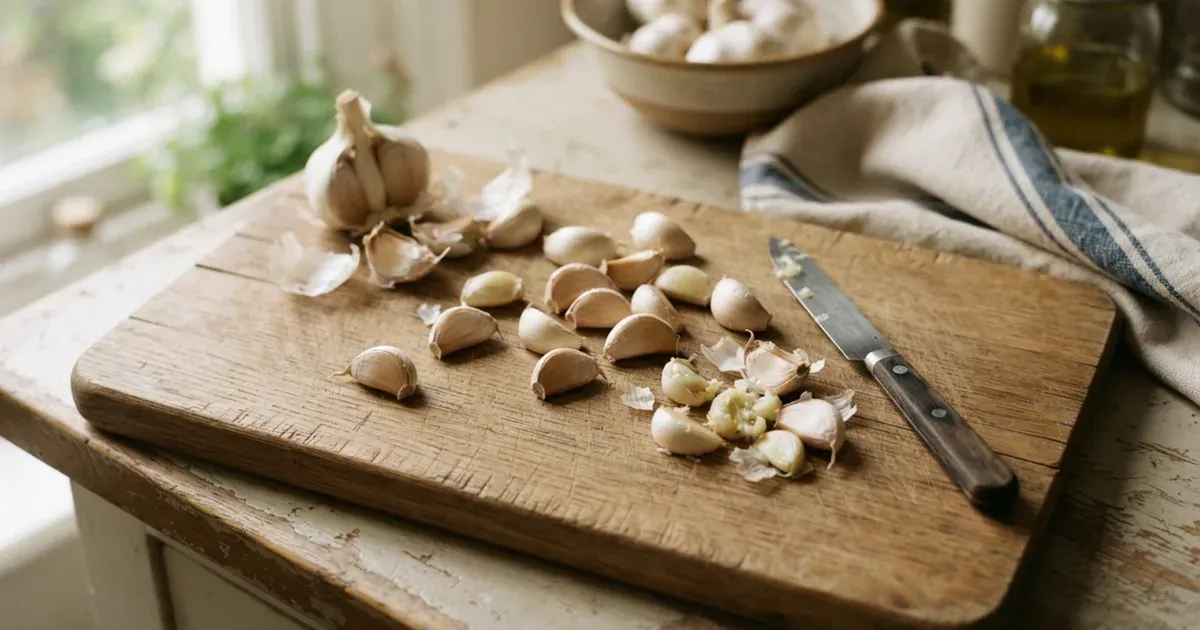
Garlic gets crushed with the flat of a knife or a mortar and pestle as one of the first steps of cooking, generally while I’m prepping onions or other vegetables — which naturally gives it a few minutes of resting time on the board before it actually goes into the pan, without me needing to time it deliberately.
My tip: If you’re chopping garlic finely rather than crushing it whole, cutting it slightly ahead — even just while you finish prepping the rest of a dish — achieves the same resting benefit without adding any real extra time to cooking.
For how garlic compares to onions and the rest of the allium family, see our guide to the vegetables worth eating most often.
Frequently asked questions
Does allicin exist in a whole, uncrushed garlic clove?
No — it only forms once garlic is crushed or chopped, through an enzyme reaction between alliinase and alliin, which are kept apart inside intact garlic cells.
Why does letting crushed garlic rest before cooking actually matter?
The allicin-forming reaction takes a few minutes to complete, and heat destroys the enzyme responsible for it. Cooking crushed garlic immediately can cut that reaction short, genuinely reducing how much allicin actually forms.
How long should I let crushed garlic rest before cooking it?
Research points to roughly 5 to 10 minutes as the range where allicin yield peaks before cooking — a small, practical window that fits naturally into most cooking prep time.
Does boiling garlic destroy its benefits entirely?
Boiling without any resting time first has been shown to reduce allicin yield by more than 90% in as little as 60 seconds — a substantial reduction, though garlic still retains other nutrients and flavour regardless.
Is garlic safe to eat in normal amounts during pregnancy?
Yes — normal cooking amounts are considered safe. Concentrated garlic supplements are a separate consideration worth discussing with your doctor, given garlic’s mild natural blood-thinning effect.
References
- USDA FoodData Central — Garlic, raw.
- Song, K., Milner, J.A. The influence of heating on the anticancer properties of garlic. The Journal of Nutrition, 2001.
Found this helpful?