An Evening Wind-Down Routine That Actually Helps You Sleep
Key takeaways
- A real sleep-lab study found people who wrote a to-do list for the next few days before bed fell asleep in about 15 minutes, versus about 25 minutes for people who wrote a list of tasks already completed.
- The more specific and detailed the to-do list, the faster participants fell asleep — a genuinely counter-intuitive finding, since writing about unfinished tasks might be expected to increase worry, not reduce it.
- Blue light from screens measurably suppresses melatonin, the hormone that signals your body it's time to sleep — and the effect lasts longer than with other light wavelengths.
- This isn't about eliminating screens entirely — dimming brightness, using night-mode settings, and stopping screen use a while before bed all genuinely help.
- A consistent wind-down routine, even a short one, gives your body a repeated, reliable cue that sleep is coming — the same principle behind why bedtime routines work for toddlers, not just adults.
An evening wind-down routine sounds like an obvious idea until you actually try to build one that survives a genuinely busy, tired evening — the version that sticks turned out to rely on a couple of specific, well-researched habits rather than a long, elaborate ritual.
The counter-intuitive to-do list finding
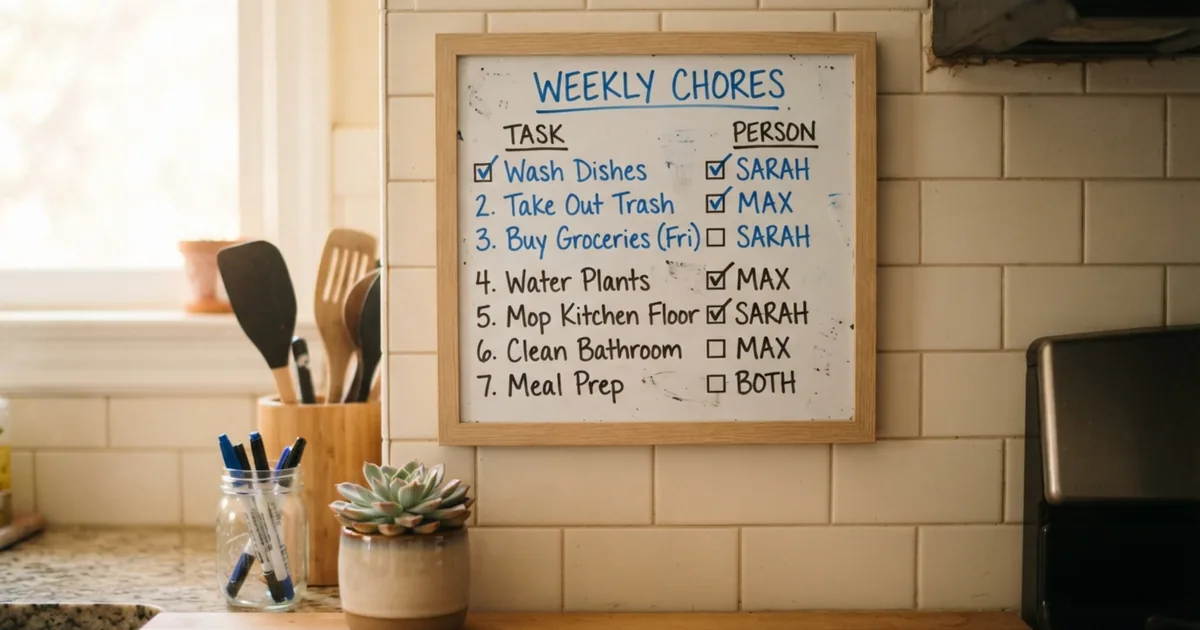
This is a genuinely surprising, well-designed study result worth knowing: researchers had people spend five minutes before bed either writing down what they needed to do over the next few days, or writing down tasks they’d already completed. Using overnight sleep monitoring (not just self-reported sleep quality), the to-do list group fell asleep noticeably faster — around 15 minutes on average, compared to about 25 minutes for the completed-tasks group. Even more counter-intuitively, the more specific and detailed the to-do list, the faster people fell asleep. The likely explanation is that writing down unfinished tasks “offloads” them from active mental attention, rather than the more obvious assumption that thinking about undone work would increase worry and delay sleep.
Why screens actually matter, specifically
Blue light from phone and laptop screens genuinely suppresses melatonin, the hormone your body produces in the evening to help you feel sleepy — this is a real, measured physiological effect, not just general advice about screens being “bad.” Research comparing different light wavelengths has found blue light suppresses melatonin for longer than other colors of light, and this suppression genuinely delays how quickly you feel ready to sleep.
This doesn’t require eliminating screens entirely, which isn’t realistic for most people’s evenings anyway. Dimming screen brightness, using a night-mode or warm-light setting, and stopping screen use some time before your actual bedtime all genuinely reduce the effect, even if you don’t cut screens out completely.
What this actually looks like as a routine
Combining both findings gives a genuinely practical, short routine: spend a few minutes writing a specific to-do list for the next day or two, then transition to lower screen brightness or screen-free time before actually getting into bed. Neither piece requires a long, elaborate ritual — the to-do list alone takes about five minutes, and the screen adjustment is a setting change plus a bit of discipline about timing.
Why consistency matters as much as the specific habits
A repeated, reliable wind-down routine — even a short one — gives your body a consistent cue that sleep is coming, the same underlying principle behind why a consistent bedtime routine works for toddlers, not just something unique to children. Doing roughly the same few things in roughly the same order each night, rather than a different routine every evening, helps your body learn to associate those specific cues with approaching sleep.
What this pairs well with
This evening routine is a natural counterpart to a deliberate morning routine — together they bookend the day with two short, well-researched habits rather than one elaborate routine at either end. Building either habit in the first place relies on the same real habit-formation research already covered for exercise — it takes real time and consistency, not a fixed number of days.
Frequently asked questions
Does writing a to-do list before bed actually help you fall asleep faster?
Yes, according to a real sleep-lab study — people who wrote a specific to-do list for upcoming days fell asleep faster than those who wrote about tasks already completed, and more detailed lists were associated with falling asleep even faster.
Why would writing about unfinished tasks help rather than cause more worry?
The likely explanation is that writing them down “offloads” them from active mental attention, reducing the low-level mental rehearsal of undone tasks that can otherwise keep your mind occupied at bedtime.
Does screen use before bed actually affect sleep, or is that overstated?
It’s genuinely real — blue light from screens measurably suppresses melatonin, the hormone that signals your body it’s time to sleep, and this effect has been directly measured in research, not just inferred from general sleep advice.
Do I need to give up screens entirely in the evening?
No — dimming brightness, using night-mode or warm-light settings, and stopping screen use some time before bed all meaningfully reduce the effect, even without eliminating screens completely.
Why does consistency in an evening routine matter?
A repeated set of cues, done in roughly the same order each night, helps your body learn to associate those specific habits with approaching sleep — the same principle that makes consistent bedtime routines effective for toddlers, not just adults.
References
- Scullin, M.K., et al. The effects of bedtime writing on difficulty falling asleep: A polysomnographic study comparing to-do lists and completed activity lists. Journal of Experimental Psychology: General, 2018. news.web.baylor.edu
- Comparative Effects of Red and Blue LED Light on Melatonin Levels During Three-Hour Exposure in Healthy Adults. pmc.ncbi.nlm.nih.gov
Found this helpful?