Building an Apple-a-Day Habit: What It Actually Does (and Doesn't Do)
Key takeaways
- Apples don't actually remove dental plaque the way people claim — the real oral-health benefit is the saliva they stimulate, not a scrubbing effect.
- Vigorous chewing on a crisp apple can boost saliva flow roughly ten times above resting levels, which helps neutralise mouth acid.
- A whole apple as a snack tends to keep you fuller for longer than the same calories from juice or a processed snack, thanks to fibre and chewing time.
- Crisp varieties (Granny Smith, Honeycrisp, Braeburn) work best for daily snacking; softer ones are better suited to cooking.
- For the full nutrition-science picture — vitamins, research on heart and metabolic health, and real risks — see our dedicated apple nutrition guide.
I’ve watched my daughter go through an apple almost mechanically some afternoons — not because she’s especially hungry, just because it’s there and it’s easy. It made me curious about what actually happens when eating an apple becomes a genuine daily habit, beyond the vague “an apple a day” saying everyone repeats without really unpacking it.
Where the saying actually comes from
“An apple a day keeps the doctor away” didn’t start as a nutrition claim at all — it traces back to a 19th-century Welsh proverb, first recorded roughly as “eat an apple on going to bed, and you’ll keep the doctor from earning his bread.” It was folk wisdom long before anyone had measured apple fibre or vitamin C, which is worth knowing because it reframes the whole habit: it was never really about one specific nutrient doing one specific job. It was a simple, repeatable daily habit that happened to be a genuinely healthy one, dressed up in a memorable rhyme.
The dental myth worth correcting
This is the one I want to get out of the way first, because it’s the most repeated apple claim and the least accurate as usually stated. Apples do not actually scrub away dental plaque the way people assume — a study measuring plaque removal after apple-chewing found it doesn’t meaningfully clear plaque, and plaque can even start regrowing within 24 hours regardless.
What the same research did find is more interesting, if less dramatic: chewing a crisp apple stimulates a genuinely large amount of saliva — up to ten times the resting flow rate — and that burst of saliva measurably reduces bacterial viability in your mouth for a short window afterward, in a way comparable to brushing. Saliva also carries calcium and phosphate that help remineralise enamel and neutralise the acids that cause decay. So the “keeps the dentist away” reputation isn’t nonsense — it’s just working through saliva stimulation, not scrubbing, and it’s absolutely not a substitute for actually brushing your teeth.
What a daily apple actually does for snacking
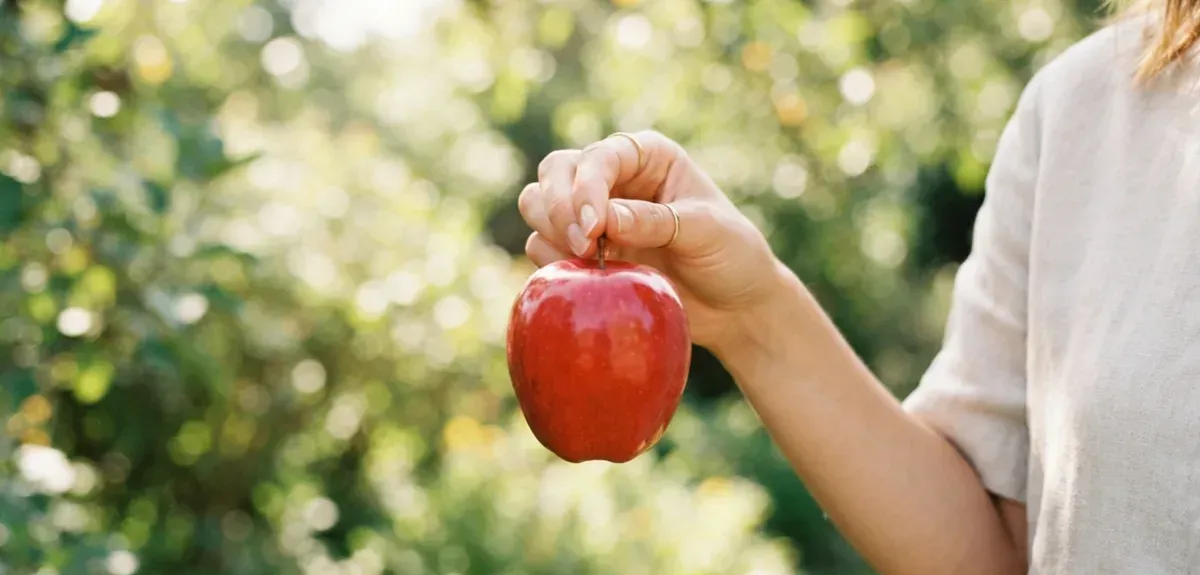
The bigger, more practical benefit of a daily apple habit is what it replaces. A whole apple takes real chewing time and delivers fibre that slows digestion, which tends to keep you satisfied longer than the same calories from apple juice or a processed snack — neither of which asks your jaw or your gut to do any work. If you’re trying to build a better snacking pattern rather than chase a specific nutrient, “keep a bowl of apples somewhere visible” is a genuinely effective, low-effort habit — the visibility matters as much as the fruit itself.
Choosing the right apple for a daily habit
Not every apple works equally well for this. Crisp, firm varieties — Granny Smith, Honeycrisp, Braeburn — hold up better for daily raw eating and deliver more of that chewing-and-saliva effect than a softer variety like Red Delicious, which bruises and softens faster and is genuinely better suited to baking or sauce. If you’re building a habit around eating one daily, buying a firmer variety in a quantity you’ll actually get through in a week or two (rather than a large bag that softens before you reach it) makes the habit easier to sustain.
Storage matters more than people expect here too. Apples kept at room temperature ripen and soften roughly four times faster than refrigerated ones, since cold slows the ethylene gas that drives ripening. If a daily-apple habit keeps failing because the fruit turns mealy before you get to it, the fix is often as simple as moving the fruit bowl to the fridge rather than the counter, especially in a warm kitchen.
For the fuller nutrition picture
This piece is deliberately about the daily-habit side of things — what a regular apple actually does for your mouth and your snacking pattern. For the full nutrition breakdown — vitamin and fibre content, the research on heart and metabolic health, and the real risks worth knowing (including one involving apple juice and medication) — our dedicated guide to apple nutrition covers all of that in depth rather than repeating it here.
Priyanka’s tip: Keep a couple of firm apples cut into wedges in a small container in the fridge, not whole in the fruit bowl — pre-cut, ready-to-eat fruit gets reached for far more often than a whole apple that needs a knife first.
Frequently asked questions
Does an apple a day really keep the dentist away?
Not through plaque removal, which doesn’t actually happen the way the saying implies. The real benefit is the large amount of saliva a crisp apple stimulates, which helps neutralise acid and support enamel — a real, if more modest, effect.
Is a whole apple better than apple juice for a daily habit?
Yes, generally. The fibre and chewing time in a whole apple support fullness and slower digestion in a way juice, which strips out the fibre, doesn’t.
Which apple variety is best for daily snacking?
Firmer, crisper varieties like Granny Smith, Honeycrisp, or Braeburn hold up well for daily raw eating. Softer varieties are better suited to cooking or baking rather than a daily snack.
Should I eat an apple instead of brushing my teeth?
No — an apple is a helpful addition to oral hygiene through saliva stimulation, but it doesn’t replace brushing and flossing.
What’s the actual nutrition benefit of eating an apple daily?
For the full breakdown of vitamins, fibre, and the research behind apple’s effects on heart and metabolic health, see our apple nutrition guide.
References
- Miquel S, et al. Effect of chewing an apple on dental plaque removal and on salivary bacterial viability. PLOS ONE, 2018. ncbi.nlm.nih.gov
Found this helpful?