Blueberries: The Real Brain and Heart Research, Fresh vs Frozen
Key takeaways
- A cup of blueberries is about 85 calories but carries a genuinely high concentration of anthocyanins, the antioxidant behind most of their research.
- Multiple systematic reviews link blueberry anthocyanins to measurable improvements in memory and cognitive performance.
- Frozen blueberries can retain more antioxidants than 'fresh' ones by the time you actually eat them, since fresh berries degrade during ordinary home storage.
- Blueberries carry a moderate amount of vitamin K, which matters if you're on blood-thinning medication and need consistent (not zero) intake.
- A cup a day is a reasonable, well-supported amount for most healthy adults.
Source: USDA FoodData Central
Blueberries were never part of my childhood the way mango or guava were — they showed up in Finland as a genuinely local fruit, foraged from the forest in late summer rather than imported. Watching how differently they’re treated here, frozen in bulk every autumn rather than eaten only fresh and seasonal, got me curious about whether frozen actually loses something real compared to fresh, or whether that’s just an assumption.
What’s actually in blueberries
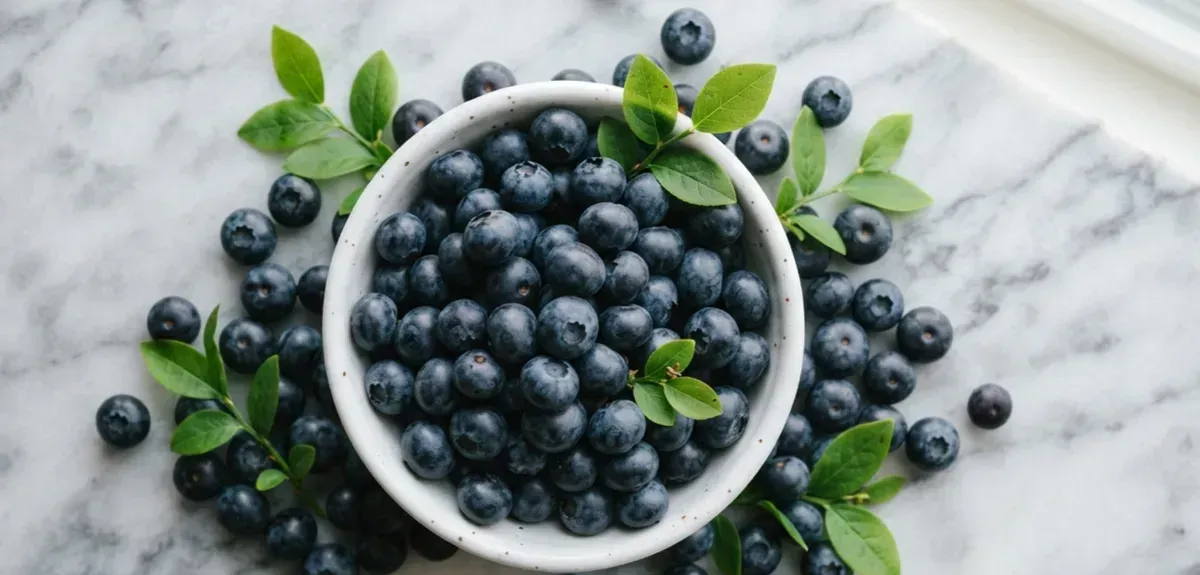
A cup of blueberries (about 148g) works out to roughly 85 calories, 21g of carbohydrate, and 3.6g of fibre — modest on paper, but the standout is the concentration of anthocyanins, the deep-blue-purple pigment compounds that most of blueberry research actually centres on. Blueberries also carry a meaningful, if moderate, amount of vitamin K.
The research that actually holds up: memory
This is genuinely one of the more interesting areas of berry research. Multiple systematic reviews of randomised, placebo-controlled trials have found real associations between berry anthocyanin intake and improved memory, attention, and cognitive performance — both in population studies and in controlled trials, including in people with self-reported or clinical cognitive decline. It’s not a cure or a guarantee, and researchers are still working out exactly why anthocyanins seem to matter for the brain specifically (one leading theory involves improved blood flow and reduced inflammation), but this is one of the few “brain food” claims with real, repeated trial evidence behind it rather than just correlation.
Fresh vs frozen: the honest answer
Here’s the part that actually surprised me. “Fresh is always better” turns out to be true only if you eat the berries almost immediately. Research tracking anthocyanin content over storage time found that frozen blueberries held onto their antioxidant content with little change even after months in the freezer, while fresh blueberries lost a real portion of theirs within just two weeks of ordinary refrigerated storage. Frozen berries are also typically harvested at peak ripeness and frozen within hours, while “fresh” berries in a shop have often already spent days in transit and storage before you buy them.
None of this means fresh blueberries are bad — eaten within a day or two of buying them, fresh is genuinely excellent. But if your fresh berries tend to sit in the fridge for a week before you get to them, a bag of frozen ones bought at the same time may well deliver more of the actual nutrition by the time you eat either.
Blueberries during pregnancy
Blueberries were an easy, low-effort way to get antioxidants and fibre in without adding much sugar, especially useful once I was watching carbohydrate intake more closely after my gestational diabetes diagnosis — see our guide to foods and drinks to limit or avoid during pregnancy for the fuller picture on sugar management.
Risks worth knowing
Vitamin K and blood thinners. Blueberries carry a moderate amount of vitamin K, which matters if you’re on warfarin or a similar blood-thinning medication. As with leafy greens, the goal is consistent intake rather than avoidance — sudden large increases or drops in vitamin K-rich foods are what actually interfere with these medications.
Pesticide residue. Blueberries are commonly grown with pesticide use and, like other soft-skinned berries, can retain more residue than thicker-skinned produce. Washing thoroughly helps; buying organic reduces it further if that matters to you.
How I actually use blueberries at home
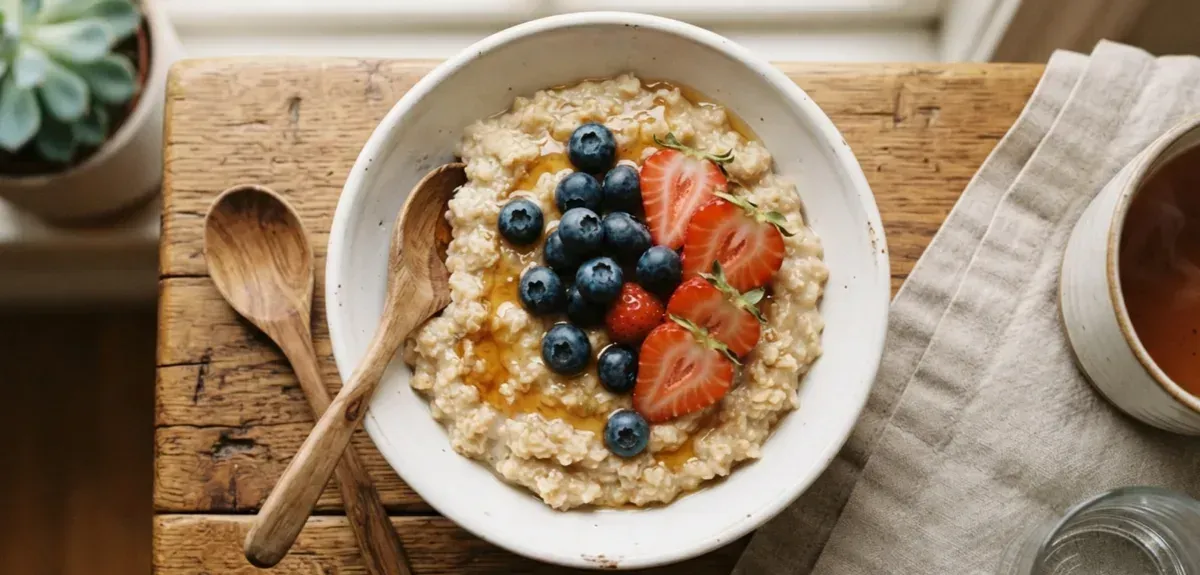
Frozen is genuinely my default now, not a compromise — a handful straight into porridge or a smoothie needs no prep, keeps for months, and based on the research above, isn’t giving up much if anything nutritionally. Fresh ones, when they’re properly in season, go straight into a bowl and get eaten within a day or two, before that storage-related decline has a chance to matter.
Priyanka’s tip: If you’re baking with frozen blueberries, toss them in a spoonful of flour before folding them into batter — it stops them from sinking to the bottom and bleeding as much colour into the rest of the mixture.
Frequently asked questions
Do blueberries actually improve memory?
There’s real evidence for this from systematic reviews of randomised controlled trials, showing improvements in memory and cognitive performance linked to berry anthocyanin intake. It’s a genuinely well-supported claim, not just marketing.
Are frozen blueberries less nutritious than fresh?
Not necessarily — research shows frozen blueberries retain their antioxidant content well over months in the freezer, while fresh berries can lose a meaningful share of theirs within about two weeks of home storage. If your fresh berries sit around for a while before being eaten, frozen may actually deliver more nutrition.
Can I eat blueberries if I’m on blood thinners?
Yes, generally — but keep your intake consistent rather than wildly varying it, since blueberries carry a moderate amount of vitamin K, which interacts with medications like warfarin.
How many blueberries should I eat a day?
About a cup a day is a reasonable, well-supported amount for most healthy adults.
References
- USDA FoodData Central — Blueberries, raw.
- Kent K, et al. Effects of Berry Anthocyanins on Cognitive Performance, Vascular Function and Cardiometabolic Risk Markers: A Systematic Review of Randomized Placebo-Controlled Intervention Studies in Humans. International Journal of Molecular Sciences, 2021. ncbi.nlm.nih.gov
- Lohachoompol V, Srzednicki G, Craske J. The Change of Total Anthocyanins in Blueberries and Their Antioxidant Effect After Drying and Freezing. Journal of Biomedicine and Biotechnology, 2004. ncbi.nlm.nih.gov
Found this helpful?