How to Swaddle Your Newborn Safely
Key takeaways
- Swaddling can help settle a newborn by recreating the snugness of the womb, but it must leave room at the hips for natural movement.
- A swaddle wrapped tightly around the hips is linked to hip dysplasia — legs need to bend up and out, not be forced straight.
- Never add a blanket over a swaddled baby, and check the back of their neck regularly to avoid overheating.
- Stop swaddling as soon as your baby shows any sign of rolling, usually around 2-3 months — a swaddled baby who rolls onto their front is a real suffocation risk.
- Always place a swaddled baby on their back to sleep, on a firm, flat surface with nothing else in the cot.
Swaddling is one of the oldest newborn soothing techniques there is, and for good reason — wrapped snugly, many babies settle faster and sleep longer, especially in the first weeks when their own startle reflex (the sudden arm-flailing “Moro reflex”) keeps waking them up. But swaddling done carelessly carries two real risks, hip problems and overheating, so it’s worth knowing exactly how to do it properly rather than just wrapping a blanket around your baby and hoping for the best.
Why swaddling works
A newborn’s startle reflex is strong and involuntary — their own arms can jerk them awake from a light sleep, over and over, in a way that has nothing to do with hunger or discomfort. Swaddling contains that reflex, and the snugness itself mimics the tight, contained space of the womb, which many babies find calming. It’s one of the five techniques in the well-known “5 S’s” method for settling a crying baby, and a 2019 study in PLOS ONE found that swaddling combined with shushing and gentle movement measurably lowered infants’ heart rate and fussiness compared to no intervention at all. It’s worth pairing with realistic expectations for your own sleep in these early weeks — a well-swaddled baby still wakes for frequent feeds, just more calmly.
The hip safety rule
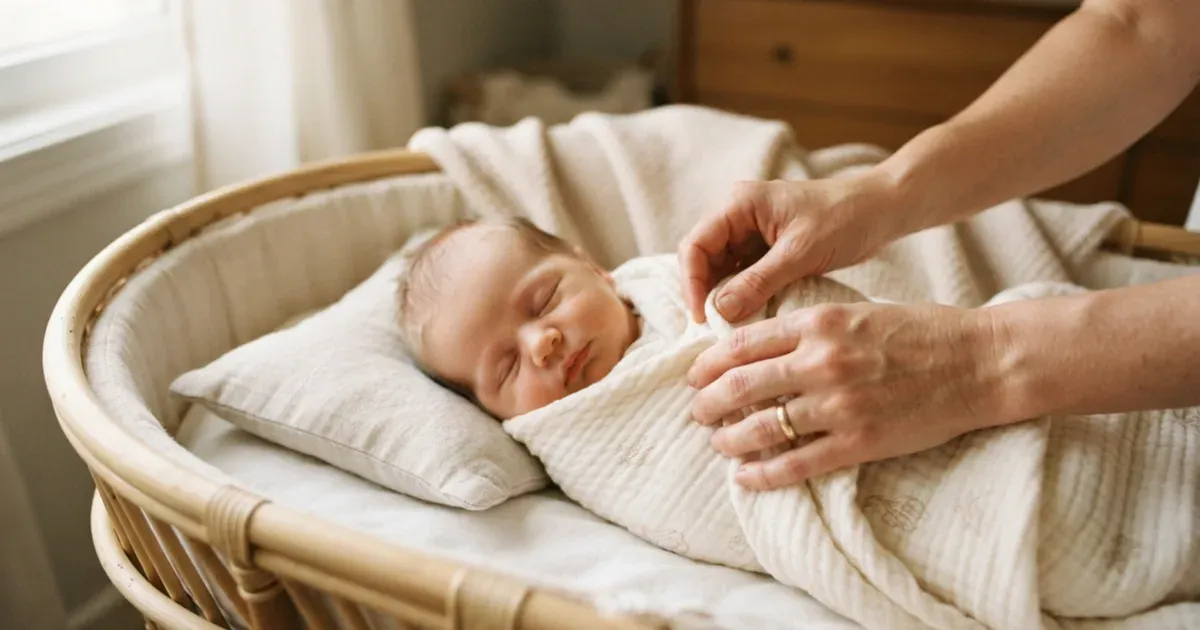
This is the detail most worth getting right: a swaddle wrapped tightly around the hips and legs is strongly linked to developmental dysplasia of the hip, because it forces a newborn’s naturally bent, frog-like leg position into a straight one. Your baby’s legs need room to bend up and out at the hip inside the swaddle — snug around the arms and chest is fine and even helpful, but the fabric around the hips and legs should be loose enough that their legs can move freely into a natural position. Many modern swaddle products are designed with a wider pouch at the bottom specifically for this reason.
Preventing overheating
Use a single thin layer — muslin or lightweight cotton — and nothing more. Never place a blanket or extra bedding over a swaddled baby; loose fabric on top of a swaddle is exactly the kind of soft bedding that increases suffocation risk. Check regularly by feeling the back of your baby’s neck or their tummy — if it feels hot or sweaty, they’re overdressed for the room, and you should remove a layer.
Doing it securely
The swaddle needs to be snug enough that it doesn’t loosen and come apart during the night — a half-undone swaddle creates loose fabric near your baby’s face, which is its own hazard. If you’re using a traditional muslin square rather than a pre-shaped swaddle product, practising the fold a few times before your baby’s first night with it is worth the effort; it’s much easier to get right slowly and calmly than at 2am with a crying newborn.
Always on the back
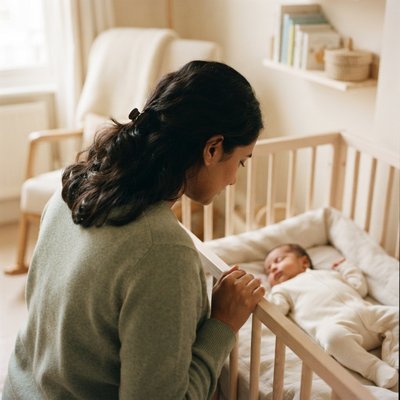
However you swaddle, always place your baby on their back to sleep, on a firm, flat mattress, with nothing else — no pillows, no loose blankets, no soft toys — in the cot with them. Room-sharing for at least the first six months remains the other key piece of safe sleep advice alongside this. A good swaddle can also make bathtime transitions calmer, since a freshly bathed, freshly swaddled baby often settles faster than one left unwrapped.
When to stop swaddling
Stop swaddling as soon as your baby shows any sign of trying to roll over, which typically happens somewhere around two to three months, though it varies by baby. A baby who can roll but is still swaddled is at real risk of ending up on their front with their arms pinned and unable to lift their head or reposition themselves — this is one of the clearest “stop now” signals in newborn care, not a gradual transition to plan around.
Frequently asked questions
Is it safe to swaddle a newborn every night?
Yes, for young babies who haven’t started attempting to roll, provided the hips have room to move, only a single light layer is used, and your baby is always placed on their back with nothing else in the cot.
Why does swaddling matter for hip health specifically?
A tightly wrapped swaddle forces a newborn’s legs into a straight position, which goes against their natural, healthy bent-and-splayed hip posture — repeated or prolonged tight wrapping is linked to hip dysplasia. Leaving room for the legs to bend up and out avoids this.
How do I know if my baby is too hot inside a swaddle?
Feel the back of their neck or their chest — if it feels hot or sweaty to the touch, remove a layer. Never add a blanket over the swaddle as an extra layer, regardless of room temperature.
When exactly should I stop swaddling?
As soon as your baby shows the first signs of rolling, typically around 2-3 months. This is a safety cutoff, not a flexible guideline — a swaddled baby who rolls onto their front faces a real suffocation risk.
Can I still use a sleeping bag or looser wrap once I stop swaddling?
Yes — a wearable sleep sack that allows full leg and arm movement is a common next step once a baby has outgrown a traditional swaddle, and avoids the loose-blanket risk entirely.
References
- NHS — Helping your baby to sleep. nhs.uk
- Möller, E.L. et al. (2019). Infant crying and the calming response: Parental versus mechanical soothing using swaddling, sound, and movement. PLOS ONE. journals.plos.org
Found this helpful?