The Postpartum Checklist: What You Actually Need
Key takeaways
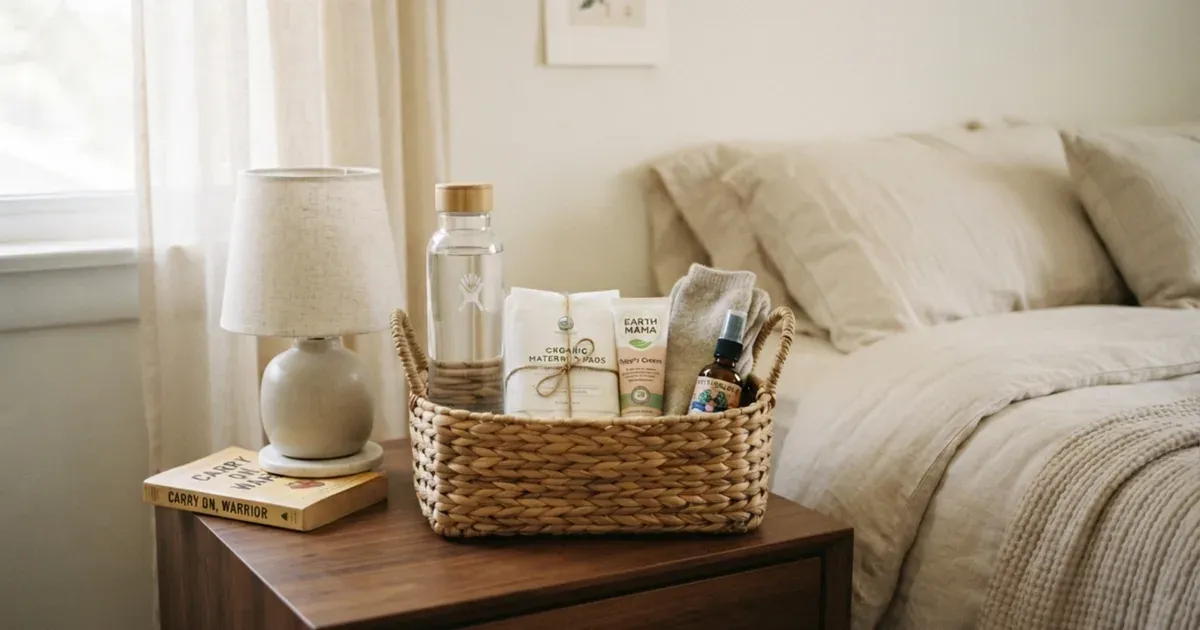
- Most of what actually helps is simple: pads (not tampons), pain relief, loose comfortable clothing, and easy food already sorted in advance.
- Elaborate "postpartum recovery kits" sold online often bundle genuinely useful basics with items that aren't necessary for most recoveries.
- A vitamin D supplement is worth having ready from day one if you're breastfeeding, not something to sort out weeks later.
- Having your support contacts (GP, health visitor, midwife) written down somewhere accessible matters more than any physical item on this list.
- What you actually needed will only be fully clear in hindsight — this list is deliberately built from real necessity, not a marketing checklist.
I went in with a hospital bag checklist and came out realising the postpartum checklist mattered just as much, and I hadn’t thought about it nearly as carefully in advance.
What genuinely helps
Maternity pads, not tampons. Bleeding after birth is heavy at first and tampons aren’t recommended until your six-week check, for infection risk reasons. Have more pads on hand than you think you’ll need.
Simple pain relief. Paracetamol and ibuprofen cover most of the discomfort from a straightforward vaginal or caesarean recovery. Have both in the house before you need them, not on a list to buy after.
Loose, comfortable clothing. Nothing that presses on a healing incision or perineal area, and easy access for breastfeeding if that’s your plan. This matters more than it sounds — restrictive clothing in the first week genuinely makes recovery more uncomfortable than it needs to be.
Nursing bras and breast pads, if breastfeeding. Comfort matters here too, and leaking is common enough in the early weeks that pads are worth having ready rather than improvising.
A vitamin D supplement, from day one. If you’re breastfeeding, this is recommended from the start, not something to figure out a few weeks in once you remember to look into it.
Easy food, already sorted. Meals you can eat one-handed, snacks within reach of wherever you’ll be feeding the baby, and ideally a few days’ worth of something simple already made or frozen before the birth. This is one of the most underrated items on any list — cooking is one of the first things that becomes genuinely difficult.
Your support contacts, written down somewhere accessible. Your midwife, health visitor, and GP’s actual contact details, plus whoever you’d call for practical help — not buried in your phone contacts under a name you’ll forget to search for at 3am.
What you can skip
Elaborate padsicle-making kits, specialty “recovery” teas and supplements beyond the vitamin D that’s actually recommended, and most of the gadget-heavy postpartum recovery bundles sold as must-haves. Some of what’s marketed is genuinely useful repackaged basics — an ice pack is an ice pack — but a lot of it is priced and positioned as more essential than it actually is. If a specific product genuinely helped you personally, that’s worth knowing, but it’s different from something being a real, general necessity.
What I wish I’d sorted in advance
I wish we’d had more food prepared and frozen before the birth than we did, and I wish our support contingency had accounted more seriously for an early arrival rather than assuming help would land exactly when planned. Both of those mattered more in the first two weeks than any physical item on a checklist did.
Frequently asked questions
Do I need to buy a specific “postpartum recovery kit”?
Not necessarily — most of what’s genuinely useful (pads, pain relief, comfortable clothing, ice packs) can be bought separately and cheaply. Bundled kits aren’t required for a straightforward recovery.
What’s the one thing people most often forget to prepare?
Food. Cooking becomes genuinely difficult in the first weeks, and having meals or snacks already sorted before the birth matters more than most people plan for.
Do I need special postpartum clothing?
Not special exactly — just loose, comfortable clothing that doesn’t press on a healing area and allows easy access for breastfeeding if you’re doing that. What you already own may well cover this.
Should I buy pads or tampons for postpartum bleeding?
Pads — tampons aren’t recommended until your six-week postnatal check, due to infection risk.
Is it worth writing down my support contacts in advance?
Yes, genuinely. Having your midwife, health visitor, and GP’s details somewhere easy to find (not just saved under a name you’d have to search for) is a small thing that matters more than it sounds in the sleep-deprived early weeks.
Found this helpful?