Getting a Picky Toddler to Eat Vegetables: What Actually Works
Key takeaways
- Fussy eating is genuinely normal — it can take many repeated attempts before a toddler accepts a food they initially rejected.
- Never use food as a reward — it teaches a child that treats are the good food and vegetables are the consolation prize.
- Letting a toddler feed themselves, mess and all, is a real, useful step toward independent eating, even when it's slower and messier.
- Our daughter was never a big eater, and keeping her engaged through stories and conversation genuinely helped her actually eat.
- Screens at mealtimes aren't necessary to get a toddler to eat — genuine engagement and conversation can do the same job.
Our daughter has never been a particularly big eater, and getting her to eat well took real, ongoing effort rather than a single trick that solved it once and for all.
What actually worked for us
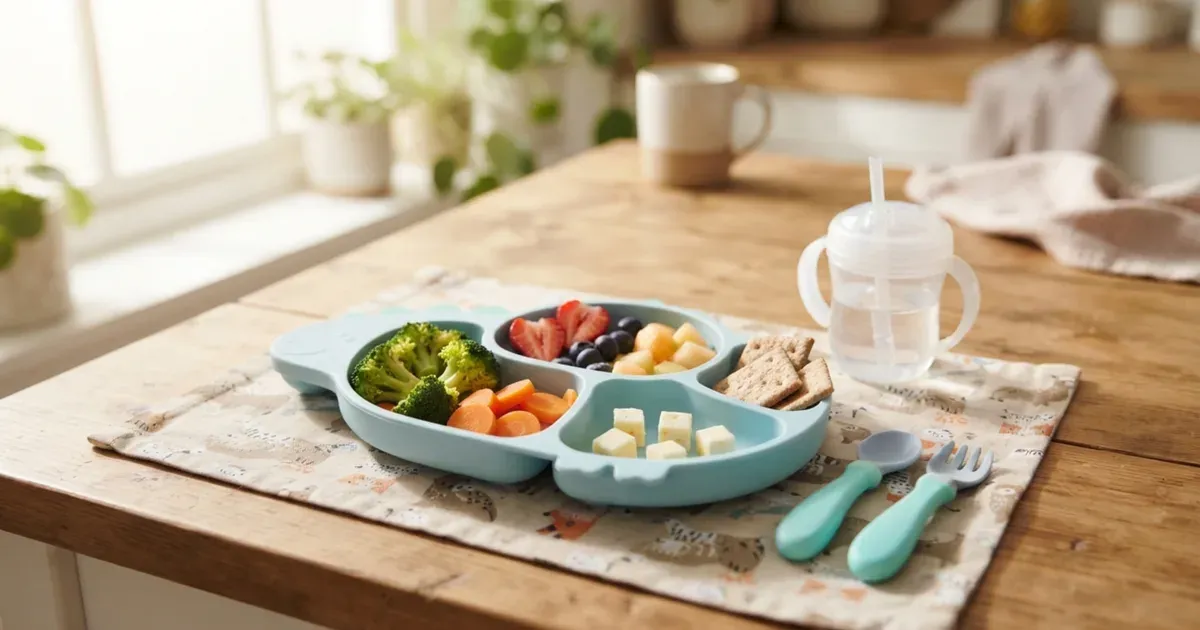
Once she was old enough to eat solids properly, we focused on giving her a genuinely balanced mix — proteins, carbohydrates, and vegetables in reasonable proportions, following what her doctors had suggested rather than guessing. What made the biggest practical difference wasn’t a specific food or recipe, but engagement: talking to her, telling her stories, and keeping her interested throughout the meal, rather than treating mealtime as something to get through quietly. We also let her feed herself, which reliably turned into a mess — but she genuinely learned to eat independently faster because we let that happen rather than always feeding her ourselves to avoid the cleanup.
Persistence is the real trick, not a specific food
NHS guidance on fussy eating backs up what we found by experience: it can take many repeated attempts before a toddler accepts a food they initially refused, and a food rejected outright one month can become a genuine favorite a few months later. Gradually reintroducing foods your toddler has previously turned down, rather than writing them off permanently, is worth doing even when it feels repetitive.
How you serve something can matter more than what it is
Changing the preparation can make a real difference on its own — a toddler who refuses cooked carrots might happily eat raw grated carrot, for instance. It’s worth experimenting with texture and presentation before assuming a specific vegetable is simply disliked outright.
What we deliberately avoided
We never used food as a reward or a bribe, which matches the NHS’s own advice directly: rewarding a child with sweets for eating vegetables teaches exactly the wrong lesson — that treats are the genuinely good food and vegetables are something to be endured for a prize. If a meal goes uneaten, the better response is to calmly remove the plate without comment or pressure, rather than turning it into a negotiation or a battle.
Screens weren’t part of our approach
We avoided television and general screen use for her first two years, aside from occasional video calls with family — mealtimes included. Keeping her engaged through actual conversation and stories did the job screens are sometimes used for, without needing a screen at all.
What’s genuinely normal, not a red flag
Fussy eating in toddlers is common and expected, not a sign that something’s wrong with your child’s diet or your parenting. The better measure isn’t any single meal, but the general pattern of what’s eaten across a week, alongside your child’s overall growth and energy — matching where they generally sit against broader developmental milestones rather than any one mealtime.
For the actual meals that became reliable wins for us, see our full toddler meal ideas — mostly simplified versions of what we already ate ourselves.
Frequently asked questions
How many times might I need to offer a food before my toddler accepts it?
It can genuinely take many repeated offers — sometimes described as needing up to 15 attempts — before a previously rejected food is accepted. Persistence matters more than any single clever trick.
Should I use dessert or treats as a reward for eating vegetables?
No — this teaches a child that sweets are the genuinely good food and vegetables are something to tolerate for a reward. It’s better to reward good mealtime behavior with something unrelated to food, like extra playtime.
Does letting a toddler feed themselves actually help, even if it’s messy?
Yes — it’s a real, meaningful step toward independent eating, even though it’s slower and messier in the short term.
Is it normal for a toddler to reject a vegetable they used to eat, or vice versa?
Yes, completely normal — tastes shift, and a food refused one month can become a favorite a few months later. It’s worth reoffering previously rejected foods rather than writing them off for good.
What should I do if my toddler doesn’t finish a meal?
Stay calm and simply remove the plate without comment or pressure. Turning it into a negotiation tends to make mealtimes more stressful without actually improving eating.
References
- NHS — Fussy eaters. nhs.uk
Found this helpful?