Quick, Healthy, Kid-Approved Toddler Meals
Key takeaways
- Toddlers do best with 3 meals and 2-3 healthy snacks a day, rather than 3 large meals alone — their stomachs are genuinely much smaller than an adult's.
- A balanced toddler diet draws from 4 main food groups: fruits/vegetables, starchy carbohydrates, protein, and dairy.
- We didn't cook special 'toddler food' — she ate simplified, softened versions of almost everything we ate ourselves.
- Porridge (oats), roti, rice, boiled potatoes, eggs, paneer, and boiled vegetables became our most reliable, repeatable wins.
- Full-fat dairy matters specifically for toddlers under 2 — they need the extra energy and fat-soluble vitamins that lower-fat versions don't provide.
Toddler meals don’t need to be a separate, special category of cooking — our most reliable wins turned out to be simplified versions of food we were already eating ourselves.
What actually worked for us
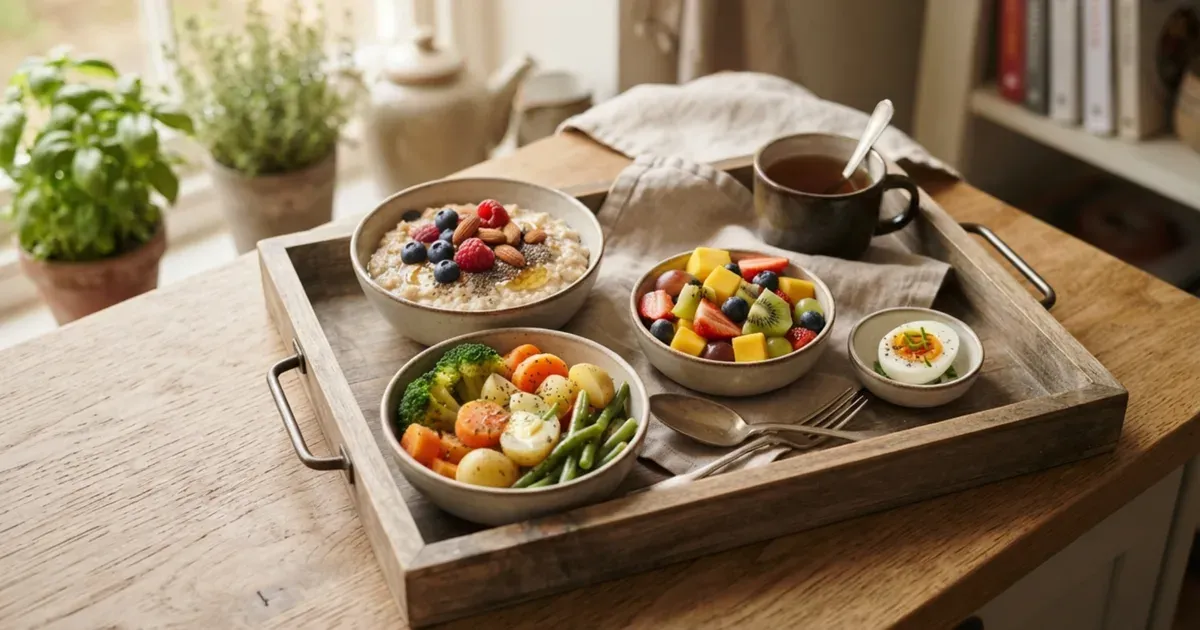
We didn’t build a separate toddler menu. Instead, we leaned on foods that were already part of our own everyday cooking, simplified where needed: porridge made from oats, fruits, pulses, roti or bread, rice, the occasional juice, boiled potatoes, eggs, milk, paneer, and boiled vegetables — genuinely close to almost everything we ate ourselves, just prepared a little softer or plainer.
How often toddlers actually need to eat
Toddlers do better with 3 meals and 2 to 3 healthy snacks spread across the day, rather than 3 larger meals alone. This isn’t just a preference — a 2-year-old’s stomach capacity is only around 200-250ml, a small fraction of an adult’s roughly 1,000ml capacity, so smaller, more frequent meals genuinely match what a toddler’s body can comfortably handle.
The four food groups, in practice
Fruits and vegetables — offered often, sometimes lightly cooked for softness, kept accessible as a snack option rather than reaching for something sugary instead.
Starchy carbohydrates — bread, rice, potatoes, pasta, and (in our case) roti and chapatti all count here, providing the energy toddlers need; wholegrain versions are worth introducing gradually after age 2.
Protein — aiming for a protein source roughly twice a day, from options like beans, eggs, fish, or paneer, supports growth and iron intake.
Dairy — full-fat milk and dairy products specifically matter for toddlers under 2, since they need the extra energy and fat-soluble vitamins that reduced-fat versions don’t provide in the same amount; semi-skimmed milk becomes an acceptable option from age 2 onward.
Why we didn’t overthink it
Once we understood the four food groups in general terms, most of our own everyday cooking already covered them — we didn’t need to invent new recipes specifically for her. Getting her genuinely engaged during meals mattered more than any specific dish, since she was never a particularly big eater to begin with. Staying calm and consistent about mealtime behavior — the same principle behind broader toddler discipline — mattered just as much as what was actually on the plate.
Reliable, well-liked meals also became a useful, screen-free way to fill the evening wind-down slot before bed, alongside the short educational videos we allowed later on.
Frequently asked questions
How many meals and snacks does a toddler actually need in a day?
Typically 3 meals plus 2 to 3 healthy snacks, rather than 3 large meals alone — toddler stomachs are much smaller than an adult’s and can’t comfortably hold as much at once.
Do toddlers need special “toddler food,” or can they eat what the family eats?
In our experience, simplified versions of everyday family food worked well — porridge, roti, rice, boiled vegetables, eggs, and paneer were genuine, repeatable wins, not specially prepared toddler-only dishes.
Why does full-fat milk matter specifically for toddlers under 2?
They need the extra energy and fat-soluble vitamins that full-fat dairy provides in a way reduced-fat versions don’t match at that age — semi-skimmed becomes appropriate from age 2 onward.
What are the four main food groups to cover in a toddler’s diet?
Fruits and vegetables, starchy carbohydrates, protein, and dairy — aiming to include something from each group across the day’s meals and snacks.
Is it okay to repeat the same reliable meals frequently?
Yes — having a rotation of dependable, well-liked meals is a completely reasonable approach, especially for a toddler who’s naturally a lighter eater.
References
- Derbyshire Family Health Service (NHS) — Healthy eating for toddlers. derbyshirefamilyhealthservice.nhs.uk
Found this helpful?