Fertility Supplements: What Works and What Doesn't
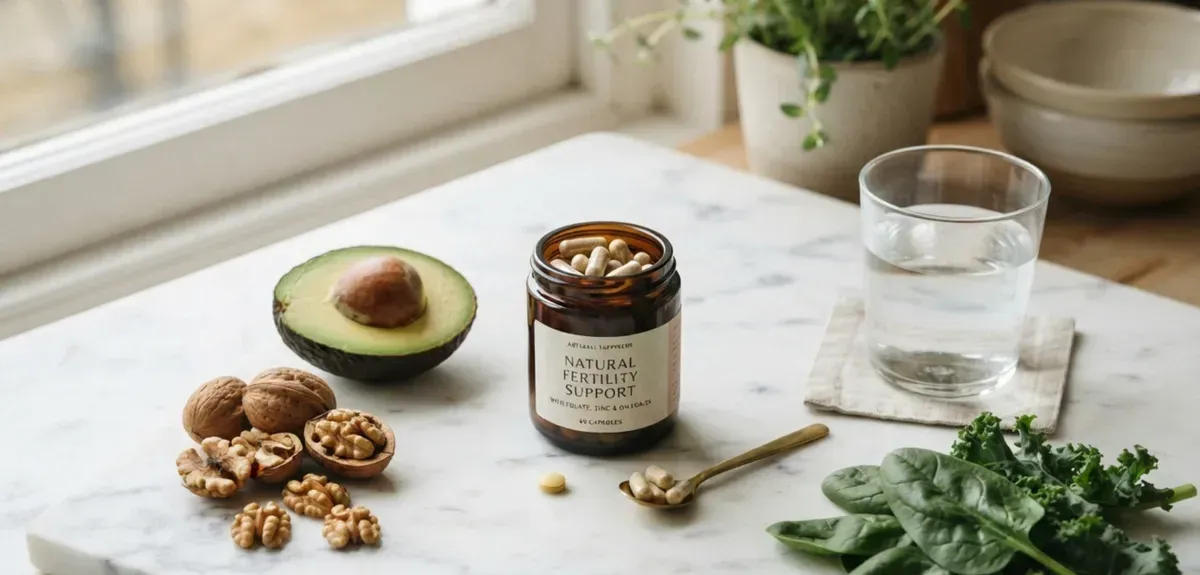
Key takeaways
- Folic acid is the one supplement with overwhelming evidence — 400mcg daily, ideally starting 1-3 months before conception.
- Vitamin D matters mainly if you're actually deficient, which is common in low-sunlight climates.
- CoQ10, maca, DHEA, and similar 'fertility blends' have limited or mixed evidence — talk to your doctor before adding any.
- For healthy couples with no diagnosed fertility issues, lifestyle usually matters more than supplements beyond prenatal vitamins.
- Supplements for specific conditions (PCOS, diminished ovarian reserve) should be medically supervised, not self-prescribed.
If you’ve spent any time researching how to boost your fertility, you’ve probably been bombarded with advertisements for supplements. CoQ10, maca root, evening primrose oil, fertility blends with exotic ingredients — the market is flooded with products promising to help you conceive faster. When my husband and I started trying for a baby, I’ll admit I was curious about some of these supplements. But after talking to our doctor, we decided to take a different approach: we focused on what was actually recommended by medical professionals and ignored the marketing noise. Four months later, we conceived our daughter. No expensive fertility supplements, no complicated regimens — just prenatal vitamins for me, vitamin D for my husband (we live in Finland where sunlight is limited), and a healthy lifestyle. In this post, I’ll share exactly what supplements we took, what our doctor recommended, and my honest thoughts on the fertility supplement industry. If you’re trying to conceive and wondering what’s worth your money, this is for you.
What Our Doctor Actually Recommended
Before we started trying to conceive, my husband and I visited a gynecologist together. We wanted professional guidance, not internet advice. The doctor’s recommendations were surprisingly simple and grounded.
For Me (The Mother)
The doctor recommended one thing: prenatal multivitamins. That’s it. No special fertility supplements, no expensive blends — just a comprehensive prenatal vitamin that I should start taking before conception and continue through pregnancy and breastfeeding. I started taking my prenatal vitamins about four months before we conceived. The multivitamin contained all the essential nutrients: folic acid (400 µg), iron (20 mg), vitamin D (400 IU), vitamin C, B vitamins, iodine, zinc, magnesium, and more. The most critical nutrient was folic acid. According to the CDC, taking 400 µg of folic acid daily before and during early pregnancy can prevent up to 70% of neural tube defects — the NHS gives the same 400 microgram daily recommendation, starting as soon as you begin trying and continuing until the end of the first trimester. This is why starting prenatal vitamins before conception is so important — the neural tube develops in the first 28 days of pregnancy, often before you even know you’re pregnant. I continued taking prenatal vitamins throughout my pregnancy and for six months after giving birth while breastfeeding. During my second trimester, my doctor added a separate iron supplement because my levels needed a boost. The first iron supplement caused constipation, so we switched to a different (more expensive) brand that my body tolerated better. For a complete breakdown of what my prenatal vitamins contained and when to take them, read our detailed guide on prenatal vitamins: when to start and what to take.
For My Husband (The Father)
Our doctor didn’t recommend any supplements specifically for fertility for my husband. The only supplement he took was vitamin D — and this wasn’t even for fertility reasons. We live in Finland, where sunlight is extremely limited for much of the year. Vitamin D supplementation is standard for everyone here, not just people trying to conceive. The doctor’s advice for my husband was straightforward: eat well, exercise regularly, get enough sleep, avoid alcohol and smoking, and minimize stress. The focus was entirely on lifestyle, not pills. You can read more about what my husband did to prepare in our post on male fertility: how partners can prepare.
The Supplements We Didn’t Take
There are countless fertility supplements marketed to couples trying to conceive. You’ve probably seen them: CoQ10, maca root, DHEA, evening primrose oil, royal jelly, vitex, inositol, and various proprietary “fertility blends.” We didn’t take any of these. Not because we thought they were harmful, but because our doctor didn’t recommend them, and we made a deliberate choice to follow medical advice rather than marketing claims. Here’s my honest perspective: many of these supplements are sold by companies whose primary motive is to make money. They target people who are emotionally invested in getting pregnant — people who are willing to try anything. The marketing is designed to make you feel like you’re missing something, like you need to buy their product to succeed. But here’s the reality: for most healthy couples, conception happens naturally without special supplements. What matters more is overall health — good nutrition, regular exercise, adequate sleep, stress management, and avoiding harmful substances like alcohol and tobacco.
What the Research Actually Says
Let me be clear: I’m not a doctor, and I’m not qualified to make medical recommendations. But I can share what research and health organizations say about fertility supplements.
Folic Acid — Strong Evidence
Folic acid (vitamin B9) is the one supplement that has overwhelming scientific support. ACOG’s prepregnancy counseling guidance recommends that all women of reproductive age take at least 400 µg of folic acid daily, matching the NHS’s own 400 microgram recommendation. This isn’t primarily about boosting fertility — it’s about preventing serious birth defects that occur in early pregnancy. This is why folic acid is included in all prenatal vitamins, and why doctors universally recommend prenatal vitamins for women trying to conceive.
Vitamin D — Important for Overall Health
Vitamin D plays a role in reproductive health for both men and women. Deficiency has been linked to fertility issues in some studies. However, vitamin D supplementation is most important for people who are actually deficient — which is common in northern climates (like Finland) or for people who spend little time outdoors. My husband took vitamin D because we live in a country with limited sunlight, not specifically because of fertility. If you’re unsure about your vitamin D levels, a simple blood test can tell you whether supplementation is needed.
Other Supplements — Mixed or Limited Evidence
Many other supplements marketed for fertility — CoQ10, maca, DHEA, and others — have limited or mixed scientific evidence. Some small studies suggest potential benefits, but large, well-designed clinical trials are often lacking. More importantly, some of these supplements can have side effects or interact with medications. DHEA, for example, is a hormone that can affect your body in significant ways. Taking it without medical supervision isn’t advisable. This is why we chose to only take what our doctor recommended. Medical professionals can evaluate your specific situation, consider your health history, and make personalized recommendations based on evidence — not marketing.
Why We Chose to Trust Our Doctor
I want to explain our philosophy, because I think it’s important. When it comes to our bodies — especially when trying to create a new life — we believe in being careful and deliberate. The internet is full of advice, supplements, and products promising miraculous results. Some of it might be helpful. Much of it is driven by profit motives. We decided early on that we would rely on medical professionals for guidance. Our doctor knows our health history, can order tests if needed, and bases recommendations on scientific evidence. They have no financial incentive to sell us products. This approach worked for us. We conceived in about four months with nothing more than prenatal vitamins (for me), vitamin D (for my husband), and a healthy lifestyle. Maybe we would have conceived just as quickly without any supplements. Maybe certain additional supplements would have helped. We’ll never know for sure. What I do know is that we felt confident and at peace with our approach because it was grounded in medical advice, not marketing.
My Advice If You’re Considering Fertility Supplements
If you’re trying to conceive and wondering whether you should take fertility supplements, here’s my honest advice:
- Start with prenatal vitamins. This is the one supplement that virtually all doctors recommend for women trying to conceive. Look for one with at least 400 µg of folic acid. Start taking it at least one month before trying to conceive, ideally 2-3 months.
- Consult your doctor before adding anything else. If you’re curious about other supplements, talk to your doctor first. They can evaluate whether you have any deficiencies that need addressing and recommend supplements based on your specific situation.
- Be skeptical of marketing claims. Companies selling fertility supplements are in the business of making money. They target people who are emotionally invested in getting pregnant. Just because a product has glowing reviews or impressive-sounding ingredients doesn’t mean it will help you conceive.
- Focus on lifestyle first. The most impactful things you can do for your fertility don’t come in a bottle. Eat nutritious food, exercise regularly, sleep well, manage stress, avoid alcohol and smoking. These fundamentals matter more than any supplement.
- Don’t fall for quick fixes. There’s no magic pill that guarantees pregnancy. Conception is a complex biological process influenced by many factors. Be patient with your body and trust the process.
What About Supplements for Specific Fertility Issues?
I want to acknowledge that our experience was that of a healthy couple with no known fertility issues. We conceived naturally within a few months of trying. If you’re dealing with diagnosed fertility challenges — PCOS, endometriosis, low sperm count, hormonal imbalances, or other conditions — your doctor may recommend specific supplements as part of a treatment plan. In these cases, supplementation might be more targeted and medically supervised. For example, some research suggests that CoQ10 may benefit egg quality in women over 35 or with diminished ovarian reserve. Inositol is sometimes recommended for women with PCOS. But these are medical decisions that should be made with a healthcare provider, not based on internet research or supplement marketing. If you’ve been trying to conceive for a year (or six months if you’re over 35) without success, please see a fertility specialist. They can diagnose any underlying issues and create a treatment plan that may or may not include specific supplements.
The Bottom Line
Here’s what actually worked for us:
- For me: Prenatal multivitamins (started 4 months before conception, continued through pregnancy and 6 months postpartum). Added iron supplement in second trimester when my levels were low.
- For my husband: Vitamin D only (due to living in Finland with limited sunlight). No fertility-specific supplements.
- For both of us: Healthy diet, regular exercise, quality sleep, stress management, no alcohol or smoking.
We conceived in about four months. Was it the supplements? The lifestyle? Luck? Probably a combination. But I’m confident that we didn’t need expensive fertility supplements that our doctor hadn’t recommended. The fertility supplement market is designed to make you feel like you need to buy something. But for most healthy couples, what you actually need is much simpler: basic prenatal vitamins, a healthy lifestyle, and patience. If in doubt, ask your doctor — not the internet, and certainly not the companies trying to sell you products.
Frequently Asked Questions
Do fertility supplements actually work?
The evidence is mixed. Folic acid (in prenatal vitamins) is strongly supported by research and universally recommended. Vitamin D is important if you’re deficient. Other supplements like CoQ10, maca, and DHEA have limited or inconsistent scientific evidence. For most healthy couples, prenatal vitamins and a healthy lifestyle are sufficient. Always consult your doctor before taking additional supplements.
What supplements should I take when trying to conceive?
For women: Start prenatal vitamins with at least 400 µg of folic acid 1-3 months before trying to conceive. For men: No specific supplements are universally recommended — focus on healthy diet and lifestyle. If you live in a region with limited sunlight, vitamin D may be beneficial for both partners. Consult your doctor for personalized recommendations.
Are fertility supplements safe?
Not all supplements are regulated the same way as medications. Quality can vary, and some supplements can have side effects or interact with medications. Prenatal vitamins from reputable brands are generally safe. For other fertility supplements, consult your doctor before taking them to ensure they’re appropriate for your situation.
Should men take fertility supplements?
Our doctor didn’t recommend any fertility-specific supplements for my husband. The focus was on healthy lifestyle: good nutrition, regular exercise, adequate sleep, no alcohol or smoking. Vitamin D supplementation may be beneficial if deficient. If male fertility issues are diagnosed, a doctor may recommend specific supplements as part of treatment.
When should I start taking prenatal vitamins?
Start prenatal vitamins at least 1-3 months before trying to conceive. This allows your body to build up folic acid stores, which are crucial for preventing birth defects in early pregnancy. I started 4 months before we conceived. Since neural tube development happens in the first 28 days of pregnancy — often before you know you’re pregnant — starting early is important.
What’s the most important supplement for fertility?
Folic acid (folate) is the most important and well-supported supplement for women trying to conceive. It prevents serious birth defects and is essential for early fetal development. This is why all prenatal vitamins contain folic acid (400-800 µg). For men, there’s no single “most important” supplement — overall health through diet and lifestyle matters more.
Can supplements replace a healthy diet for fertility?
No. Supplements are meant to supplement a healthy diet, not replace it. You can’t out-supplement a poor diet. Focus on eating whole, nutritious foods — lean proteins, vegetables, fruits, nuts, seeds, and whole grains. Supplements fill nutritional gaps but don’t provide all the benefits of real food.
Should I trust fertility supplement reviews online?
Be cautious. Many online reviews are incentivized, biased, or simply reflect placebo effects. The fertility supplement market targets emotionally invested people willing to try anything. Instead of relying on reviews, consult your doctor and look for supplements backed by scientific research from reputable sources.
References
Found this helpful?