Mango Chutney Recipe: Sweet, Tangy, and Spiced
Key takeaways
- This is a cooked, vinegar-set condiment — not the same as a raw mango sauce, which needs no cooking or jarring.
- The vinegar and sugar together are what let it keep for months, not weeks.
- Use firm-ripe mango, not fully soft mango — it holds its shape better through the simmer.
- Naturally gluten-free and vegan as written.
Ingredients
Check off ingredients as you go
Chutney was one of the first things I learned to make in a British-Indian kitchen tradition rather than my mother’s — the vinegar and jarring process is more Anglo-Indian preserve than what we made growing up, but it’s become one of my regular batch-cooking projects, especially when mangoes are cheap and plentiful.
Chutney, not a quick sauce
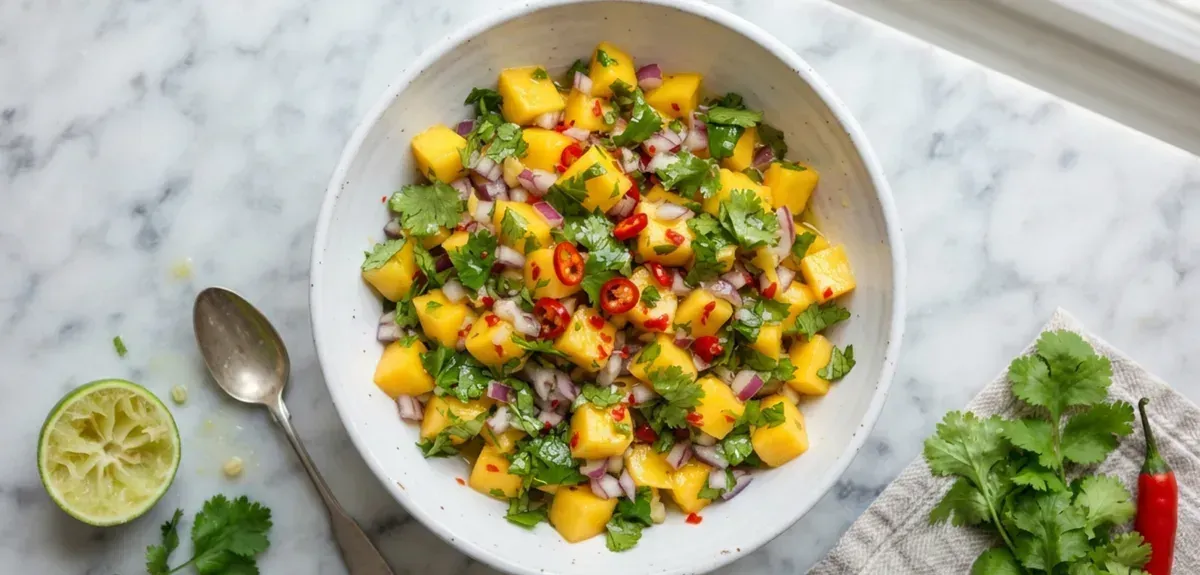
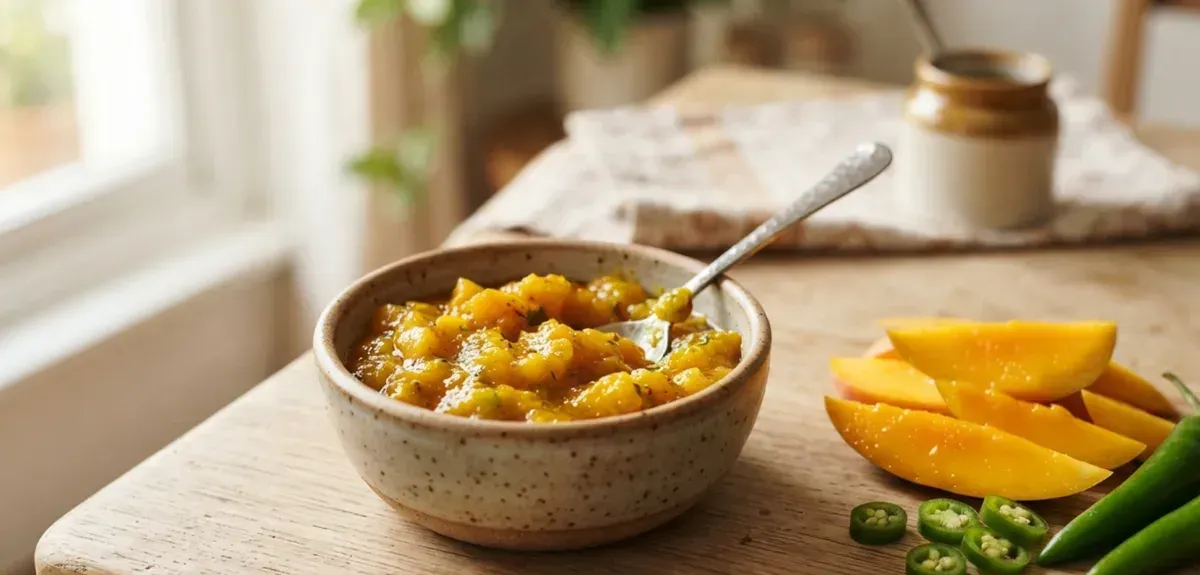
If you’ve landed here looking for something to blend and use tonight, you likely want mango sauce instead — raw, blended, ready in 15 minutes, no cooking. This is a different thing entirely: a cooked, spiced condiment set with vinegar and sugar, simmered low and slow until it’s thick and jammy, then jarred to keep for months. Both are good. They’re just not the same recipe wearing a different name.
Why the vinegar matters
The sugar-and-vinegar combination isn’t just flavour — it’s what actually makes chutney a preserve rather than just a cooked fruit sauce. The acidity and sugar concentration together create an environment that’s inhospitable to most spoilage bacteria, which is the same basic principle behind jam-making. That’s why this keeps for months in the fridge while the raw mango sauce only keeps for about a week — they’re preserved by completely different mechanisms.
Ingredients and how to make it
Follow the checklist and steps above. The order matters more than it looks: dissolving the sugar in the vinegar first, before adding the spices and mango, gives the sugar time to fully melt without scorching, and lets the spices bloom briefly in the warm liquid before the mango goes in.
Use firm-ripe mango rather than fully soft mango — very ripe mango tends to break down into mush during the long simmer, while firmer fruit holds some texture even after 30–40 minutes on the heat.
My tip: Don’t rush the simmer. The chutney looks thin for most of the cooking time and then thickens quickly in the last five minutes — pull it too early and you’ll end up with something closer to a syrup than a chutney.
Variations
Less sweet. Cut the brown sugar to 2/3 cup (130g). The chutney will be tangier and won’t keep quite as long, so plan to use it within a month or two rather than freezing it.
Extra warmth. A cinnamon stick or a couple of whole cloves added with the other spices, then removed before jarring, gives it a slightly more festive, spiced-preserve character.
Fruit blend. Swap a quarter of the mango for diced peach or pineapple — both hold up well through the same cooking time and pair naturally with the same spices.
Storage
Once cooled, store in a sterilised, airtight jar in the fridge — it keeps for months this way, thanks to the vinegar and sugar. It also freezes well in smaller portions if you want to make a large batch at once.
Frequently asked questions
How is this different from mango sauce?
Chutney is cooked with vinegar and sugar until thick, then jarred to keep for months. Mango sauce is raw and blended, ready in minutes, and meant to be used within a week or two.
Can I make this without vinegar?
Vinegar is what gives chutney its shelf life, not just its tang. Lemon or lime juice can substitute for flavour, but the chutney won’t keep nearly as long — treat it more like the mango sauce’s storage timeline if you go this route.
What do I serve mango chutney with?
It’s classic alongside a cheese board, spooned onto a curry, spread on a sandwich or wrap, or served with roast or grilled meats — the sweet-tangy-spiced flavour cuts through rich or fatty food well.
Can I freeze mango chutney?
Yes — it freezes well in airtight containers for several months. Thaw in the fridge before serving.
Is mango chutney very spicy?
Not as written — the chili flakes add background warmth rather than real heat. Adjust the amount up or down depending on your tolerance.
Why did my chutney turn out too runny?
It likely needed longer on the heat — chutney thickens mostly in the final stretch of simmering, not gradually throughout. If it’s already jarred and still thin, you can reheat it gently in a saucepan to reduce it further.
Source: USDA FoodData Central
Found this helpful?