Fresh Mango Salsa: No Cooking, No Waiting
Key takeaways
- Draining the diced tomato and cucumber before mixing is the single biggest reason homemade salsa turns watery — both vegetables release a lot of liquid once cut, and skipping this step is the most common mistake.
- Ripe but still firm mango holds its shape in dice far better than a very soft, overripe one, which tends to mash rather than stay in distinct pieces.
- This is a genuinely light, fresh side dish — real nutrition from the fruit and vegetables, without needing exaggerated health claims to make the case for it.
- Naturally vegan and gluten-free as written.
Ingredients
Check off ingredients as you go
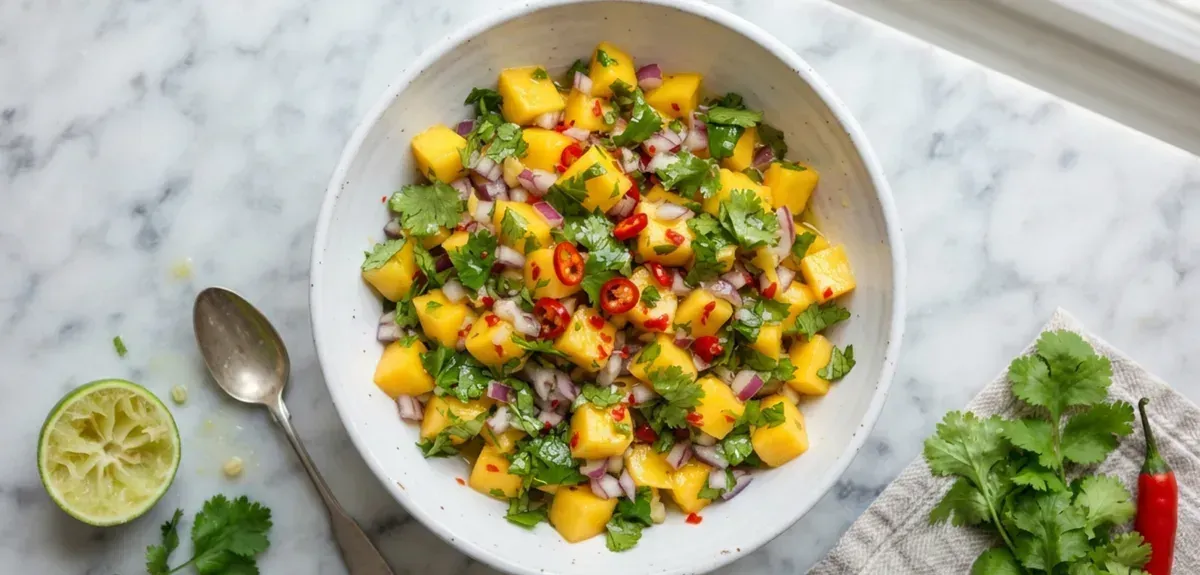
Mango salsa earns its place at almost every barbecue we host, mostly because it disappears faster than anything else on the table and takes less effort than nearly everything else too.
Why this recipe works
The one thing that separates a good homemade salsa from a soupy, watery one is dealing with the liquid in the tomato and cucumber before they ever meet the mango. Both vegetables are mostly water held inside cell walls that rupture the moment you dice them, and if that liquid goes straight into the bowl with everything else, you end up with a salsa that’s swimming rather than chunky within an hour. Seeding both first, then letting the diced pieces sit in a sieve for a few minutes to drain, solves this almost entirely — it’s a small extra step that makes a real difference to the final texture.
For the fuller picture on mango’s own nutrition, see our mango nutrition guide — real vitamin A, vitamin C, and fibre, which is worth mentioning plainly rather than dressing up with vaguer claims about skin health or weight loss that this dish doesn’t need to lean on to be worth making.
Ingredients and how to make it
Follow the checklist and steps above. Dice everything to roughly the same small size — this isn’t just about looks, it means every spoonful has a bit of sweetness, crunch, and heat rather than one bite being all mango and the next all onion.
Raw red onion can taste sharp and overpowering straight from the knife. If that bothers you, a quick rinse of the diced onion under cold water for a few seconds mellows the harshness noticeably without losing the crunch.
My tip: Let the finished salsa chill for the full 30 minutes before serving if you can manage the wait. The flavours genuinely meld and round out during that time — a salsa eaten the moment it’s mixed tastes noticeably more like separate ingredients than one cohesive dish.
Variations
Extra fruit. A diced peach or a small handful of pineapple alongside the mango adds another layer of sweetness without changing the method.
Creamier. Folding in diced avocado just before serving (not during the chill, so it doesn’t turn mushy) makes a heartier, richer version, good as a topping for grilled fish or chicken.
Milder or hotter. Omit the jalapeño entirely for a mild version, or leave some of the seeds and pith in for a noticeably spicier one — that’s where most of a jalapeño’s heat actually lives.
If you’d rather have a cooked, jarred condiment on hand instead of a fresh salsa that only keeps a few days, our mango chutney is the longer-life alternative.
Storage
Keep in an airtight container in the fridge for up to 3 days. It will release a little more liquid the longer it sits, even with the draining step — a quick stir, or draining off a small amount of accumulated liquid before serving leftovers, keeps it from tasting diluted.
Frequently asked questions
Why did my mango salsa turn out watery?
Almost always the tomato and cucumber weren’t seeded and drained before mixing. Both release a lot of liquid once cut, and that liquid needs somewhere to go before it joins the rest of the salsa.
Can I use frozen mango?
Yes, though thaw and drain it well first — frozen mango releases noticeably more liquid than fresh once thawed, which works against the same watery-salsa problem.
How spicy is this?
As written, it’s mild to medium, and entirely adjustable — the jalapeño’s amount (and whether you include its seeds and pith) controls the heat directly.
What should I serve this with?
Tortilla chips are the classic pairing, but it’s just as good spooned over grilled fish, chicken, or tacos, or served alongside a simple green salad.
Can I make this ahead of a party?
Yes — making it a few hours ahead actually improves it, since the flavours have more time to meld. Just give it a stir and drain off any excess liquid right before serving.
What else can I make with ripe mangoes besides salsa?
If you want something sweet rather than savoury, mango ice cream is a good use for extra-ripe fruit that’s gone past the firm stage this salsa needs.
Source: USDA FoodData Central
Found this helpful?