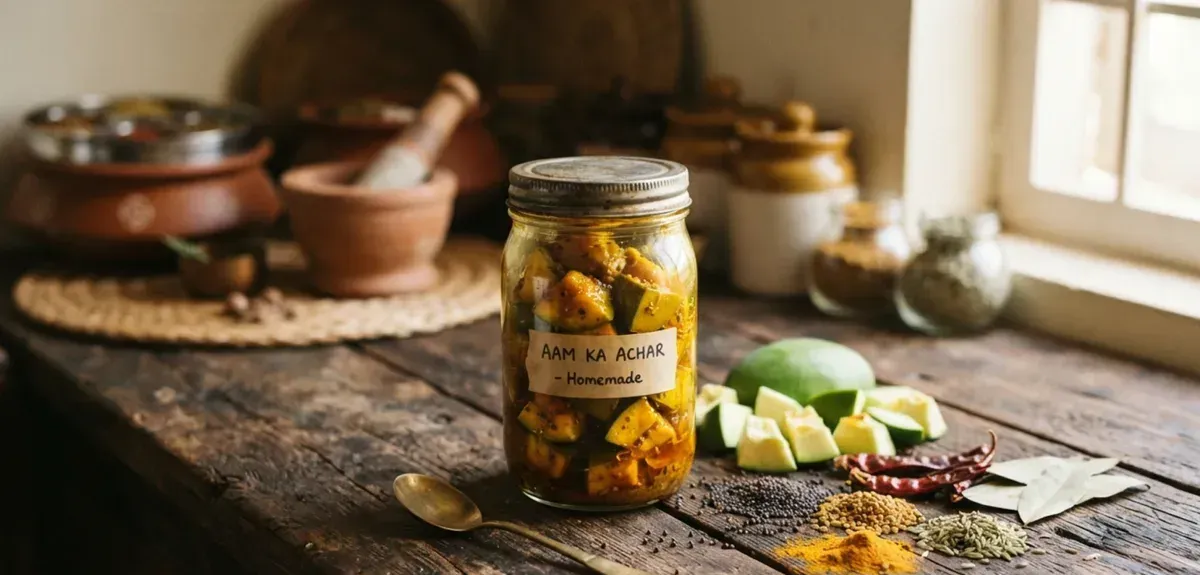
Mango Pickle (Aam Ka Achar): Traditional Salt-and-Oil Method
Key takeaways
- This is a salt-and-oil cured pickle, not a live-culture ferment — the "boosts digestion via probiotics" claim attached to achaar online doesn't hold up the way it does for a genuinely fermented food like yogurt.
- Mustard oil is traditional, but EU regulations restrict high-erucic-acid mustard oil for food use, so a genuine culinary-grade version is hard to find in Finland and much of Europe — sesame oil is a solid substitute.
- The oil layer over the mango isn't just presentation — it's a real barrier against air and moisture, which is what lets this keep for months without refrigeration.
- Completely dry mangoes, jars, and utensils at every single stage aren't optional — moisture is the most common cause of mould in a homemade batch.
Ingredients
Check off ingredients as you go
Achaar was always my grandmother’s domain, made in bulk every mango season and doled out in small jars to half the extended family — this is the version I make now, adjusted slightly for a kitchen where mustard oil isn’t something I can just buy at the corner shop.
A note on mustard oil, for anyone cooking this outside India
Traditional mango pickle is almost always made with mustard oil, and it does contribute a specific pungency to the finished pickle that other oils don’t quite replicate. But it’s worth knowing before you go shopping: EU food safety regulations restrict mustard oil with high erucic acid content from being sold for culinary use, which is why pure mustard oil in Finland (and much of Europe) is often labelled “for external use” or sold as a massage oil rather than a cooking one. Some specialty importers do carry genuine food-grade mustard oil, but it’s not guaranteed at a regular supermarket. Sesame oil is the substitute I actually reach for, and it makes a good pickle — just a slightly different, milder one than the mustard-oil original.
Why this recipe works
Three separate things are doing preservation work here, not just one. Salt draws moisture out of the mango through osmosis during the initial 24-hour cure, which both concentrates flavour and removes the water that spoilage organisms need. The oil layer over the top physically blocks air and moisture from reaching the mango once it’s jarred. And the spices — particularly the mustard and fenugreek — bring their own mild antimicrobial properties on top of their flavour.
I want to correct something repeated often about pickles like this one: achaar is not the same kind of “probiotic” food as yogurt or a genuine live ferment. It’s preserved chemically, through salt, oil, and acidity, rather than through a deliberately cultivated population of beneficial bacteria. Any claim that a jar of oil-cured mango pickle is meaningfully boosting your gut microbiome the way a spoonful of live-culture yogurt would is overstating what’s actually happening in the jar. It’s a delicious, real preservation method — it just isn’t a probiotic food.
For the fuller picture on mango nutrition itself (using ripe, not raw unripe, mango), see our mango nutrition guide.
Ingredients and how to make it
Follow the checklist and steps above. Choose firm, green, unripe mangoes specifically — a tart variety like Totapuri or Rajapuri holds its texture through the salt cure and oil mixing far better than a soft, ripe mango would, which would break down into mush.
Dryness is the theme running through every single step, not just the mango prep. Wet mango, a damp jar, or a spoon that’s touched water at any point in the process is the most common reason a batch grows mould rather than simply curing properly.
My tip: Don’t skip draining the liquid that collects during the 24-hour salt cure. That liquid is exactly the moisture you’re trying to remove — leaving it in the mix works against the whole preservation method rather than adding flavour.
Variations
Milder. Reduce the chili powder by half and skip the garlic for a gentler, more approachable pickle — still tangy and spiced, just without as much heat.
Extra tangy. The optional vinegar addition pushes this further toward a bright, sharp pickle, and also extends its shelf life slightly.
Quick version. A shorter, week-long cure gives a milder, less deeply developed pickle than the traditional longer cure — genuinely still good, just a different, fresher-tasting result rather than a shortcut to the same thing.
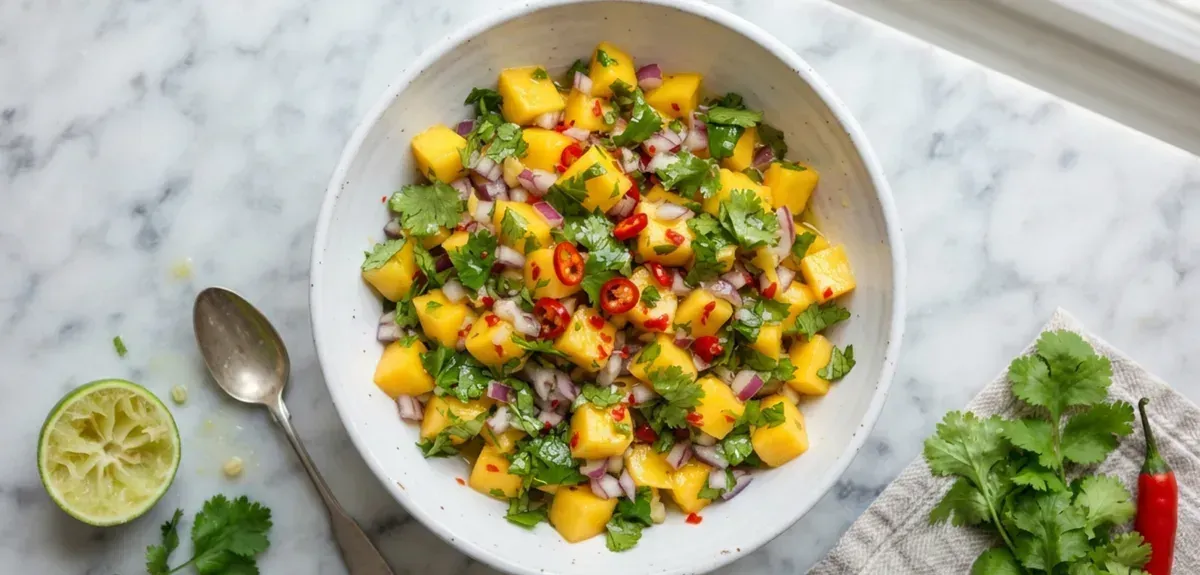
If you’d rather make a cooked, jammy condiment instead of this raw, oil-cured one, our mango chutney uses vinegar and sugar for an entirely different preservation method and flavour. For a fresh, no-preservation side dish using ripe mango instead, our mango salsa is ready in five minutes rather than two weeks.
Storage
Kept in a sealed, sterilised jar with the mango fully submerged in oil, this keeps in a cool, dark cupboard for several months, and even longer refrigerated. Always use a clean, dry spoon to serve — introducing any moisture into the jar after the fact undoes the preservation the same way it would during preparation.
Frequently asked questions
Why did my pickle grow mould?
Almost always moisture — either the mangoes, the jar, or the spoon used to serve it weren’t completely dry. Discard a mouldy batch rather than trying to salvage it.
Can I use ripe mangoes instead of unripe ones?
No — ripe mango is too soft and sweet for this method and will break down into a mush rather than holding its shape through the salt cure and oil mixing. Firm, unripe, tart mango is essential here.
Do I really need mustard oil?
It’s traditional and gives a distinct pungency, but sesame oil is a solid, widely available substitute — especially relevant if you’re outside India, where genuine culinary-grade mustard oil can be hard to source due to food safety regulations.
Is mango pickle a probiotic food?
Not meaningfully — it’s preserved with salt, oil, and acidity rather than through a live bacterial culture, so it doesn’t offer the same gut-health benefit as a genuinely fermented food like yogurt.
How long does the pickle need to cure before it’s ready?
At least 1–2 weeks for a proper flavour, though it continues deepening in flavour for weeks after that. A shorter cure gives a milder, fresher-tasting pickle rather than the traditional fully developed flavour.
Source: USDA FoodData Central
Found this helpful?