Strength Training for Women: Myths and Why It Matters
Key takeaways
- Women naturally have far lower testosterone levels than men, which makes building large amounts of bulky muscle physiologically difficult without specific, deliberate training for it.
- Strength training builds muscle tone and density rather than dramatic size for most women who lift as part of a general fitness routine.
- Resistance exercise, alongside weight-bearing activity, is directly recommended by the NHS for improving bone density and helping prevent osteoporosis.
- The muscle-strengthening guideline — all major muscle groups, at least twice a week — applies to everyone, not just people trying to build visible muscle size.
- Bone density benefits from strength training matter across a woman's whole life, not only after a menopause-related diagnosis.
The fear of getting “bulky” has kept a lot of women away from strength training entirely — worth addressing directly, since the actual physiology tells a different story.
Why the “bulky” fear doesn’t match the biology
Building large amounts of visible muscle mass depends heavily on testosterone, and women naturally have far lower levels of it than men. This makes significant muscle bulk genuinely difficult to build without deliberate, specific training aimed at exactly that outcome — the kind of dedicated hypertrophy-focused programming that bodybuilders follow, not the incidental result of a general strength routine. For most women doing regular strength training as part of overall fitness, the result is increased muscle tone and density, not dramatic size.
Why it matters beyond appearance
Strength training is its own separate recommendation alongside aerobic activity — working all the major muscle groups (legs, hips, back, abdomen, chest, arms, shoulders) at least twice a week — and it isn’t only relevant to people trying to change how they look. The NHS specifically recommends resistance exercise, alongside weight-bearing activity, for improving bone density and helping to prevent osteoporosis, a genuinely important benefit that has nothing to do with muscle size.
Bone health is a lifelong consideration, not just a post-menopause fix
Bone density benefits from strength training accumulate over time, which makes building the habit earlier in life valuable well before any menopause-related bone density conversation comes up. Weight-bearing exercise — where your own legs and feet support your body weight, like walking briskly, dancing, or jumping — works alongside resistance training as a complementary way to strengthen bones, muscles, and joints together.
What this actually looks like day to day
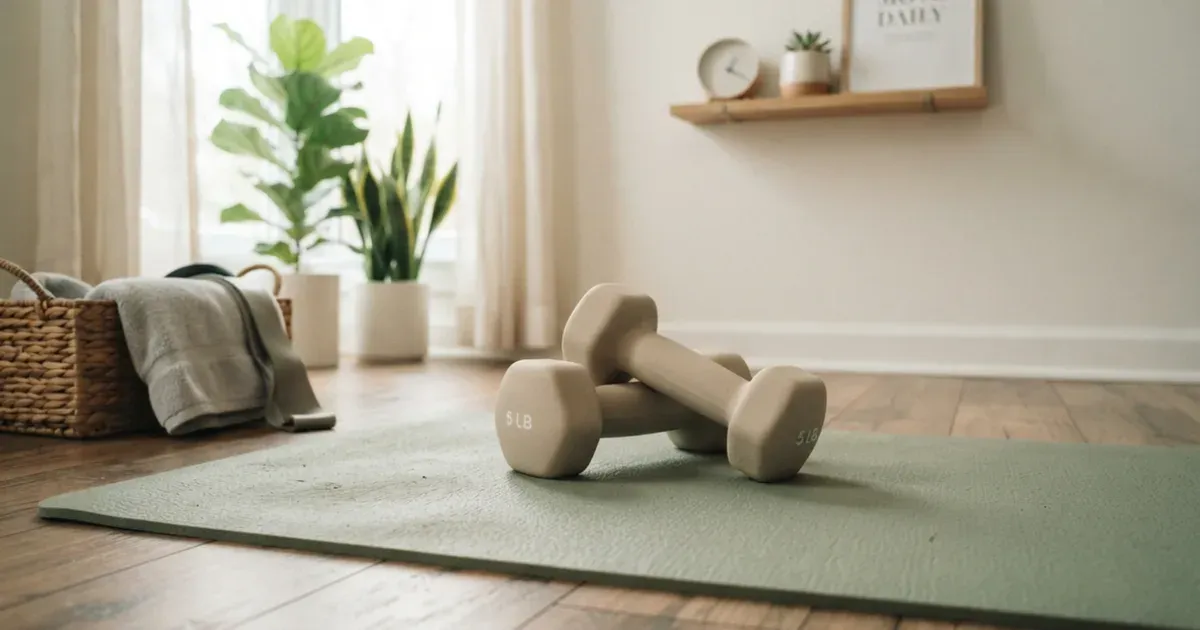
Strength training doesn’t require heavy gym equipment to count — bodyweight movements like squats, push-ups, and lunges work the same major muscle groups the guideline calls for, and light dumbbells or resistance bands add a straightforward way to progress once bodyweight versions start feeling manageable. Some muscle soreness after a new strength session is completely normal — here’s how to tell normal soreness from something that needs attention.
Frequently asked questions
Will strength training make me bulky?
Not through general fitness-focused training — women’s naturally lower testosterone levels make significant muscle bulk difficult to build without deliberate, specialized training aimed specifically at that outcome. Most women who lift see toning and increased strength, not dramatic size.
Why does strength training matter if I’m not trying to change how I look?
It’s directly linked to improved bone density and reduced osteoporosis risk, alongside strength, balance, and reduced injury risk — benefits entirely separate from appearance.
Is strength training only important after menopause?
No — bone density benefits build over a lifetime, so starting the habit earlier is genuinely valuable, not something to delay until a specific diagnosis or life stage.
Do I need a gym or heavy weights to get real strength-training benefits?
No — bodyweight exercises like squats, push-ups, and lunges work the same major muscle groups the guideline calls for, with light weights or resistance bands as an optional way to progress.
How often should I be doing strength training?
At least twice a week, covering all the major muscle groups — legs, hips, back, abdomen, chest, arms, and shoulders — alongside your regular aerobic activity.
References
- NHS — Osteoporosis: Prevention. nhs.uk
Found this helpful?