Building a Morning Routine That Actually Holds Up, Habit by Habit
Key takeaways
- A large randomised trial found cold showers reduced self-reported sick days off work by 29% — but didn't actually reduce how often people got sick.
- Meditation has genuinely solid research behind it for reducing perceived stress, backed by multiple systematic reviews of randomised trials.
- Drinking water first thing rehydrates you after sleep — it doesn't 'flush toxins' or dramatically boost metabolism, despite the common claim.
- Habits like gratitude journaling or affirmations are personal preferences with weaker research behind them — worth keeping if they genuinely help you, not because science demands it.
- A consistent routine matters more than any single habit within it — the structure itself is doing more work than people usually credit it for.
My mornings changed completely once I had a toddler — there’s no version of “meditate for 20 minutes uninterrupted” that survives a small child waking up at the same time you do. What stayed useful, even in a much shorter window, was being honest with myself about which habits were actually doing something versus which ones I was doing because a list told me to.
The habit with a genuine, if nuanced, research base: cold showers
This is one of the more interesting findings I came across. A large randomised controlled trial of over 3,000 participants had people finish their regular shower with 30 to 90 seconds of cold water for 30 days, then continue at their own discretion. The result: a 29% reduction in self-reported sickness absence from work compared to a control group. The honest caveat, which most articles repeating this stat leave out, is that the same trial found no actual reduction in illness days — people took less time off, but weren’t measurably sick less often. That could reflect something real about resilience or mindset rather than a direct immune effect, and it’s worth knowing that distinction rather than treating cold showers as a proven illness-prevention tool.
The habit with the strongest evidence overall: meditation
Morning meditation is one of the few items on the usual “productive morning” list with genuinely robust research behind it. A meta-analysis of 17 randomised controlled trials found mindfulness-based interventions produced significantly lower perceived stress after the intervention compared to control groups. This doesn’t require a long session either — even a short, consistent few minutes each morning is more in line with what’s actually been studied than an idealised 30-minute practice most people never sustain.
The habit that gets oversold: drinking water first thing
Hydrating right after waking is genuinely sensible — you go several hours without water overnight, and replacing that matters. Where this habit usually gets oversold is the claim that it “flushes toxins” or dramatically “kickstarts metabolism.” Neither is well supported: your liver and kidneys handle toxin processing continuously regardless of when you drink water, and any metabolic effect from morning hydration specifically is negligible. Drink the water because rehydrating after sleep is a reasonable, low-effort habit — not because of an exaggerated metabolic claim.
The habits that are genuinely personal, not universally proven
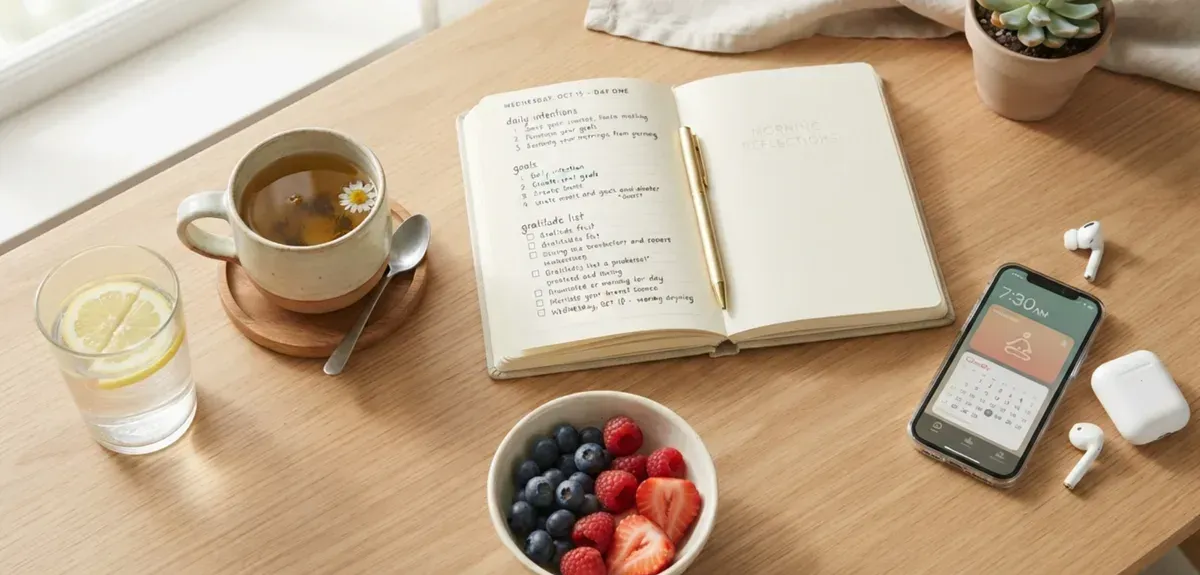
Gratitude journaling, affirmations, visualisation, setting intentions, and morning journaling all show up constantly on productivity lists, and the honest picture is that the research behind them, specifically as morning rituals, is much thinner and more mixed than for meditation or exercise. That doesn’t make them useless — plenty of people, myself included some mornings, find real value in a few minutes of writing down what they’re grateful for or what the day ahead looks like. It just means these are personal preference tools worth keeping if they genuinely help you, not evidence-backed requirements for a “successful morning.”
What I actually kept
Realistically, my current morning routine is short: water, a few minutes of quiet before anyone else in the house is awake, and deciding the two or three things that actually need to happen that day. Exercise, when it happens, is a walk rather than anything more structured — consistency mattered more to me than intensity once I stopped having predictable free time.
Priyanka’s tip: If your mornings keep changing shape — a new baby, a shifting work schedule, travel — build your routine around the shortest version that still counts as “done,” rather than an ideal you’ll only manage occasionally. A five-minute version you do daily beats a thirty-minute version you do twice a week.
Frequently asked questions
Do cold showers actually prevent illness?
The best evidence shows they reduce self-reported sick days off work, but not how often people actually get sick — an important distinction. It may reflect resilience or mindset more than a direct immune effect.
Is morning meditation worth doing?
Yes — this is one of the better-supported habits on any “morning routine” list, with solid research showing reduced perceived stress from consistent mindfulness practice.
Does drinking water first thing really boost metabolism?
Not meaningfully. It’s a sensible rehydration habit after hours without water overnight, but the “flushes toxins” and “boosts metabolism” claims are overstated.
Do I need to do all 21 habits to have a good morning routine?
No — a shorter, consistent routine you actually sustain is more valuable than a long one you only manage occasionally. Pick the few habits that genuinely help you and build consistency around those.
Are habits like gratitude journaling or affirmations backed by strong research?
The research here is much thinner and more mixed than for meditation or exercise. They’re reasonable personal practices if they help you, but not evidence-based requirements.
References
- Buijze GA, et al. The Effect of Cold Showering on Health and Work: A Randomized Controlled Trial. PLOS ONE, 2016. journals.plos.org
- Effectiveness of Mindfulness-Based Stress Reduction on Mental Health and Psychological Quality of Life: A GRADE-Assessed Systematic Review. 2024. pubmed.ncbi.nlm.nih.gov
Found this helpful?