Aam Papad (Mango Leather): The Oven Method for Non-Tropical Kitchens
Key takeaways
- Sun-drying is traditional, but takes 2–3 full days of reliable, strong sun and carries real risk of dust, insects, or uneven drying — the oven method here is more realistic almost anywhere, including places without dependable sun.
- Spreading the pulp thinly (3–4mm) is the single biggest factor in whether this dries evenly — a thick layer will stay gummy in the center long after the edges are done.
- This is a concentrated source of mango's natural sugar, not a low-calorie snack — a small square packs a lot of the fruit's sugar into a little bite.
- Naturally vegan if you skip the ghee, and gluten-free as written.
Ingredients
Check off ingredients as you go
Sun-drying aam papad on the rooftop for two or three days simply isn’t something you can do reliably in Helsinki, so the oven has become the method I actually use — and honestly, it’s more consistent than the traditional way, weather-dependent as sun-drying always was even back in India.
Why this recipe works
The two things that actually determine whether this turns out right are thickness and patience, not any special technique. A pulp layer spread thicker than about 3–4mm will dry unevenly — the surface sets while the center stays gummy and sticky for far longer, sometimes never fully setting at all. Spreading it thin, even if that means using a larger tray, is the real fix.
The oven’s low, steady heat with the door slightly ajar mimics what slow, dry sun exposure does, just far more predictably. It also sidesteps the genuine downsides of drying fruit outdoors — dust, insects, and uneven sun exposure are real risks with a rooftop tray, even in climates where sun-drying is traditional and usually works out fine.
For the fuller picture on mango’s own nutrition, see our mango nutrition guide — real vitamin C and fibre, worth having, though it’s fair to say plainly that this is a concentrated-sugar treat, not a low-calorie snack, however healthy the raw ingredient.
Ingredients and how to make it
Follow the checklist and steps above. Cook the pulp low and slow, stirring constantly — mango pulp with sugar can scorch on the bottom of the pan quickly if left unstirred, and a scorched batch will taste bitter no matter how well the drying goes afterward.
Taste the pulp before adding all the sugar. Very ripe, sweet mango varieties (Alphonso, Kesar) often need less added sugar than tarter varieties.
My tip: Check the tray every couple of hours rather than setting a timer and walking away. Oven temperatures vary enough between models that the real range is closer to 6–10 hours, and the only reliable test is whether it peels cleanly off the parchment.
Variations
Spiced. A pinch of cardamom or a small piece of cinnamon stick cooked into the pulp (removed before spreading) adds a warmer flavour to the finished leather.
Sun-dried, the traditional way. If you do have several days of reliable, strong sun and a way to keep dust and insects off the tray (a fine mesh cover works), the traditional method takes 2–3 days rather than one oven session — same thin-layer principle applies.
Mixed fruit. A portion of the mango can be swapped for another puréed fruit, like apple or pear, though mango’s natural pectin and sugar content make it dry into the most reliably chewy texture on its own.
If you’d rather use ripe mangoes in a savoury preserve instead of a sweet one, our mango chutney is another good long-keeping way to use a glut of fruit.
Storage
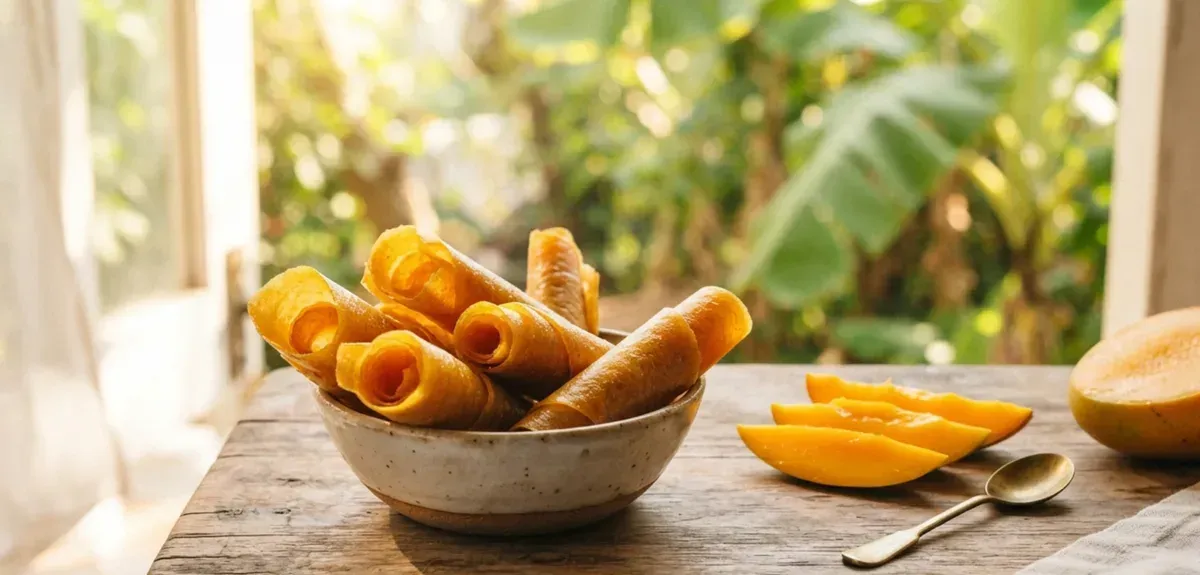
Once fully dried and cooled, store in an airtight container in a cool, dry place for up to 6 months, or in the fridge for even longer shelf life. If it feels at all sticky when you go to eat it, that’s usually a sign it wasn’t fully dried — a brief extra session in the oven can fix an underdone batch.
Frequently asked questions
How do I know when it’s actually done?
It should peel away from the parchment cleanly, with no sticky residue left behind, and feel firm and slightly chewy rather than tacky.
Can I use a food dehydrator instead of the oven?
Yes — a dehydrator set to a low fruit-leather setting (around 57–63°C/135–145°F) works well and often gives more even results than an oven, since it’s built for exactly this purpose.
Why did my aam papad turn out sticky instead of chewy?
Almost always it needed more drying time, or the layer was spread too thick to dry through evenly. Give it more time in the oven rather than assuming the recipe failed.
Can I use canned mango pulp?
Fresh mango gives the best flavour and pectin content, but canned pulp works in a pinch — just check it isn’t already heavily sweetened, and adjust the added sugar down accordingly.
Is this a good snack for kids?
In small amounts, yes — it has no artificial additives, but it is a concentrated source of natural sugar, so it’s better treated as an occasional sweet snack than an everyday one.
What else can I make with a big batch of ripe mangoes?
If you have more mangoes than you can dry at once, mango ice cream is a good alternative use that takes far less active time.
Source: USDA FoodData Central
Found this helpful?