Ajwain (Carom Seeds) for Bloating: What the Digestion Claim Actually Holds Up
Key takeaways
- Ajwain's sharp, thyme-like flavour comes mostly from thymol, a compound genuinely studied for stomach acid and digestive enzyme activity.
- Almost all of that research is in rats, not people — the human evidence for ajwain water easing bloating is traditional use, not clinical trials.
- A realistic serving is under a teaspoon (roughly 2-4g) — the 100g nutrition figures below are a standardised comparison, not a real portion.
- Ajwain is a normal, safe kitchen spice in typical cooking amounts; large or concentrated medicinal doses are the ones worth being cautious about, especially in pregnancy.
- Tempering ajwain in hot oil or ghee at the start of cooking releases more of its flavour compounds than adding it raw or at the end.
Source: USDA FoodData Central
Ajwain water after a heavy meal is one of those home remedies that’s so ordinary in Indian households nobody really questions it — a pinch of seeds boiled or steeped in water, drunk warm when your stomach feels too full or too tight. I’ve made it plenty of times myself, mostly out of habit rather than any real understanding of why it’s supposed to help. So I went looking at what’s actually behind it: what’s in ajwain, what thymol genuinely does for digestion, and where the claim starts to outrun the evidence.
What’s actually in ajwain
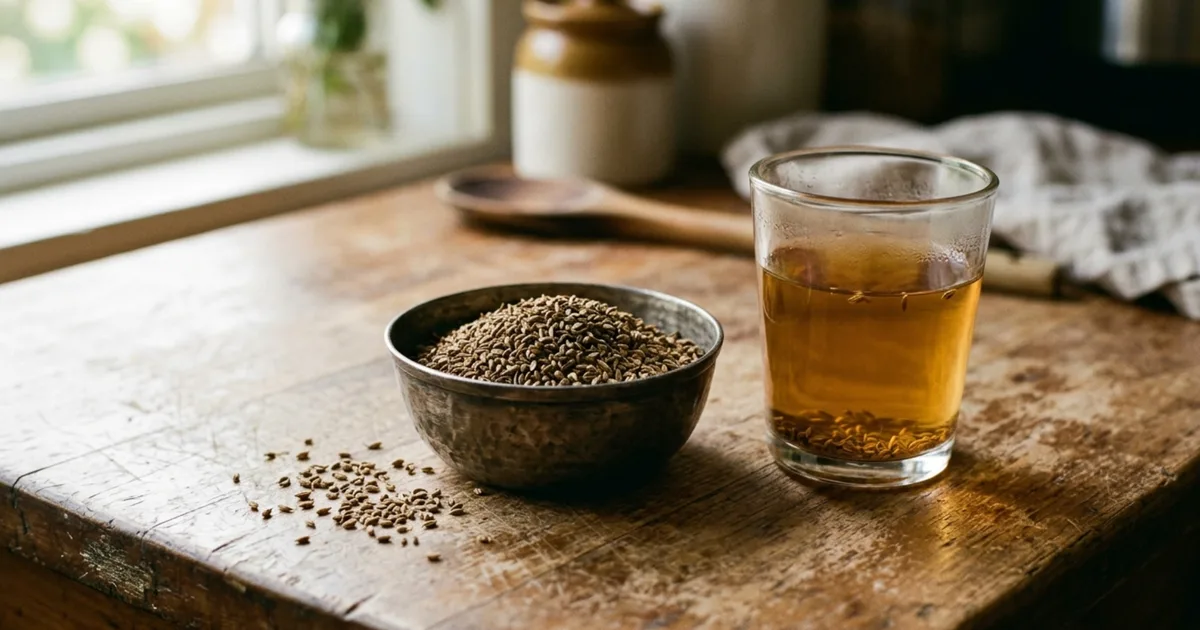
Ajwain, or carom seeds (Trachyspermum ammi), are small, ridged, greyish-brown seeds with an intense flavour — sharp, slightly bitter, close to thyme but much stronger. Per 100g, ajwain provides roughly 305 kcal, 16.2g protein, 43.8g carbohydrate, 25.4g fat, and an unusually high 38g of fibre, along with notable amounts of calcium and iron.
Those numbers look dramatic next to almost any vegetable, and that’s exactly where they’re misleading if you take them at face value. Nobody eats 100g of ajwain — it isn’t a food you portion out like rice or lentils. A realistic serving is a pinch to under a teaspoon, somewhere around 2-4g, used to temper a dal or flavour a paratha dough. The 100g figures are a standardised comparison basis, the same way any spice’s nutrition label works, not a realistic intake. At an actual serving size, ajwain isn’t contributing meaningful calories, protein, or fibre to your day. What it’s contributing is flavour, and a concentrated dose of a specific compound worth understanding on its own terms.
The thymol claim, examined honestly
Ajwain’s signature flavour and most of its studied activity come from thymol, an aromatic compound that makes up a large share of ajwain’s essential oil — some analyses of Trachyspermum ammi oil put thymol content well above half the oil’s composition, occasionally over 90% in certain seed populations. Thymol is also the same compound found in thyme, which is part of why ajwain smells and tastes so similar to it.
The digestion claim specifically traces back to a body of research on spices and gastrointestinal activity, much of it out of India. A frequently cited 2001 study by Platel and Srinivasan, published in Nutrition Research, tested a range of dietary spices — including ajowan (ajwain) — in rats and found it shortened food transit time by close to 28%, alongside other spices like ginger and cumin showing similar effects. Related work from the same research group found that dietary spices, ajwain among them, stimulated pancreatic digestive enzymes and increased bile acid secretion in rats. A separate line of research has also measured a marked rise in gastric acid secretion after ajwain exposure in animal studies — some sources describe it as roughly a fourfold increase, though that figure comes from older animal pharmacology work, not a controlled measurement in humans.
Here’s the honest summary: this is a real, reasonably consistent finding across multiple animal studies, not a single cherry-picked result. A 2004 review in the Indian Journal of Medical Research by the same two researchers described the digestive stimulant action of spices as having been “authenticated in exhaustive animal studies” — which is a careful way of saying the animal evidence is solid, while stopping short of claiming it’s proven in people. I couldn’t find a controlled human clinical trial testing ajwain water specifically for bloating or indigestion. What exists is decades of consistent animal pharmacology, a well-understood active compound, and a very long tradition of use — which is a genuinely different, weaker standard of evidence than a trial in humans, even though it’s also not nothing.
Practically, that means the mechanism behind “ajwain helps digestion” is plausible and reasonably well-supported at the level of stomach acid, enzymes, and bile — just not yet confirmed as an outcome you can count on in a human clinical sense. If ajwain water settles your stomach after a heavy meal, that’s a reasonable thing to keep doing. It’s just not accurate to describe it as clinically proven.
How I actually use ajwain in my kitchen
Ajwain works best when it’s given a chance to release its oils, which mostly happens with heat. For dals and vegetable sabzis, I add the seeds to hot oil or ghee at the very start, before onions or other spices go in — they should sizzle for a few seconds, similar to mustard seeds, until the kitchen smells sharp and slightly thyme-like. That’s the flavour actually moving from the seed into the oil, which then carries it through the rest of the dish.
For parathas, ajwain goes straight into the flour before you add water — a level teaspoon (around 3-4g) is plenty for a batch of dough serving 3-4 people. It’s also common in besan-based snacks like pakoras, where it cuts through the richness of the fried batter.
Ajwain water is simple: a level teaspoon of seeds steeped in a cup (240ml) of hot water for 5-10 minutes, strained, and drunk warm. Some people boil the seeds for a couple of minutes instead of steeping, which pulls out more flavour but also more bitterness — I prefer steeping for that reason.
My tip: If a recipe calls for ajwain and you don’t have it, don’t reach for thyme as a substitute — thyme’s flavour is much milder and it won’t temper in oil the same way. A small amount of cumin seed and a pinch of dried oregano gets closer, though it’s still not the same.
Ajwain pairs naturally with the same tempering base used across most Indian cooking — garlic goes into the same hot oil in many dals, and it shows up alongside fenugreek seeds in some pickle and paratha spice blends, since both are strong-flavoured seeds used in small quantities. If you’re building a stomach-settling routine around spices generally, ginger has a considerably stronger human evidence base for nausea specifically than ajwain currently does for bloating — worth knowing if you’re choosing between the two for a particular symptom. A simple vegetable khichdi tempered with ajwain and cumin is also one of the easiest ways to use it if a heavy meal is exactly what you’re trying to avoid next time.
A caution worth knowing
Ajwain in ordinary cooking amounts — a pinch to a teaspoon in a dish — is standard practice across Indian kitchens and isn’t a safety concern for most people. The caution applies to larger, concentrated, or medicinal-style doses rather than culinary use. Trachyspermum ammi has a documented history in traditional Indian medicine as one of several plants used to attempt to induce abortion, which is why concentrated ajwain preparations, rather than normal cooking use, are generally the ones flagged for caution in pregnancy. If you’re pregnant or breastfeeding and want to use ajwain beyond normal cooking amounts — as a concentrated water, extract, or specifically for a health purpose — check with your midwife or doctor first rather than assuming more is better, and see our broader guide on foods to avoid during pregnancy for other ingredients worth double-checking.
Frequently asked questions
Does ajwain water actually help with bloating?
It’s a reasonable, low-risk home remedy with a plausible mechanism behind it — thymol has been shown in animal studies to increase gastric acid, digestive enzyme activity, and bile secretion. There isn’t a human clinical trial confirming it relieves bloating specifically, so treat it as traditional and plausible rather than clinically proven.
How much ajwain is a normal serving?
Well under a teaspoon — typically a pinch to about 3-4g used in tempering, dough, or steeped for ajwain water. The 100g figures used for nutrition comparisons are not a realistic amount to eat in one sitting.
Is ajwain the same as thyme or oregano?
No, though they share thymol as a flavour compound, which is why the smell is similar. Ajwain comes from a different plant (Trachyspermum ammi, in the carrot family) and has a stronger, more bitter, more concentrated flavour than either thyme or oregano.
Can I drink ajwain water every day?
Occasional use in normal amounts is generally considered safe for most healthy adults. There isn’t strong research on daily long-term use specifically, so treat it the way you’d treat any concentrated herbal preparation — fine occasionally, not something to build into a daily supplement-style habit without a specific reason.
Is ajwain safe during pregnancy?
Normal culinary amounts in cooking are standard practice and not generally considered a concern. Concentrated ajwain water or medicinal-style doses are the ones worth checking with your midwife or doctor about first, given ajwain’s traditional use as an abortifacient in larger quantities.
What does ajwain actually taste like if I’ve never cooked with it?
Sharp, slightly bitter, and strongly aromatic — closer to thyme than to any other common Indian spice, but more intense. A little goes a long way, and raw, uncooked seeds taste noticeably harsher than ajwain that’s been tempered in hot oil.
References
- Ajwain / carom seeds nutrition data (per 100g) — Recipal Nutrition Database
- Platel, K., Srinivasan, K. (2001). Studies on the influence of dietary spices on food transit time in experimental rats. Nutrition Research, 21(9), 1309-1314. ScienceDirect
- Platel, K., Srinivasan, K. (2004). Digestive stimulant action of spices: a myth or reality? Indian Journal of Medical Research, 119, 167-179. PubMed
- Bahmani, M., et al. Thymol screening, phenolic contents, antioxidant and antibacterial activities of Iranian populations of Trachyspermum ammi (L.) Sprague. PMC, National Library of Medicine
Found this helpful?