Vegetable Khichdi: The One-Pot Meal for Busy or Unwell Days
Key takeaways
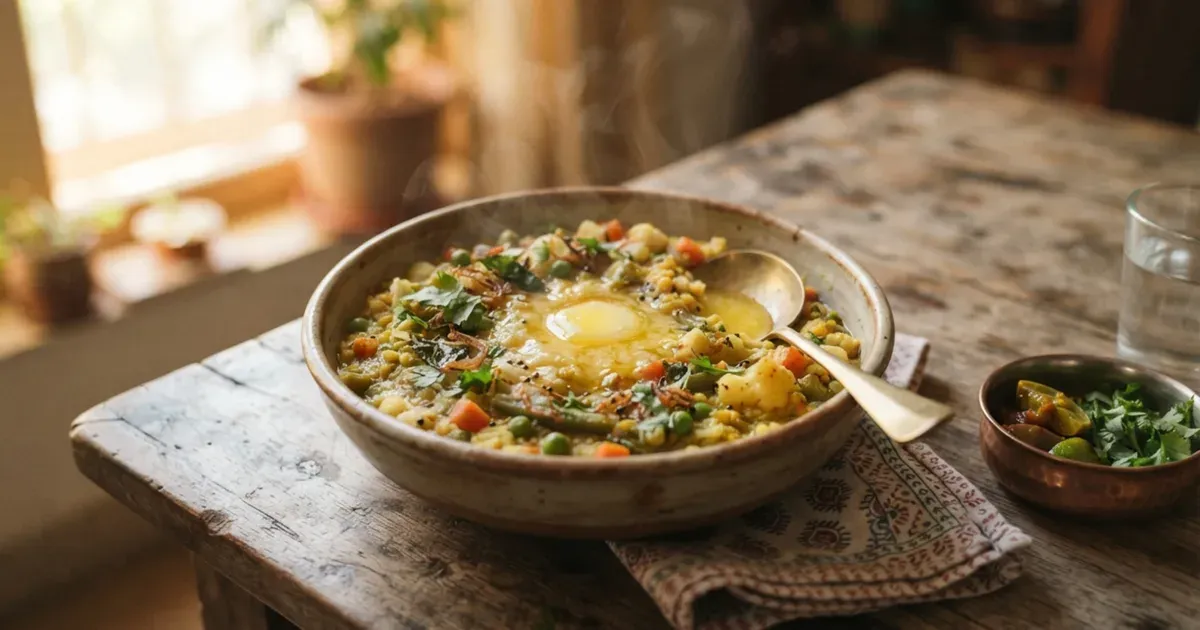
- Khichdi is rice and dal cooked together, which means it carries the same complete-protein logic as dal-chawal, just combined into one pot instead of two dishes.
- This is genuinely the meal I make on the busiest nights or when nobody in the house feels like cooking anything elaborate — one pot, minimal attention needed.
- It's also a traditional first solid food for babies and a common recommendation during illness or recovery, since it's gentle, easy to digest, and still nutritionally complete.
- Stirring in ghee at the end, rather than only cooking with it, helps your body absorb the fat-soluble vitamin A from the carrot and turmeric.
- Consistency is entirely up to preference — thicker and porridge-like, or looser and soupier, both are correct khichdi.
Ingredients
Check off ingredients as you go
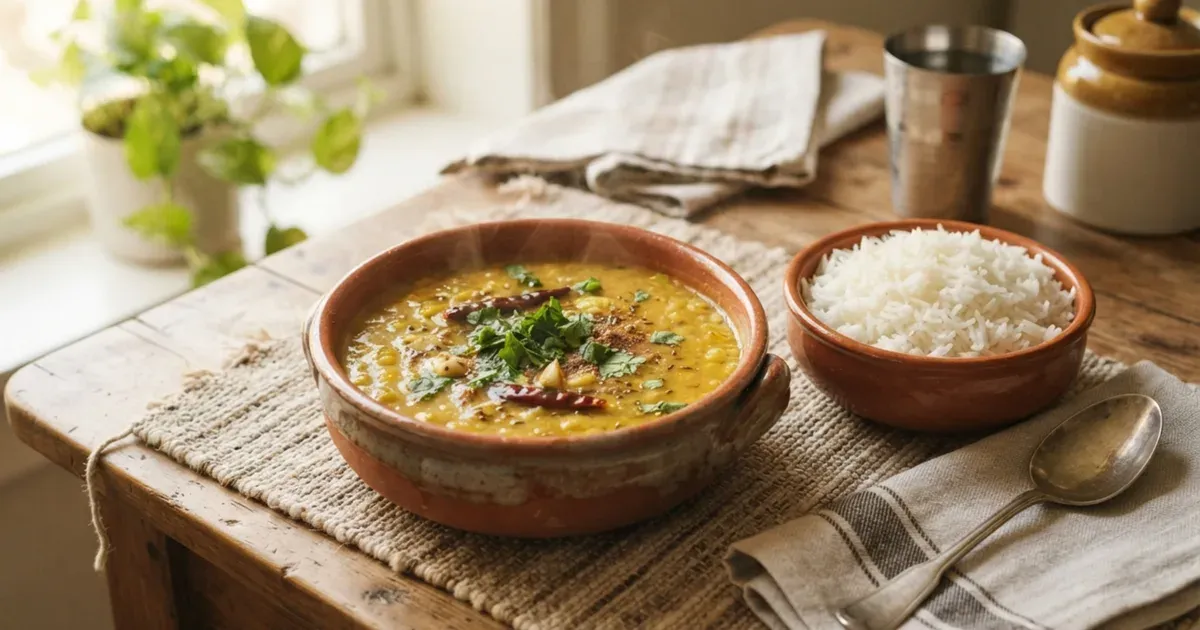
Khichdi is the meal I make when there’s genuinely no energy left for anything more involved — one pot, minimal chopping, and it somehow still feels like a proper, complete meal rather than a shortcut.
Why this recipe works
Khichdi is really just dal and rice cooked together in one pot instead of as two separate dishes — which means it carries the same complete-protein logic as dal-chawal: rice provides the amino acid moong dal is naturally low in, and the dal provides what rice is missing. Combining them into one pot doesn’t lose that benefit; it just makes the whole thing faster and requires far less attention while cooking.
The vegetables added along the way — carrot, potato, peas, tomato — aren’t just bulk. Stirring a spoonful of ghee in at the end, rather than only using it to cook, genuinely helps your body absorb more of the fat-soluble vitamin A from the carrot and turmeric, since that vitamin needs fat present to be properly absorbed.
Ingredients and how to make it
Follow the checklist and steps above. Moong dal is the traditional choice for khichdi because it cooks quickly and sits gently on digestion — it’s part of why khichdi shows up so often as a recovery food or a baby’s first solid food.
Vegetables are genuinely flexible here — use whatever’s actually in the fridge. Cauliflower, spinach, or beans all work well added at the same point as the carrot and potato.
My tip: If you like a bit of texture rather than a fully soft, mushy khichdi, add the vegetables a few minutes later than the rice and dal so they don’t overcook completely by the time everything is done.
Variations
Simple khichdi. Skip the vegetables entirely for a plain rice-and-dal khichdi — still a complete, gentle meal, and the classic version served to someone unwell or recovering.
Spiced up. A pinch of garam masala and a squeeze of lemon at the end turns this into a more flavourful, everyday dinner rather than a purely comfort-food version.
Thicker or looser. Reduce the water for a thicker, more scoopable khichdi, or add more for a soupier, almost porridge-like consistency — both are correct, it’s entirely about preference.
Storage
Keeps well in the fridge for up to 3 days in an airtight container. Khichdi thickens considerably as it sits, so add a splash of hot water when reheating to bring it back to your preferred consistency. It doesn’t freeze quite as well as dal alone, since the rice texture changes somewhat, but it’s still usable for up to a month if needed.
Frequently asked questions
Is khichdi actually a complete, balanced meal on its own?
Yes — the rice-and-dal combination provides a complete amino acid profile, and the added vegetables contribute fibre and vitamins, making it genuinely well-rounded for a single-pot dish.
Why is khichdi often given to babies or people recovering from illness?
It’s gentle on digestion, easy to make very soft, and still nutritionally complete thanks to the rice-dal combination — a practical reason it’s been a traditional choice for both for generations.
Can I make khichdi without a pressure cooker?
Yes — simmering it in an open pot takes a bit longer, around 20-25 minutes, and needs occasional stirring plus more water added as it cooks, but works exactly the same way.
Does the ghee actually matter, or is it just for taste?
Both — it adds real flavour, but stirring it in at the end also genuinely helps your body absorb the fat-soluble vitamin A from the carrot and turmeric in the dish.
Can I make this vegan?
Yes — use oil instead of ghee throughout, including at the end; you’ll lose a small amount of the vitamin-A-absorption benefit specifically tied to ghee’s fat content, though any cooking oil provides a similar fat-soluble-vitamin boost.
References
- USDA FoodData Central — Lentils, mature seeds, cooked; Carrots, raw.
Source: USDA FoodData Central
Found this helpful?