Lentils (Dal): Nutrition, Protein, and Why Dal-Chawal Actually Works
Key takeaways
- Cooked lentils have about 9g of protein, 8g of fibre, and roughly 3.3mg of iron per 100g — a genuinely strong nutritional profile for one of the cheapest staples in an Indian kitchen.
- Lentils on their own aren't a complete protein — they're low in one specific amino acid (methionine) that rice happens to provide.
- Real amino-acid research confirms dal-chawal (lentils and rice) genuinely forms a complete protein when eaten together — this isn't just a nice cultural pairing, it's chemically necessary.
- Lentils' iron is non-heme, meaning it's absorbed less efficiently than iron from meat — pairing dal with a vitamin-C source (like a squeeze of lemon or a tomato-based tadka) genuinely improves how much you absorb.
- Lentils are also a genuinely useful source of folate, relevant during pregnancy and for anyone managing iron levels.
Source: USDA FoodData Central
Dal-chawal was dinner more nights than I can count growing up — the kind of meal so routine it never occurred to me to ask whether the pairing had any real nutritional logic behind it, beyond just being what everyone ate. It turns out the pairing isn’t just habit; there’s real biochemistry behind why it works.
What’s actually in lentils
Cooked lentils carry about 9g of protein and 8g of fibre per 100g, alongside roughly 3.3mg of iron and a substantial 181mcg of folate — numbers that hold up well against far more expensive protein sources, in one of the cheapest staples available in most Indian kitchens.
Why lentils alone aren’t a complete protein
This is worth knowing precisely: lentils are genuinely low in one specific essential amino acid, methionine (a sulphur-containing amino acid), even though they’re a strong source of others, including lysine. A food needs all nine essential amino acids in reasonable amounts to count as a “complete” protein on its own — lentils fall just short on this one specific count.
Why dal-chawal genuinely solves this — not just tradition
Rice happens to provide exactly what lentils are missing: it’s a reasonable source of methionine but comes up short on lysine — the amino acid lentils supply in abundance. Real amino-acid research, including studies using the indicator amino acid oxidation method, has confirmed that combining cooked lentils with rice measurably improves protein quality and increases how much of that protein your body can actually use, compared to eating either one alone. This means dal-chawal isn’t a cultural habit that happens to be nutritionally fine — it’s a pairing that’s chemically necessary to get a complete amino acid profile from two plant foods that are each individually incomplete on their own.
The iron-absorption detail worth knowing
Lentils’ iron is non-heme iron — the plant-based form, which your body absorbs less efficiently than the heme iron found in meat. This is exactly why pairing dal with something containing vitamin C genuinely helps: a squeeze of lemon over the finished dish, or a tomato-based tadka (the tempered spice base many dals are finished with), measurably improves how much of that iron you actually absorb. This is the same underlying mechanism covered in our turmeric article for a different nutrient — small, traditional cooking choices often have a real, verifiable reason behind them, not just taste.
Other things worth knowing
Lentils and gas/digestion. Lentils, like other legumes, can cause noticeable gas for people not used to eating them regularly — this generally improves with consistent intake as gut bacteria adjust, and thoroughly cooking lentils (rather than undercooking them) also helps.
Lentils during pregnancy. Lentils’ folate and iron content make them a genuinely valuable food during pregnancy, and pairing dal with a vitamin-C-rich side — amla, citrus, or tomato — improves iron absorption specifically when it matters more. If you’re managing gestational diabetes, our guide to foods and drinks to limit or avoid during pregnancy covers the broader picture, though lentils themselves are a genuinely good, high-fibre choice in that context.
The biggest misconception about lentils
Treating lentils as “just a budget food” undersells what they actually deliver — genuine protein, fibre, iron, and folate at a fraction of the cost of most other protein sources, with a scientifically real reason the traditional dal-chawal pairing works as well as it does. This isn’t a compromise diet; it’s a nutritionally sound one that happens to also be inexpensive.
How I actually cook dal at home
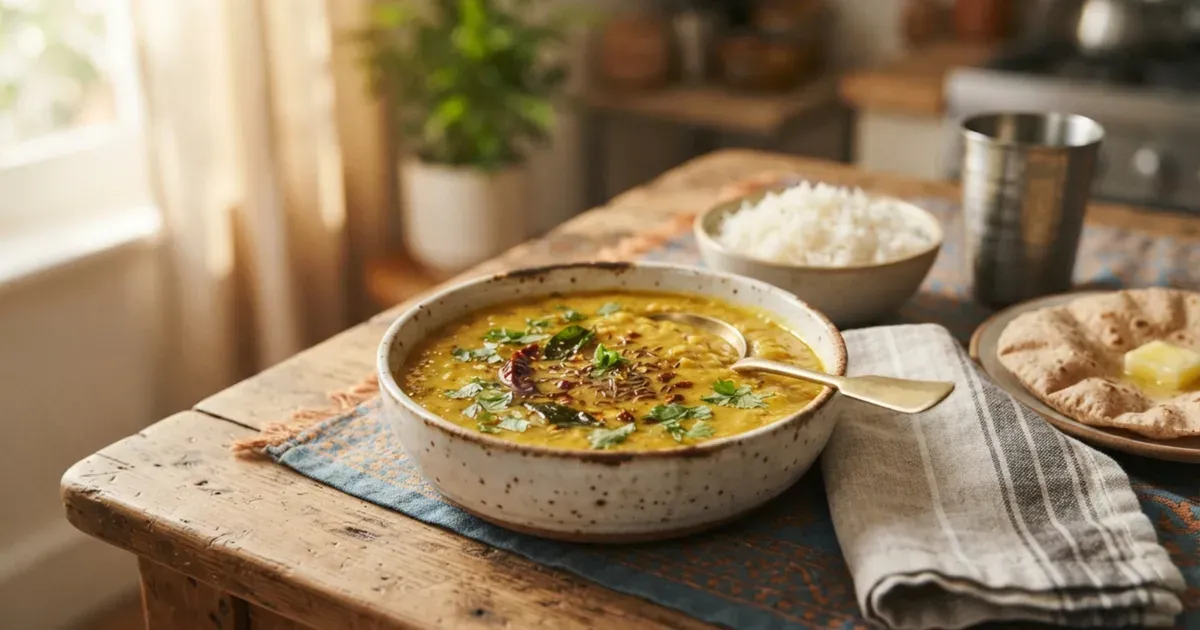
A simple yellow dal (toor or moong), tempered with cumin, turmeric, and a bit of garlic in oil, alongside rice, is still one of the most regular meals in my house — quick, cheap, and, as it turns out, genuinely well-balanced by design rather than accident. A squeeze of lemon at the end, or a tomato-forward tadka, is a small habit worth keeping specifically for the iron-absorption benefit.
My tip: Soaking lentils for 20-30 minutes before cooking, even a quick soak rather than overnight, noticeably reduces cooking time and tends to make them easier to digest.
Frequently asked questions
Is dal-chawal actually a complete protein, or just a nice combination?
It’s genuinely a complete protein when eaten together — rice provides the methionine lentils are naturally low in, and lentils provide the lysine rice is naturally low in. Real amino-acid research confirms this improves protein quality measurably, not just anecdotally.
Why do lentils sometimes cause gas or bloating?
This is common, especially if you don’t eat legumes often — it typically improves as your gut adjusts with regular intake, and thoroughly cooking lentils helps too.
Does adding lemon to dal actually make a nutritional difference?
Yes — lentils’ iron is the less-efficiently-absorbed non-heme type, and vitamin C (from lemon, tomato, or similar) genuinely improves how much of it your body absorbs.
Are lentils a good source of protein compared to meat?
They’re a strong plant-based source, though not “complete” on their own the way meat protein is — pairing with rice, as in dal-chawal, closes that gap effectively.
Are lentils safe and useful during pregnancy?
Yes — their folate and iron content are genuinely valuable, and pairing with a vitamin-C source improves iron absorption specifically, which matters more given pregnancy’s increased iron needs.
References
- USDA FoodData Central — Lentils, mature seeds, cooked.
- Metabolic Availability of Methionine Assessed Using Indicator Amino Acid Oxidation Method, Is Greater when Cooked Lentils and Steamed Rice Are Combined in the Diet of Healthy Young Men. The Journal of Nutrition. sciencedirect.com
Found this helpful?