Walnuts: Nutrition, and the Brain-Shaped Coincidence
Key takeaways
- Walnuts have about 654 calories per 100g and carry 2.5g of plant omega-3 (ALA) — more than any other common tree nut.
- Walnuts' wrinkled, two-lobed shape resembling a brain is a genuine botanical coincidence — it comes from how the seed folds to fit inside its shell during growth, not from any special brain-related property.
- Despite the shape being coincidental, real research links regular walnut consumption to better performance on memory and processing-speed tests.
- A 2021 systematic review found the existing studies use such different cognitive tests that a clean, combined conclusion isn't yet possible — the research is genuinely promising, not yet fully settled.
- Walnuts also carry a notable amount of magnesium and manganese alongside their omega-3 and protein content.
Source: USDA FoodData Central
The “walnuts look like tiny brains, so they must be good for your brain” idea gets repeated constantly enough that I wanted to know whether there was any actual substance behind it, or if it was just a memorable coincidence people had built a health claim on top of.
What’s actually in a walnut
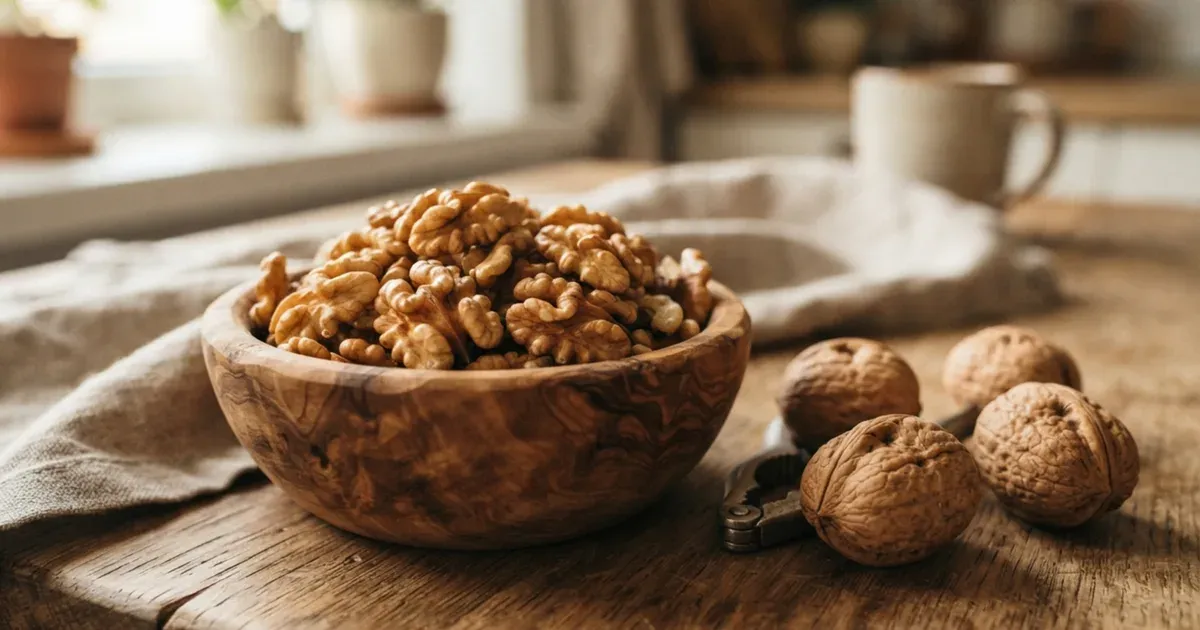
Walnuts carry about 654 calories per 100g, alongside 15.2g of protein and 6.7g of fibre. The standout number is 2.5g of plant omega-3 (ALA) per 100g — more than any other common tree nut — plus a genuinely notable amount of magnesium (158mg) and manganese.
The shape really is a coincidence
Cracking open a walnut shell reveals two wrinkled, folded halves separated by a thin membrane — a striking, near mirror-image resemblance to the brain’s two hemispheres. This resemblance is a real botanical coincidence: the wrinkled, bi-lobed shape comes from how the seed folds inward to fit efficiently inside its hard protective shell as it grows, with nothing about that growth process related to any brain-specific property of the nut itself.
But the actual research is real — just not fully settled yet
Here’s where it gets genuinely interesting: despite the shape being coincidental, real nutritional research does link walnut consumption to measurable cognitive benefits. Studies have found adults who regularly eat walnuts scoring higher on tests of memory, concentration, and processing speed compared to non-consumers, plausibly tied to walnuts’ omega-3 content (important for brain cell membrane structure), ellagic acid (an antioxidant linked to reduced brain inflammation), and natural melatonin content.
The honest caveat, worth stating clearly: a 2021 systematic review and meta-analysis of the existing research found that the studies use different, non-uniform cognitive tests, which means the evidence couldn’t be cleanly combined into one definitive conclusion. This is a genuinely promising, actively-researched area — not a settled, proven fact the way “walnuts contain omega-3” is. The honest version of this claim is “real, ongoing research links walnuts to better cognitive performance,” not “walnuts are scientifically proven to boost your brain.”
Other things worth knowing
Walnuts and heart health. Beyond the brain-specific research, walnuts’ omega-3 and unsaturated fat content has broader, more consistently supported research behind it for cardiovascular health — arguably the more solidly established benefit compared to the still-developing cognitive research above.
Tree nut allergy. Walnuts are a common tree nut allergen — a genuinely different and more serious category of reaction than the mild latex-fruit cross-reactivity covered in some of our fruit articles, and worth taking seriously if you have any known nut allergy.
Walnuts during pregnancy. Walnuts’ omega-3 and magnesium content make them a reasonable pregnancy snack in normal portions, alongside other nutrient-dense options like dates or amla. If nut allergy runs in your family, discuss introduction timing with your own doctor.
The biggest misconception about walnuts
Treating the brain-shape resemblance itself as evidence of a special brain benefit gets the logic backwards — the shape is coincidental, and the actual, separate nutritional research is what’s genuinely worth paying attention to, even though that research is still developing rather than fully conclusive. It’s a good example of a health claim where the folklore hook (the shape) isn’t the reason the food is actually good for you (the omega-3, antioxidants, and other real nutrients).
How I actually use walnuts at home
A small handful of walnuts, roughly a quarter cup, works well as a portable snack or scattered over oats for texture — genuinely minimal effort, and calorie-dense enough that a small amount goes a reasonably long way.
My tip: Store walnuts in the fridge or freezer rather than a pantry — their high fat content makes them prone to going rancid faster than most other pantry staples if kept at room temperature for too long.
Frequently asked questions
Is it true that walnuts look like a brain because they’re good for it?
No — the resemblance is a genuine botanical coincidence, from how the seed folds to fit inside its shell during growth. The actual cognitive research on walnuts is real, but it’s a separate fact from the shape itself.
Is there real scientific evidence that walnuts improve brain function?
There’s genuinely promising research linking regular walnut consumption to better memory and processing-speed test scores, but a 2021 review found the existing studies too inconsistent in methodology to combine into one definitive conclusion. It’s an active, real area of research — not yet a fully settled claim.
How much omega-3 do walnuts actually have?
About 2.5g of plant omega-3 (ALA) per 100g — more than any other common tree nut, though like other plant sources, it converts only partially into the more active omega-3 types found in fish.
Are walnuts a common allergen?
Yes — walnuts are a recognized tree nut allergen, a distinct and more serious category than mild fruit-related cross-reactivities, and worth taking seriously if you have any known nut allergy.
Are walnuts a good pregnancy snack?
Generally yes, in normal portions — their omega-3 and magnesium content are genuinely useful, though it’s worth discussing introduction timing with your doctor if nut allergy runs in your family.
References
- USDA FoodData Central — Nuts, walnuts, English.
- Walnut intake, cognitive outcomes and risk factors: a systematic review and meta-analysis. pmc.ncbi.nlm.nih.gov
Found this helpful?