Turmeric: Benefits, Curcumin, and the Black Pepper Trick
Key takeaways
- Curcumin, turmeric's active compound, is genuinely poorly absorbed on its own — most of it gets broken down and passes through before your body can use it.
- A landmark 1998 human study found that adding a small amount of black pepper increased curcumin absorption by 2,000%, largely by slowing how quickly the liver breaks it down.
- The nutrition stats often quoted for turmeric (huge percentages of daily iron and manganese) are based on 100g of the spice — nobody actually eats that much in a day.
- A realistic teaspoon of turmeric (about 2g) provides roughly 10% of daily iron and 15% of daily manganese — still genuinely useful, just a very different number from the 100g figure.
- This is exactly why turmeric is traditionally cooked with black pepper or oil in Indian food, not usually eaten as a raw powder on its own — it's an old, practical solution to a real absorption problem.
Source: USDA FoodData Central
Turmeric went into almost everything cooked at home growing up — it was simply “the yellow spice,” added by instinct rather than measurement, in nearly every dal and vegetable dish. What I never knew until researching this properly is that the traditional habit of cooking it with a pinch of black pepper isn’t just flavour — it’s solving a genuine absorption problem.
The absorption problem nobody mentions
Curcumin, the compound turmeric is famous for, has a real limitation: on its own, it’s genuinely poorly absorbed by the body. Most of what you eat gets broken down rapidly and passes through the digestive system before your body can actually use much of it — a real, well-documented issue, not a minor footnote.
The fix, and the actual research behind it
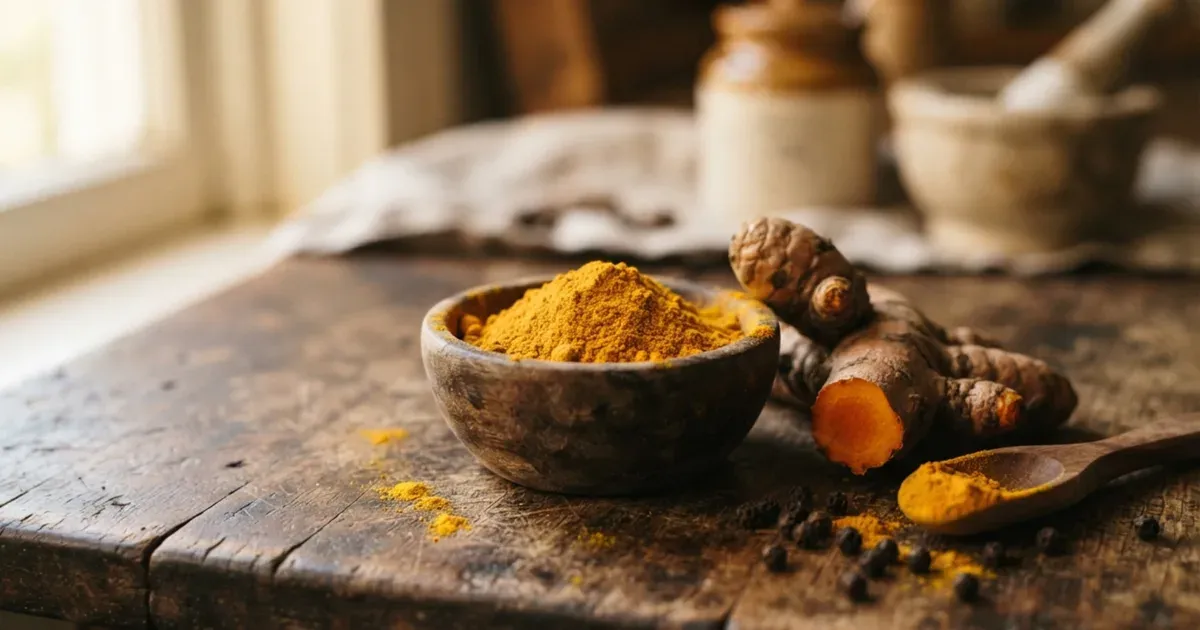
This is where black pepper comes in, and it’s backed by a genuine, well-known 1998 human study from St. John’s Medical College in Bangalore: adding a small amount of piperine (black pepper’s active compound) to curcumin increased its bioavailability by 2,000% — not a typo, a two-thousand-percent increase, achieved with just 20mg of piperine alongside the curcumin dose. Piperine works by helping curcumin pass through the intestinal wall more easily and by slowing down how quickly the liver breaks it down, keeping more of it circulating in the bloodstream where it can actually do something.
This is exactly why turmeric is traditionally cooked with black pepper, or in oil (curcumin is also fat-soluble, so cooking it in ghee or oil helps too), rather than eaten as a raw powder mixed into water. The habit long predates the 1998 study by generations — the research simply confirmed, with real numbers, what traditional Indian cooking had already been doing.
The misleading stat you’ll see everywhere
Turmeric’s nutrition numbers are often quoted per 100g — genuinely impressive-sounding figures for iron and manganese, since 100g of ground turmeric really does contain a large percentage of the daily target for both. The problem is nobody actually eats 100g of turmeric in a day; it’s a spice, used in small amounts. A realistic teaspoon (about 2g) provides roughly 10% of daily iron and around 15% of daily manganese — still genuinely useful, especially added consistently across regular cooking and alongside other iron sources like lentils/dal or spinach, but a very different, more honest number than the 100g figure that gets repeated in a lot of “superfood” content.
Other things worth knowing
Turmeric and inflammation research. Beyond the absorption story, curcumin has real research behind it for anti-inflammatory effects, though most of the strongest evidence comes from concentrated supplement doses rather than the amount used in everyday cooking — worth knowing the difference between “turmeric in your dal” and “a curcumin supplement” when reading benefit claims.
Turmeric during pregnancy. Culinary amounts of turmeric in cooking are considered safe during pregnancy, but concentrated turmeric or curcumin supplements are generally advised against, since high-dose supplementation hasn’t been well studied for pregnancy safety specifically. If you’re managing any pregnancy-related dietary concern, our guide to foods and drinks to limit or avoid during pregnancy is worth reading alongside any specific spice question.
The biggest misconception about turmeric
Treating turmeric powder alone, stirred into warm water or milk, as automatically therapeutic overstates what the curcumin in that cup can actually do without something to help it absorb. The traditional cooking method — turmeric alongside pepper, oil, or both, as part of an actual dish — isn’t a lesser or old-fashioned version of “real” turmeric benefits; it’s the version that’s actually backed by the absorption research.
How I actually use turmeric at home
Turmeric goes into nearly every dal and vegetable dish I cook, the same instinctive way it did growing up — a pinch, added early, cooked in oil alongside other spices rather than added raw at the end. If I’m making a turmeric-milk drink specifically for the cold season, a small pinch of black pepper goes in alongside it, both for the traditional taste and for the real absorption reason covered above.
My tip: If you’re making turmeric milk (haldi doodh) for its intended benefit rather than just the taste, a genuine pinch of black pepper — not a large amount, just enough to notice — matters more than adding extra turmeric.
Frequently asked questions
Why does turmeric need black pepper to actually work?
Curcumin, turmeric’s main active compound, is genuinely poorly absorbed on its own. A real human study found that adding piperine (black pepper’s active compound) increased curcumin absorption by 2,000%, largely by slowing its breakdown in the liver.
Is turmeric’s high iron and manganese content actually meaningful?
The commonly quoted figures are usually based on 100g of the spice, which nobody eats in a day. A realistic teaspoon (about 2g) still provides a genuinely useful amount — roughly 10% of daily iron and 15% of daily manganese — just a much smaller number than the 100g stat suggests.
Does cooking turmeric destroy its benefits?
No — cooking it in oil or ghee actually helps, since curcumin is fat-soluble. This is part of why traditional cooking methods (turmeric in a cooked dish, not raw powder in water) work well, rather than being a less “pure” way to consume it.
Is turmeric milk (haldi doodh) actually effective?
It’s a reasonable, traditional way to consume turmeric, and adding a small pinch of black pepper genuinely improves how much curcumin your body can actually use from it.
Is turmeric safe during pregnancy?
Culinary amounts used in normal cooking are generally considered safe. Concentrated turmeric or curcumin supplements are a different matter and are generally advised against during pregnancy, since high-dose safety hasn’t been well studied.
References
- Shoba, G., et al. Influence of piperine on the pharmacokinetics of curcumin in animals and human volunteers. Planta Medica, 1998.
- USDA FoodData Central — Spices, turmeric, ground.
Found this helpful?