Flaxseed: Nutrition, Lignans, and Why Whole Seeds Mostly Pass Through You
Key takeaways
- Flaxseed has about 534 calories per 100g, with a genuinely exceptional 22.8g of plant omega-3 (ALA) — the richest common plant source of it.
- Whole flaxseed has a hard outer shell that your digestive enzymes generally can't break through in normal transit time, meaning much of it can pass through undigested.
- Grinding flaxseed breaks that shell open, making the omega-3, fibre, and lignans inside genuinely accessible — a real, measured difference, not a minor preference.
- A human study found grinding or crushing flaxseed measurably increased the bioavailability of its lignans (a plant compound linked to hormone-related health research) compared to eating it whole.
- Ground flaxseed loses freshness faster than whole seeds, since grinding exposes the oils inside to air — buying whole and grinding small batches, or refrigerating ground flax, helps it stay usable longer.
Source: USDA FoodData Central
Flaxseed was one of those ingredients I bought once, sprinkled whole onto yoghurt a few times because that’s what the packaging photo showed, and largely forgot about — until I looked into why some sources insist on grinding it first and others don’t bother mentioning it at all.
What’s actually in flaxseed
Flaxseed is genuinely exceptional for one specific nutrient: about 22.8g of plant omega-3 (ALA) per 100g, making it one of the richest common plant sources of it available. Alongside that, it carries roughly 27-28g of fibre (a mix of soluble and insoluble) and around 20g of protein per 100g — a strong overall profile, even before getting to the compound flaxseed is specifically researched for.
The shell problem that changes everything
This is the detail that actually matters most: whole flaxseed has a hard, glossy outer shell that your digestive enzymes generally can’t break through during normal transit time. In practice, this means a meaningful portion of whole flaxseed can pass through your digestive system essentially intact — you’ve eaten it, but your body hasn’t actually accessed much of what’s inside.
What grinding actually changes, with real research behind it
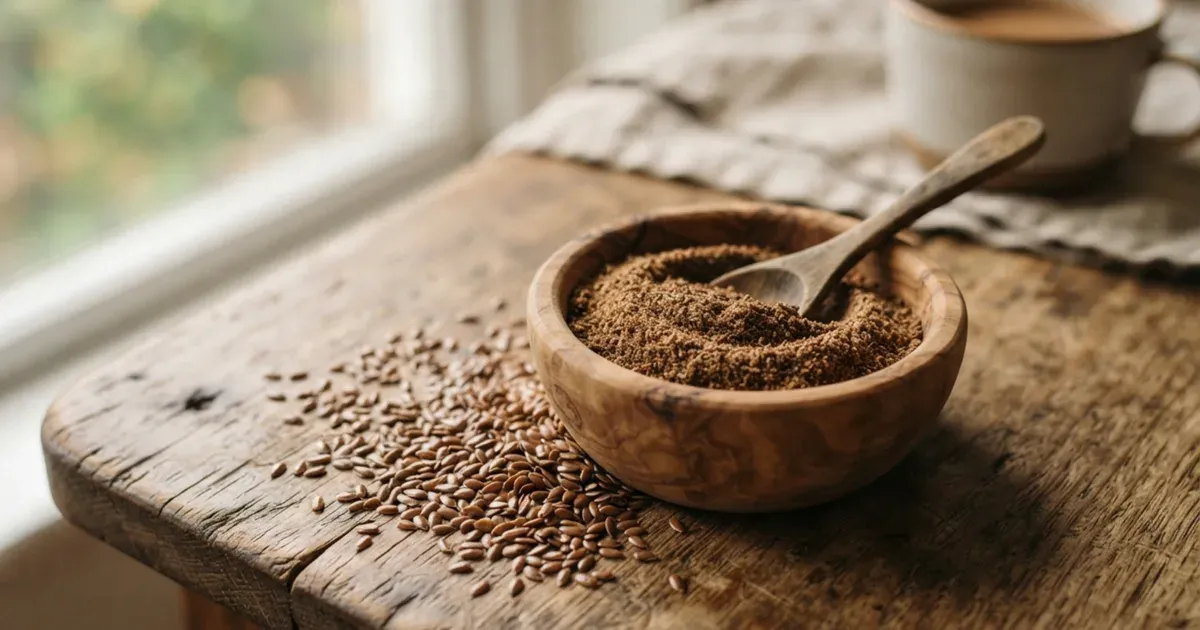
Grinding flaxseed breaks that shell open, making the omega-3, fibre, protein, and lignans inside genuinely accessible to digestion — this isn’t a minor textural preference, it’s the difference between a nutrient being physically available to your body or not. A controlled human study specifically testing this — comparing whole, crushed, and ground flaxseed — found that milling and crushing measurably increased the bioavailability of flaxseed’s lignans (a plant compound with real hormone-related research behind it) compared to eating the seeds whole. The practical takeaway is direct: ground flaxseed, not whole, is the version worth actually buying if you’re eating it specifically for its nutritional content.
The freshness trade-off worth knowing
Grinding flaxseed does come with a real downside: it exposes the oils inside to air, which makes ground flaxseed go rancid faster than whole seeds. Buying whole flaxseed and grinding small batches yourself (a coffee or spice grinder works fine), or keeping pre-ground flaxseed refrigerated rather than in a pantry, helps it stay fresh and usable for longer.
Other things worth knowing
Flaxseed’s omega-3 has the same conversion limit as chia’s. Flaxseed’s ALA converts to the more active EPA/DHA omega-3 types only partially in the body — the same nuance covered in our chia seeds article, since both are plant-based ALA sources rather than direct fish-based omega-3.
Flaxseed during pregnancy. Ground flaxseed in normal food amounts is generally considered fine during pregnancy, though very high intakes of flaxseed specifically (rather than food-level amounts) are sometimes advised against due to its mild hormone-related compounds — worth discussing with your own doctor if you’re considering a concentrated flaxseed supplement rather than a spoonful in food. Our guide to foods and drinks to limit or avoid during pregnancy covers the broader dietary picture.
The biggest misconception about flaxseed
Buying whole flaxseed and sprinkling it onto food, assuming it’s nutritionally identical to the ground version, misses the actual research on this specific point — the shell genuinely limits what you absorb. This isn’t pedantic; it’s the single most important practical fact about how to actually get value from flaxseed, more relevant than most of the other health claims attached to it.
How I actually use flaxseed at home
A tablespoon of ground flaxseed, stirred into porridge or a smoothie, is the easiest way I keep it in a regular rotation — genuinely minimal effort, and it disappears into the texture of whatever it’s added to rather than needing its own dish. I keep the ground flax in the fridge specifically because of the rancidity issue, rather than in the cupboard with other dry ingredients.
My tip: If you only have whole flaxseed, a quick 10-second pulse in a spice grinder right before use gives you the absorption benefit of ground flax without needing to buy or store a separate ground product.
Frequently asked questions
Is there really a difference between whole and ground flaxseed?
Yes, a genuine and researched one — whole flaxseed’s hard shell means much of it can pass through undigested, while grinding breaks that shell open and makes the omega-3, fibre, and lignans inside actually accessible.
Why does ground flaxseed go bad faster than whole seeds?
Grinding exposes the oils inside to air, which speeds up rancidity. Refrigerating ground flaxseed, or grinding small batches from whole seeds as needed, helps it stay fresh longer.
Is flaxseed’s omega-3 the same as fish-based omega-3?
Not quite — like chia seeds, flaxseed provides ALA, a plant form that converts only partially into the more biologically active EPA/DHA types found directly in fish.
What are lignans, and why do they matter?
They’re a plant compound found in notable amounts in flaxseed, with real research behind their hormone-related health effects — research has specifically shown grinding flaxseed increases how much of these lignans your body can actually absorb.
Is flaxseed safe during pregnancy?
Ground flaxseed in normal food amounts is generally considered fine, though very high or concentrated intakes are sometimes advised against — worth a quick check with your own doctor if considering more than a typical food-level amount.
References
- USDA FoodData Central — Flaxseed.
- The Relative Bioavailability of Enterolignans in Humans Is Enhanced by Milling and Crushing of Flaxseed. The Journal of Nutrition. sciencedirect.com
- Mayo Clinic — Flaxseed: Is ground better than whole? mayoclinic.org
Found this helpful?