Chia Seeds: Nutrition, and the Weight Loss Claim Checked
Key takeaways
- Chia seeds have about 486 calories per 100g — genuinely calorie-dense, so portion matters even though the serving size is naturally small.
- A single tablespoon has around 4-5g of fibre and 2.5g of plant omega-3 (ALA) — a real, meaningful amount from a small serving.
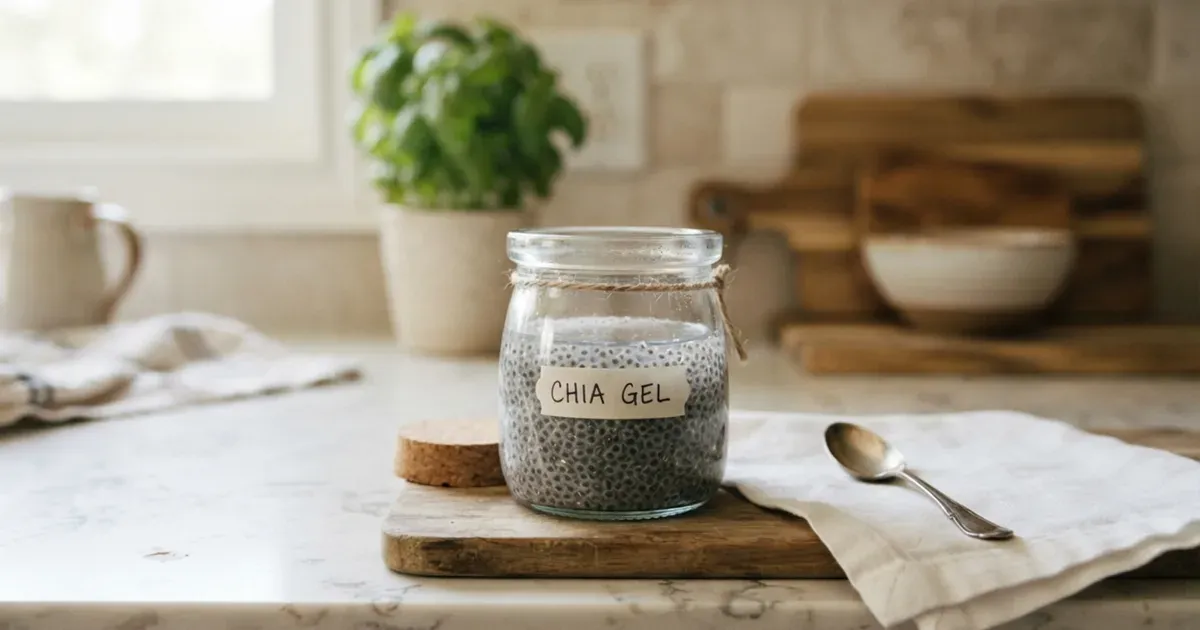
- Chia's soluble fibre absorbs up to 10-12 times its weight in water, forming a gel that genuinely slows digestion and can increase fullness.
- Clinical trials show modest weight loss only when chia seeds replace other, higher-calorie foods in your diet — simply adding chia on top of your existing meals hasn't shown the same effect.
- Chia's omega-3 is ALA, a plant form that converts to the more active omega-3 types (EPA/DHA) in the body, but only partially and inefficiently — it isn't a direct substitute for fish-based omega-3.
Source: USDA FoodData Central
Chia seeds have a reputation as an almost magical weight-loss food, repeated constantly enough online that it seemed worth actually checking what the research says, rather than taking the claim at face value.
What’s actually in chia seeds
Chia seeds are genuinely nutrient-dense: about 486 calories per 100g, with roughly 34g of fibre and 17.8g of plant omega-3 (ALA) in that same amount. Because the effective serving size is naturally small — a tablespoon is about 12g — this works out to a genuinely useful 4-5g of fibre and 2.5g of omega-3 from just a spoonful, alongside a notable amount of calcium.
The gel-forming property that’s actually real
Chia’s soluble fibre genuinely absorbs an impressive 10 to 12 times its own weight in water, forming a thick gel — this is a real, easily observable property, not an exaggeration. In the stomach, this same gel-forming action increases the volume of what you’ve eaten without adding much in the way of calories, and can genuinely signal fullness by slowing how quickly food moves through your digestive system.
The weight-loss claim, checked against the actual trials
This is where the honest picture gets more specific than most “chia for weight loss” content lets on. Clinical trials do show modest weight loss — in the range of roughly 0.9 to 1.9kg over 12 weeks — but only when chia seeds replace other, less filling or higher-calorie foods in the diet. Simply adding chia seeds on top of what you’d normally eat hasn’t shown the same benefit, and given how calorie-dense chia actually is, adding a large amount on top of an already-sufficient diet can just as easily add calories rather than remove them. The honest takeaway: chia seeds can be a genuinely useful substitution tool (used in place of something else, not sprinkled additionally everywhere), not an automatic weight-loss shortcut regardless of how you use them.
The omega-3 nuance worth knowing
Chia’s omega-3 is ALA (alpha-linolenic acid), the plant-based form. Your body can convert some ALA into the more biologically active omega-3 types, EPA and DHA — the kind found directly in fatty fish — but this conversion is genuinely partial and inefficient. This doesn’t make chia’s omega-3 useless, but it isn’t a direct, one-to-one substitute for fish-based omega-3 if that’s specifically what you’re trying to get more of — flaxseed shares this same ALA-conversion nuance, so the same caveat applies there too.
Other things worth knowing
Soaking matters for digestion. Dry chia seeds can absorb liquid in your digestive tract the same way they do in a bowl — staying well hydrated when eating chia, or soaking them beforehand, is a reasonable, low-effort precaution.
Chia during pregnancy. Chia’s fibre, calcium, and plant omega-3 content make it a reasonable addition during pregnancy, in normal food-based amounts. Our guide to foods and drinks to limit or avoid during pregnancy covers the broader dietary picture if you have specific concerns.
The biggest misconception about chia seeds
The idea that chia seeds are a standalone weight-loss solution overstates what the actual trials show — the benefit is real but conditional, tied specifically to substitution rather than simple addition. Treating chia as a genuinely nutrient-dense food worth including as part of a varied diet is the more accurate, sustainable framing than expecting a specific number on the scale from adding a spoonful to your existing meals.
How I actually use chia seeds at home
A tablespoon of chia soaked overnight in milk or a plant-based alternative, with a little honey and dates or fruit added in the morning, replaces what would otherwise be a less filling breakfast for me — exactly the substitution use the research actually supports, rather than sprinkling chia onto meals that already have enough volume.
My tip: Stir chia seeds into liquid within the first minute of adding them, and again a couple of minutes later — this prevents the seeds clumping together into a single dense lump rather than forming an even gel throughout.
Frequently asked questions
Do chia seeds actually help with weight loss?
The evidence is more specific than the common claim suggests — modest weight loss shows up in trials only when chia seeds replace other, higher-calorie foods, not when they’re simply added on top of an existing diet.
How much fibre and omega-3 is actually in a tablespoon of chia seeds?
Around 4-5g of fibre and 2.5g of plant omega-3 (ALA) — a genuinely useful amount from a small serving, though chia is calorie-dense enough that portion still matters.
Is chia’s omega-3 the same as the omega-3 in fish?
Not quite — chia provides ALA, a plant form your body converts partially and inefficiently into the more active EPA/DHA types found directly in fatty fish. It’s a genuine but different, less direct source.
Why do chia seeds form a gel in water?
Their soluble fibre absorbs up to 10-12 times its weight in liquid — a real, easily observable property that also happens inside your digestive tract, which is part of why staying hydrated matters when eating them.
Are chia seeds safe during pregnancy?
Yes, in normal food-based amounts — their fibre, calcium, and plant omega-3 content are all genuinely useful additions to a varied pregnancy diet.
References
- USDA FoodData Central — Seeds, chia seeds, dried.
- Systematic evaluation of the impact of chia seeds on weight loss. researchgate.net
Found this helpful?