Overnight Oats: The Recipe, and What Soaking Actually Changes
Key takeaways
- No cooking required — the oats soften entirely through soaking overnight in the fridge.
- Cold-soaked oats retain more resistant starch (a type linked to gut health benefits) than the same oats once cooked, since heat breaks resistant starch down.
- Soaking does reduce phytic acid (a compound that can block some mineral absorption), but the dramatic reduction percentages sometimes quoted online come from lab conditions with warm temperatures and longer soak times — a simple overnight fridge soak has a real but more modest effect.
- This is a genuinely practical meal-prep option — make several jars at once for a working week's worth of breakfasts with almost no active time.
- Chia seeds are optional but add real fibre and a thicker, pudding-like texture if you want it.
Ingredients
Check off ingredients as you go
Overnight oats solved a genuine problem for me: breakfast that requires zero attention in the morning, prepared the night before in the few minutes it takes to actually think about the next day.
Why this recipe works
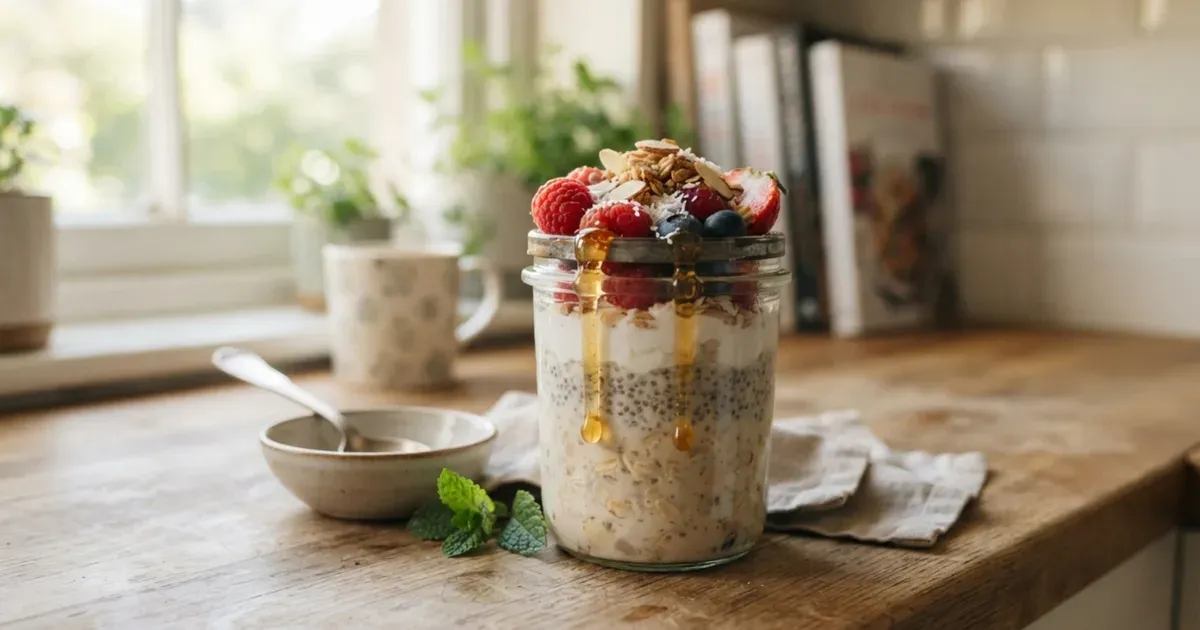
Soaking oats in liquid overnight softens them completely without any cooking — the oats absorb the milk and yoghurt over several hours in the fridge, ending up with a texture closer to a thick pudding than dry oats. This makes it a genuinely practical meal-prep option: a batch of several jars, made once, covers most of a working week’s breakfasts with no morning effort beyond adding toppings.
There’s a real, if sometimes overstated, nutritional story behind the soaking too. Cold-soaked oats retain more resistant starch — a type of starch linked to gut health benefits — than the same oats once cooked, since heat breaks resistant starch down. Soaking also does genuinely reduce phytic acid, a compound in oats that can interfere with absorbing some minerals. It’s worth being honest about the scale of this second effect, though: some of the more dramatic phytic-acid-reduction percentages quoted online come from controlled lab studies with warmer temperatures and longer soaking windows than a simple overnight fridge soak achieves. A basic overnight soak still has a real, meaningful effect — just a more modest one than the most impressive-sounding stats suggest.
Ingredients and how to make it
Follow the checklist and steps above. The ratio of oats to liquid (roughly 1:1, plus the yoghurt) is a good starting point — adjust based on how thick you like it, since oats vary somewhat in how much they absorb.
Chia seeds are entirely optional, but if you enjoy a thicker, pudding-like texture, adding a tablespoon genuinely changes the result — chia’s soluble fibre absorbs a large amount of liquid overnight, on top of what the oats themselves absorb.
My tip: Prep 3-4 jars at once on a Sunday for the working week ahead — the base keeps well in the fridge for several days, and you just vary the toppings each morning to keep it from feeling repetitive.
Variations
Fruit and nut butter. Stir a spoonful of peanut or almond butter into the base the night before for a richer, more filling result.
Cocoa. A teaspoon of cocoa powder added to the base turns this into a chocolate version, still genuinely simple.
Higher protein. A scoop of plain protein powder, or extra yoghurt in place of some of the milk, boosts the protein content if that’s a priority for your morning.
Storage
Keeps well in the fridge for up to 4-5 days in a sealed jar or container, without toppings added. Add fresh fruit or anything crunchy only right before eating, since both lose their texture and freshness if left sitting in the soaked oats overnight.
Overnight oats also pairs well with dates as the sweetener instead of honey, for a bit of extra fibre alongside the sweetness — a couple of chopped, pitted dates soaked in with the rest of the mixture soften nicely by morning. If it’s protein you’re after more than fibre, a spoonful of flaxseed stirred in works alongside or instead of the chia.
Frequently asked questions
Do I really need to soak overnight, or does a few hours work?
A minimum of about 4 hours gives a workable texture, but a full overnight soak (8+ hours) gives the best, most fully softened result.
Is overnight oats actually healthier than cooked oatmeal?
It’s a genuine trade-off rather than one being clearly superior — cold-soaked oats retain more resistant starch, while cooking reduces phytic acid more thoroughly. Both are reasonable ways to eat oats.
Can I make overnight oats without dairy?
Yes — any plant-based milk and yoghurt work well as substitutes, with only minor differences in creaminess.
How many jars can I realistically prep at once?
Most people find 3-4 days’ worth keeps well without the texture degrading — beyond that, the oats can start to break down too much for some people’s taste.
Is it okay to add fruit the night before instead of in the morning?
It’s better to add fresh fruit just before eating — most fruit gets noticeably softer and less appealing after sitting in the soaked oats overnight.
References
- Malting of oats in a pilot-plant process. Effects of heat treatment, storage and soaking conditions on phytate reduction. Journal of Cereal Science. sciencedirect.com
Source: USDA FoodData Central
Found this helpful?