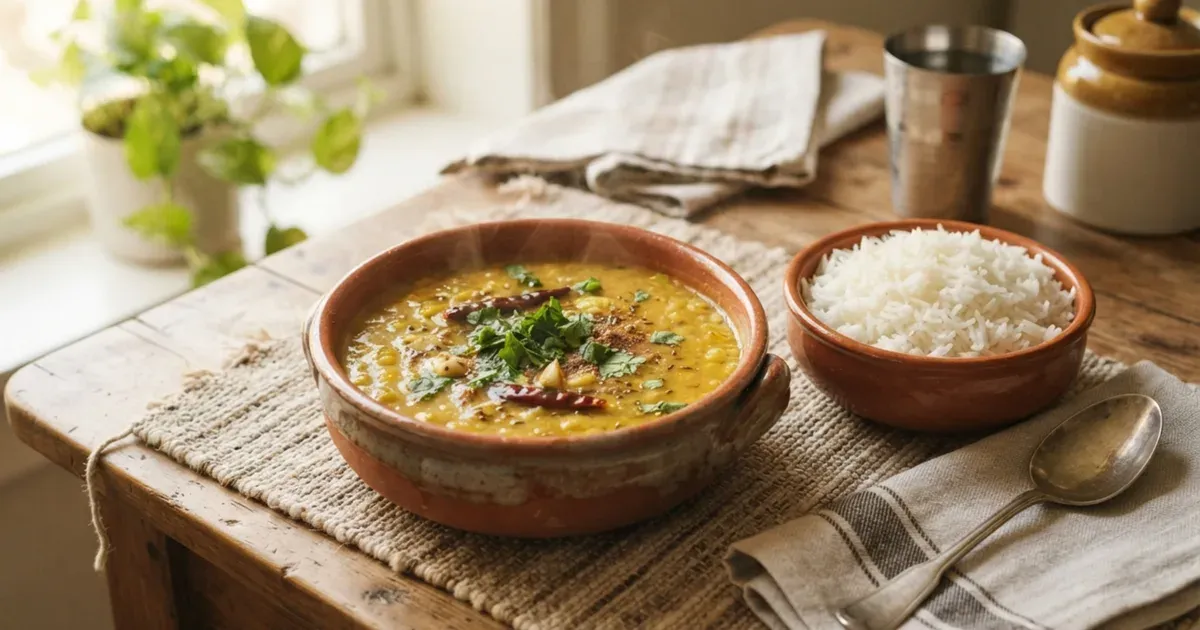
Everyday Dal Tadka: The Recipe I Actually Cook Most Nights
Key takeaways
- This is genuinely the dal I cook most nights — no special ingredients, nothing that needs advance planning.
- Dal paired with rice (dal-chawal) forms a real, complete protein — rice provides the amino acid lentils are naturally low in, and lentils provide the one rice is naturally low in.
- Cooking the tomato-onion base properly in oil, until the raw tomato smell disappears, genuinely improves nutrient absorption, not just flavour.
- Letting crushed garlic rest a few minutes before it hits the pan preserves more of its beneficial compound than adding it straight to hot oil.
- A squeeze of lemon at the end helps your body absorb more of the dal's iron — a small habit worth keeping, not just a flavour choice.
Ingredients
Check off ingredients as you go
Dal tadka is the recipe I actually cook most nights, not the version I make when I’m trying to impress anyone — simple, quick, and built from ingredients that are always in the kitchen anyway.
Why this recipe works
Nothing about this recipe is unusual — it’s the same basic dal tadka cooked in most Indian households, built from turmeric, cumin, garlic, onion, and tomato. What’s worth knowing is that a few of the small, traditional steps in how it’s made aren’t just habits passed down without reason — letting crushed garlic rest before cooking and cooking the tomato base properly in oil both measurably change what you actually get out of the dish, beyond taste.
Serving this with rice isn’t incidental either — dal and rice together form a genuine complete protein, each providing the specific amino acid the other is naturally low in. This isn’t a nice cultural pairing that happens to also be nutritionally fine — it’s a combination that’s genuinely necessary to get the full amino acid profile from two otherwise-incomplete plant proteins.
Ingredients and how to make it
Follow the checklist and steps above. Toor dal gives a heartier, slightly earthier result; moong dal cooks faster and is gentler if you’re eating it while unwell or want something lighter.
The tadka (the tempered spice mixture stirred into the cooked dal at the end) is the part worth taking your time over — rushing the onion and tomato through on high heat instead of letting them properly soften and cook down loses both flavour and the real nutrient-absorption benefit that comes from cooking tomato thoroughly in oil.
My tip: If you’re short on time, cook the dal in a pressure cooker instead of an open pot — 3-4 whistles on medium heat gets it fully soft in under 15 minutes, and you can prepare the tadka while it cooks.
Variations
Spinach dal. Stir a couple of handfuls of chopped spinach into the dal in the last 5 minutes of cooking for extra iron and a different texture.
Without onion-garlic. Skip the onion and garlic and add a pinch more asafoetida instead, for a simpler, satvik version of the same dish.
Thicker or thinner. Add less water while cooking the dal for a thicker consistency closer to a dal fry, or more water for a thinner, soupier dal — both are correct, it’s a matter of preference.
Storage
Keeps well in the fridge for up to 4 days in an airtight container, and the flavour genuinely improves by the next day as the spices settle in further. Freezes well for up to 2 months — thaw in the fridge overnight and reheat gently on the stove with a splash of water to loosen it back up.
Frequently asked questions
Which dal is best for this recipe?
Toor dal is the classic choice for a heartier, everyday dal tadka. Moong dal works well too, cooks faster, and is gentler on digestion if that matters to you.
Do I really need to let the garlic rest before cooking it?
It’s a small step, but it’s genuinely backed by research — crushing garlic and letting it sit for a few minutes before it hits the heat preserves more of its beneficial compound than cooking it immediately.
Can I make this without a pressure cooker?
Yes — simmering the dal in an open pot takes a bit longer (15-20 minutes) but works exactly the same way, just check occasionally and add water if it’s cooking dry.
Is this dal actually a complete meal on its own?
Paired with rice, yes — the combination genuinely provides a complete amino acid profile. On its own, dal is still a strong source of protein, fibre, and iron, just not technically “complete” without a grain alongside it.
Can I make this vegan?
Yes — use oil instead of ghee for the tadka, and the rest of the recipe is naturally plant-based already.
References
- USDA FoodData Central — Lentils, mature seeds, cooked.
Source: USDA FoodData Central
Found this helpful?