Broccoli Nutrition: Sulforaphane, and Why How You Cook It Matters
Key takeaways
- A cup of raw broccoli has just 31 calories but carries more vitamin C than an orange, plus a full day's worth of vitamin K.
- How you cook broccoli dramatically changes how much sulforaphane, its most-researched compound, your body actually absorbs.
- Boiling for 10 minutes can cut usable sulforaphane by roughly 90%; light steaming preserves far more of it.
- The 'broccoli hurts your thyroid' concern is largely overstated for normal intake — a 2024 systematic review found no real effect in humans.
- Broccoli carries enough vitamin K to matter for consistency if you're on blood-thinning medication.
Source: USDA FoodData Central
Broccoli was one of the first vegetables I learned to actually cook properly rather than just boil into submission, mostly because my daughter would only eat it if it still had some bite to it. It turns out that preference — undercooked over mushy — matches what the actual research says is better for you too, which I didn’t know until I looked into why broccoli’s reputation is so specifically tied to how you prepare it.
What’s actually in broccoli
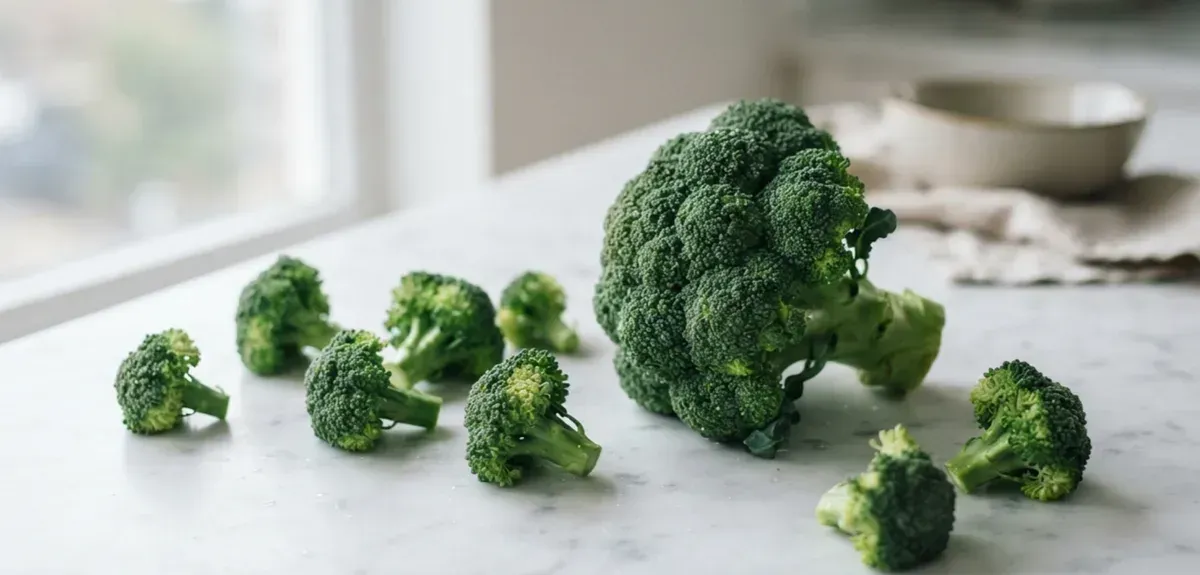
A cup of raw broccoli (about 91g) is just 31 calories but delivers more vitamin C than an orange, along with a full day’s worth of vitamin K and a meaningful amount of fibre — genuinely one of the most nutrient-dense vegetables you can eat by weight.
The compound that changes based on how you cook it
This is the most interesting, and most actionable, thing about broccoli. Its best-known health compound, sulforaphane, doesn’t actually exist in the raw vegetable — it forms when an enzyme called myrosinase converts a precursor compound during chewing or cutting. The problem is that myrosinase is heat-sensitive and starts breaking down above about 70°C. Research comparing cooking methods found that boiling broccoli for around 10 minutes destroys nearly all the myrosinase and leaches much of the remaining precursor compound into the cooking water, cutting the sulforaphane your body actually absorbs by roughly 90% compared to raw. Light steaming — just a minute or two at a lower temperature — preserves far more of the enzyme and produces meaningfully better sulforaphane absorption than either boiling or eating it raw and cold.
There’s also a genuinely clever trick backed by research here: adding a small amount of raw mustard seed powder to cooked broccoli, which itself contains active myrosinase, can restore several times more sulforaphane availability even after the broccoli’s own enzyme has been cooked out. It sounds like a kitchen myth, but it’s a real, tested effect.
The thyroid concern, honestly examined
Broccoli and other cruciferous vegetables get flagged constantly for containing “goitrogens” — compounds that can, in theory, interfere with thyroid function. A 2024 systematic review of the actual human research found the vast majority of evidence does not support meaningful thyroid effects from normal cruciferous vegetable intake, including in people already managing a thyroid condition. The real risk factor is combining very large amounts of raw cruciferous vegetables with an existing iodine deficiency — a specific, fairly unusual combination, not something typical broccoli eating triggers. If you have a thyroid condition, cooking your broccoli (which reduces the compounds in question anyway) and maintaining adequate iodine intake covers the bases without needing to avoid broccoli altogether.
Broccoli during pregnancy
Broccoli’s fibre and folate content make it a genuinely useful vegetable during pregnancy, and its vitamin C supports iron absorption from other foods eaten in the same meal. The vitamin K content is worth being aware of only if you’re on blood-thinning medication — see our foods and drinks to limit or avoid during pregnancy for the broader picture on medication-relevant nutrients.
Risks worth knowing
Vitamin K and blood thinners. Broccoli’s vitamin K content is high enough to matter if you’re on warfarin — the goal, as with other vitamin K-rich vegetables, is consistent intake rather than avoidance.
Digestive discomfort. Broccoli’s fibre and sulfur compounds can cause gas or bloating in some people, particularly if eaten raw or in large amounts without your gut being used to it. Cooking it lightly, rather than eating it raw, tends to ease this for most people.
How I actually cook broccoli at home
Light steaming, cut into smaller florets so they cook evenly in just a couple of minutes, is my default now — it keeps the texture my daughter wants and, per the research above, preserves more of the actual nutrition than boiling ever did. When I do want it cooked longer, a quick sauté with garlic at high heat gets flavour without the extended water-boiling that does the most damage to sulforaphane content.
My tip: Cut or chop your broccoli about 10 minutes before cooking it, rather than straight into the pan — this gives the myrosinase enzyme time to start converting the sulforaphane precursor before any heat is applied, which preserves more of it even if you do end up cooking it further.
For how broccoli compares to the rest of the cruciferous family, see our guide to the vegetables worth eating most often.
Frequently asked questions
Does cooking broccoli destroy its nutrition?
It depends heavily on the method. Boiling for an extended time destroys much of the enzyme responsible for sulforaphane formation and leaches nutrients into the water. Light steaming preserves far more.
Should I eat broccoli raw for maximum nutrition?
Raw broccoli does retain active myrosinase, but light steaming (rather than boiling) can actually produce comparable or better sulforaphane availability while being easier to digest for most people.
Does broccoli really hurt your thyroid?
For most people eating normal amounts, no — a comprehensive 2024 review found no meaningful thyroid effect from typical cruciferous vegetable intake, even in people with existing thyroid conditions.
Is broccoli safe if I’m on blood thinners?
Yes, in consistent amounts. Broccoli’s vitamin K content matters for medication interaction only if intake swings dramatically week to week.
How can I get more sulforaphane from cooked broccoli?
Chop it and let it sit for about 10 minutes before cooking, steam it lightly rather than boiling, and consider adding a small amount of raw mustard seed powder, which contains its own active enzyme.
References
- USDA FoodData Central — Broccoli, raw.
- Bongiorno R, et al. Bioavailability Study of Isothiocyanates and Other Bioactive Compounds of Brassica oleracea L. var. Italica Boiled or Steamed. Foods, 2022. ncbi.nlm.nih.gov
- Galanty A, et al. Do Brassica Vegetables Affect Thyroid Function?—A Comprehensive Systematic Review. International Journal of Molecular Sciences, 2024. ncbi.nlm.nih.gov
Found this helpful?