Kale Nutrition: Why Its Calcium Beats Spinach, and the Vitamin K Warning
Key takeaways
- Kale's calcium is genuinely well absorbed — research suggests your body takes up roughly 8 times more of it than the calcium in spinach.
- That difference comes down to oxalate content: kale is naturally low in oxalate, while spinach's calcium is largely locked up as calcium oxalate.
- A cup of raw kale carries an enormous amount of vitamin K — over three times the daily requirement — which matters most if you're on blood-thinning medication.
- Raw kale can taste bitter and tough due to its cellulose structure; massaging or briefly cooking it breaks this down.
- Kale is a genuinely strong calcium source for anyone limiting dairy, not just a trendy leafy green.
Source: USDA FoodData Central
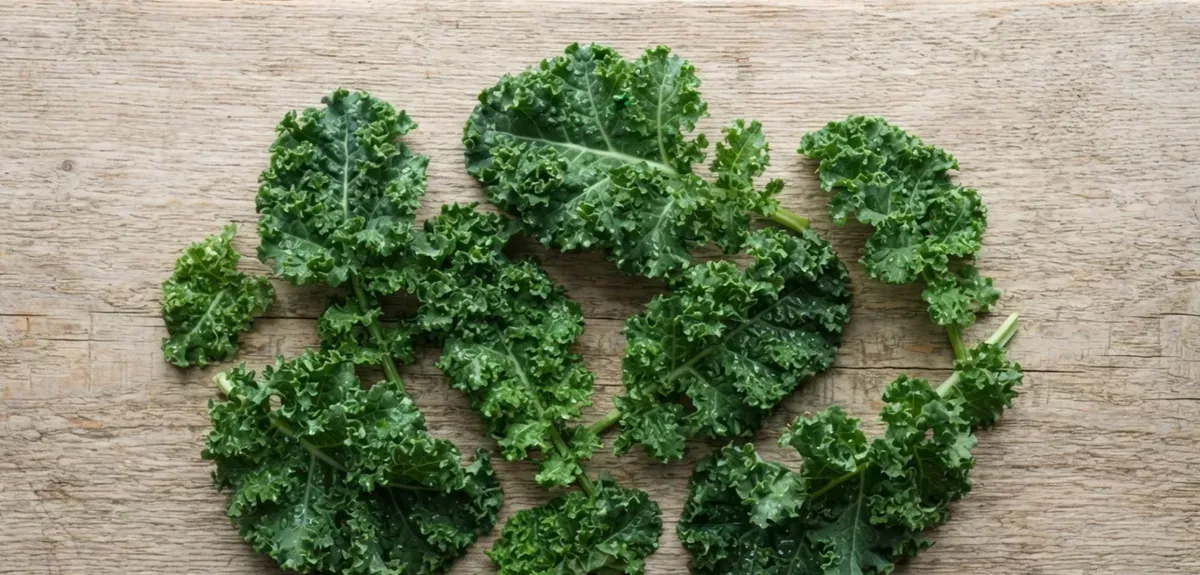
Kale showed up in my kitchen mostly because it’s everywhere in Finland’s winter vegetable aisles when little else fresh is available. What kept it in regular rotation, once I looked into the research, was finding out its calcium content isn’t just high on paper — it’s actually one of the better-absorbed plant calcium sources there is, which isn’t something I’d have assumed from a leafy green.
What’s actually in kale
A cup of raw kale (about 67g) is roughly 33 calories but carries a genuinely dense nutrient profile: strong vitamin C, meaningful calcium, and an enormous amount of vitamin K — more on that below. Per 100g, that’s about 35 calories, 254mg of calcium, and 104mg of vitamin C.
Why kale’s calcium is better than the number suggests
This is the fact that changed how I think about kale specifically. Spinach often gets cited as calcium-rich, but most of that calcium exists as calcium oxalate, a form your body absorbs poorly — research using isotope tracing found calcium absorption from spinach sits around just 5%. Kale, by contrast, is naturally low in oxalate, and its calcium exists in a more soluble form your body can actually use — the same research found kale’s calcium absorption around 40%, roughly eight times better than spinach’s, and even higher than the absorption rate typically reported for milk. In practical terms: gram for gram of absorbed calcium, kale does more for you than its total calcium number alone would suggest, and more than spinach despite spinach’s higher calcium content on a nutrition label.
The vitamin K number that actually matters
Kale’s vitamin K content is enormous — a single cup carries well over three times a typical daily requirement. For most people, this is simply a strength: vitamin K matters for blood clotting and bone health. But if you’re on a blood-thinning medication like warfarin, this is the single most important thing to know about kale specifically, more so than with most other vegetables. The advice, as with other vitamin K-rich greens, isn’t to avoid kale — it’s to keep your intake roughly consistent week to week, since sudden large increases or drops are what actually throw off these medications, not a stable amount eaten regularly.
Kale during pregnancy
Kale’s folate, calcium, and iron content make it a genuinely useful vegetable during pregnancy. As with any leafy green, wash it thoroughly and cook it if you’re at all concerned about contamination — our foods and drinks to limit or avoid during pregnancy covers general vegetable safety in more depth.
Risks worth knowing
Blood thinner interaction. Covered above, but worth repeating: this is kale’s most important real-world risk, and it’s about consistency of intake, not avoidance.
Thyroid, in context. Kale is a cruciferous vegetable and gets swept into the same “goitrogen” concern as broccoli. As with broccoli, the actual research on typical human intake doesn’t support meaningful thyroid interference for most people — the theoretical risk requires very large raw intake combined with an existing iodine deficiency, not ordinary kale eating.
How I actually use kale at home
Raw kale straight from the bag is genuinely tough and bitter for a lot of people, mine included at first — the fix that actually works is massaging it: a minute or two of working olive oil and a little salt or lemon juice into the leaves with your hands breaks down the cellulose structure and turns it noticeably softer and milder, similar to what light cooking does. If I’m cooking it rather than eating it raw, a quick sauté works the same way spinach does — wilted fast in a hot pan rather than boiled.
My tip: Strip the leaves off the tough central stem before massaging or cooking kale — the stem takes much longer to soften than the leaf and is the main reason people find whole-leaf kale unpleasantly chewy.
For how kale compares to spinach and other leafy greens, see our guide to the vegetables worth eating most often.
Frequently asked questions
Is kale’s calcium really better absorbed than spinach’s?
Yes — research using isotope tracing found kale’s calcium absorption around 40%, compared to roughly 5% for spinach, because kale is naturally low in the oxalate that binds up spinach’s calcium.
Why does kale matter so much for people on blood thinners?
Its vitamin K content is unusually high, even compared to other leafy greens. The advice is to keep intake consistent rather than avoid it, and to let your doctor know how much you typically eat.
Does raw kale really need to be massaged?
It’s not required, but it makes a real, noticeable difference — massaging breaks down the tough cellulose structure, softening the texture and reducing bitterness, similar to what light cooking does.
Does kale hurt your thyroid?
For most people eating normal amounts, no — the same research finding no meaningful thyroid effect from broccoli and other cruciferous vegetables applies to kale.
Is kale good during pregnancy?
Yes, generally — its folate, calcium, and iron content are all genuinely useful. Wash it thoroughly and cook it if you’re concerned about contamination.
References
- USDA FoodData Central — Kale, raw.
- Heaney RP, Weaver CM. Calcium absorption from kale. American Journal of Clinical Nutrition, 1990. ajcn.nutrition.org
Found this helpful?