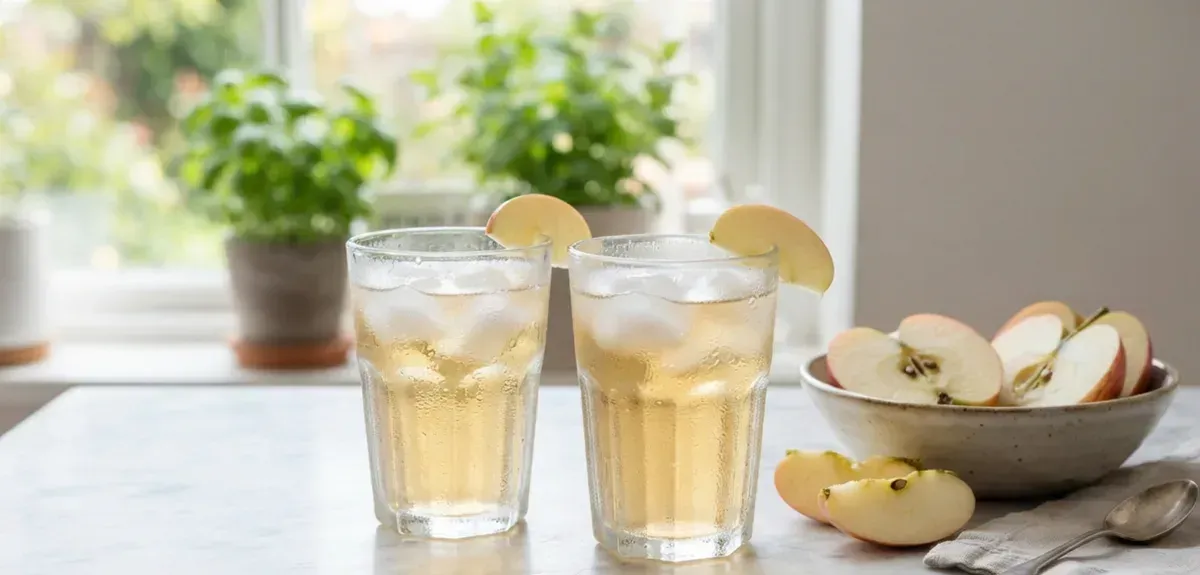
Homemade Apple Juice: Blended, Strained, No Added Sugar
Key takeaways
- Blending and straining removes most of the fibre that whole apples have — this is juice, nutritionally closer to sugar water with vitamins than to eating the fruit.
- Skipping the strain entirely gives you a pulpy apple drink that keeps the fibre — genuinely the better choice nutritionally, if you don't mind the texture.
- No juicer needed — a blender and a fine strainer do the same job.
- If this is for a young child, the American Academy of Pediatrics recommends limiting fruit juice — none before 12 months, and modest daily amounts after that.
Ingredients
Check off ingredients as you go
Apple juice was a treat drink growing up, not an everyday one, and making it at home rather than buying it by the carton is mostly what’s changed for me as an adult — it tastes noticeably more like actual apples, and I know exactly what’s (and isn’t) in the glass. It’s also a good way to use up apples that are past their best for eating fresh but still fine once blended, the same way I’d use them for homemade apple cider vinegar.
Why this recipe works — and an honest caveat
Blending whole apples and straining out the solids gives you clear, fresh-tasting juice without needing a dedicated juicer. But it’s worth being straightforward about what juicing actually does nutritionally: straining removes almost all the fibre that makes a whole apple genuinely filling and slow to digest, leaving behind mostly water, natural sugar, and some vitamins and polyphenols. It isn’t a “cleaner” or more concentrated version of the fruit’s nutrition — it’s a different food, closer to sweetened water than to an apple.
If you want the nutritional upside without losing the fibre, the easy fix is to skip the straining step and just blend — you’ll get a pulpier, smoothie-like drink rather than clear juice, but you keep everything the whole fruit had. I go back and forth between both versions depending on whether I want a drink or a snack. For the fuller picture on what apples themselves offer nutritionally, see our full apple nutrition guide.
Ingredients and how to make it
Follow the checklist and steps above. Leaving the peel and core in before blending is deliberate — most of an apple’s fibre and a good share of its polyphenols sit in and just under the skin, so even though straining removes the solid fibre, the coloured pigments and some soluble compounds still make it into the liquid.
A mix of sweet and tart apple varieties gives a rounder flavour than an all-one-variety batch — tart apples (like Granny Smith) add brightness that balances out sweeter varieties (like Gala or Fuji).
My tip: Taste the blended mixture before straining and before adding any sweetener. Ripe apples in season are almost always sweet enough on their own, and it’s much easier to add a little honey afterward than to fix an oversweetened batch.
Variations
Unstrained (“apple pulp drink”). Skip the straining step for a thicker, fibre-rich drink — this is the version I’d actually recommend more often nutritionally.
Spiced. A pinch of cinnamon blended in gives it a warm, autumnal note, especially good served slightly warm rather than chilled.
Mixed fruit. Adding a pear or a handful of berries to the blender works well with the same method — just adjust the water slightly depending on how much liquid the added fruit brings.
If you’d rather put excess apples toward something you keep in the fridge for weeks instead of days, our homemade apple jam is a good next use for a big batch.
Storage
Keep refrigerated in an airtight container for up to 3 days — homemade juice has no preservatives, so it doesn’t keep nearly as long as store-bought. It also freezes well in an airtight container or ice cube trays for up to 6 months; thaw in the fridge before serving.
Frequently asked questions
Do I need a juicer?
No — a blender and a fine mesh strainer or cheesecloth do the same job for this method.
Is homemade apple juice healthier than store-bought?
It has no added sugar or preservatives, which is a real advantage. Nutritionally, though, it’s still juice — concentrated natural sugar without the fibre of the whole fruit — so “healthier than store-bought” doesn’t mean “a health food.”
Is apple juice a good drink for kids?
In small amounts, occasionally, it’s fine for most children over a year old. The American Academy of Pediatrics recommends no juice at all before 12 months and modest daily limits after that — whole fruit is the better everyday choice for fibre and fullness.
Why did my juice turn brown?
That’s oxidation from exposure to air, not spoilage. The lemon juice in this recipe slows it down considerably, but some browning over a day or two in the fridge is normal.
Can I add other fruits to the blender?
Yes — pear, berries, or citrus all work well blended alongside the apples. Adjust the water slightly since juicier fruits need less added liquid.
Source: USDA FoodData Central
Found this helpful?