Mango Nutrition: Health Benefits, Risks, and How Many Are Too Many
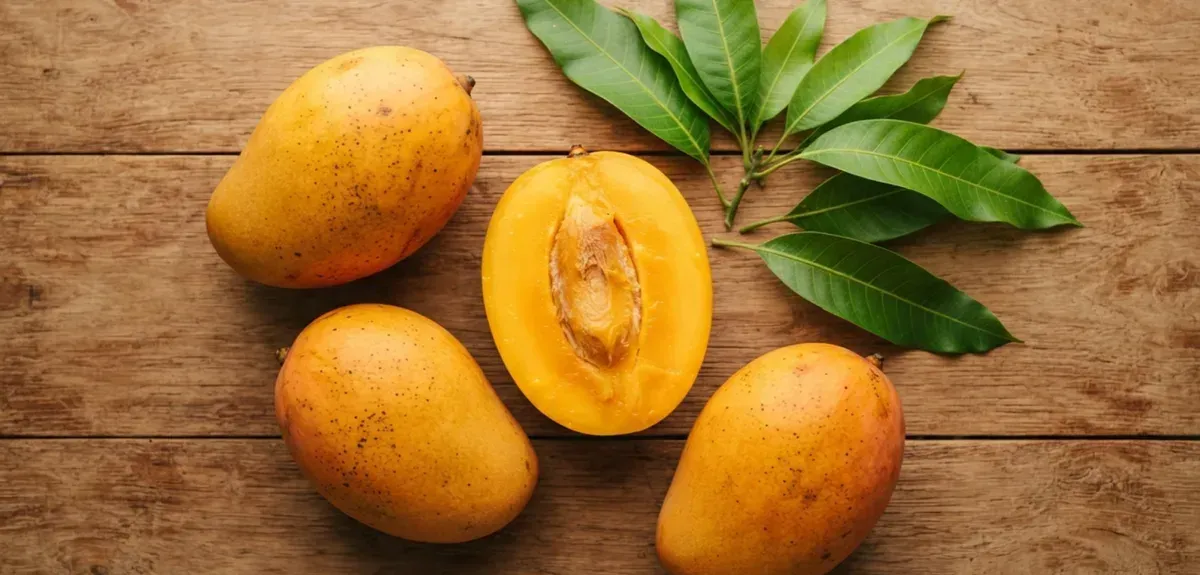
Key takeaways
- A cup of mango is about 100 calories but delivers a genuinely large share of your daily vitamin A and vitamin C.
- Mangiferin, a compound unique to mango, has real research behind it for blood sugar and cholesterol effects.
- Handling mango peel and stems can cause a real skin reaction in people previously exposed to poison ivy or poison oak.
- Mango is naturally high in sugar for a fruit, so portion matters more here than with most other fruit choices.
- Two to three ripe mango cheeks a day is a reasonable amount for most healthy adults.
Source: USDA FoodData Central
Mango season back home in India was never subtle — my mother would buy them by the crate, and there was a whole ritual around choosing the right ones by smell at the stem end. In Finland, mangoes show up quietly, one or two at a time, imported and expensive, and I’ve had to relearn how to actually pick a good one without the crate to compare against. What hasn’t changed is how much I still reach for mango over almost any other fruit when it’s actually ripe.
What’s actually in a mango
A cup of mango (about 165g) works out to roughly 100 calories, 25g of carbohydrate, and 2.6g of fibre — modest numbers, but the vitamin content is genuinely impressive. Mango is one of the richer fruit sources of vitamin A, largely from beta-carotene, and carries a solid dose of vitamin C too, both in a fruit that tastes more like dessert than “health food.”
The compound unique to mango
Beyond the vitamins, mango contains mangiferin, a polyphenol found in much higher concentrations in mango than in most other fruit. A systematic review of mango and mangiferin research found consistent evidence for improvements in blood sugar control and cholesterol profiles across the available studies, alongside antioxidant and anti-inflammatory effects seen in laboratory research. It’s not a substitute for medication or a balanced diet, but it’s a genuinely interesting reason mango shows up in nutrition research more than its sugar content alone would suggest it should.
The risk almost nobody warns you about
This is the one I actually want to lead with, because it surprised me and I’ve never seen it mentioned on a typical “mango benefits” list. Mango peel and stems contain compounds closely related to urushiol — the same irritant in poison ivy and poison oak. If you’ve ever had a reaction to either of those plants, your immune system can cross-react to mango skin, causing a genuine contact dermatitis: redness, itching, sometimes blistering, usually around the mouth or on hands that have handled the peel. Case documentation of this reaction has shown it specifically among people with prior poison ivy or poison oak exposure, while people without that history handling the same fruit had no reaction at all.
The fix is simple once you know about it: peel mango with a knife rather than biting into the skin, and wash your hands afterward if you’re at all prone to plant-based skin reactions. The flesh itself doesn’t cause this reaction — it’s specifically the peel and the sap near the stem.
Mango during pregnancy
Mango’s vitamin C content supports iron absorption, which matters more during pregnancy given increased blood volume demands. That said, mango’s natural sugar content is worth being mindful of if you’re managing gestational diabetes — portion and pairing with protein matter more here than with lower-sugar fruit. If you’ve been diagnosed, our guide to foods and drinks to limit or avoid during pregnancy covers the broader sugar-management picture.
Other risks worth knowing
Sugar content. Mango is one of the higher-sugar fruits, which matters if you’re watching blood sugar closely for any reason. Pairing it with protein or fat — a spoon of yoghurt, a few nuts — slows the rise, similar to how it works with other fruit.
Latex-fruit cross-reactivity. Like bananas, mango can occasionally trigger a mild reaction in people with a latex allergy, due to shared proteins. This is separate from the poison-ivy-related skin reaction above and affects the fruit itself, not just the peel.
The biggest misconception about mango
People often assume all tropical fruit is “unhealthy” because it’s sweet, lumping mango in with genuinely processed, sugar-added tropical snacks and drinks. Whole, ripe mango bears no resemblance to those — it’s a whole food with real fibre, vitamins, and a compound that’s actively being studied for metabolic benefits. The sugar is real and worth portioning around, but it isn’t a reason to avoid mango altogether.
How I actually use mango at home
A properly ripe mango needs almost nothing done to it — cut around the seed, score the flesh, and eat it straight from the skin, which is exactly how I grew up eating it. When mangoes are underripe or I’ve bought too many at once, they go toward something that uses the whole batch: a jar of mango pickle for the sharper, greener fruit, or mango chutney once they’ve ripened a bit further. For a quick everyday use, mango lassi is the fastest way I know to use a very ripe mango before it turns.
Priyanka’s tip: To check ripeness without cutting into it, smell the stem end rather than pressing the fruit — a ripe mango smells sweet and slightly floral right at the stem, even when the skin still looks fully green.
Frequently asked questions
Why does mango sometimes cause a skin rash?
Mango peel and stems contain compounds related to urushiol, the irritant in poison ivy and poison oak. People previously sensitised to those plants can develop a genuine skin reaction from handling or biting into mango skin. Peeling with a knife avoids the issue.
Is mango too sugary to be healthy?
It’s higher in natural sugar than many fruits, so portion matters more than with something like berries. But it’s still a whole food with real fibre, vitamins, and beneficial plant compounds — not comparable to added-sugar snacks.
What is mangiferin, and is it worth knowing about?
It’s a polyphenol unique to mango in significant concentrations, with research linking it to improved blood sugar control and cholesterol profiles. It’s a genuine area of ongoing nutrition research, not just marketing language.
Can I eat mango if I have a latex allergy?
It’s possible to have a mild cross-reaction, similar to bananas or avocados, due to shared proteins. If you have a known latex allergy, introduce mango cautiously or check with an allergist.
How many mangoes should I eat a day?
Two to three ripe mango cheeks a day is a reasonable amount for most healthy adults, adjusted down if you’re managing blood sugar closely.
References
- USDA FoodData Central — Mangos, raw.
- Silva LMR, et al. Mangifera indica L., By-Products, and Mangiferin on Cardio-Metabolic and Other Health Conditions: A Systematic Review. Life, 2023. ncbi.nlm.nih.gov
- Weinstein S, Bassiri-Tehrani S, Cohen DE. Exploring the mango-poison ivy connection: the riddle of discriminative plant dermatitis. Contact Dermatitis, 2004. pubmed.ncbi.nlm.nih.gov
Found this helpful?