Homemade Apple Sauce: Simple, Unpeeled, No Added Sugar
Key takeaways
- Leaving the peel on and blending rather than straining keeps meaningfully more fibre than clear apple juice made from the same fruit.
- Most ripe apples don't need any added sugar — taste the sauce before reaching for it.
- This is soft and mild enough to work as an early first food for babies past the start of solids — check with your pediatrician on timing and texture for your baby specifically.
- Naturally vegan and gluten-free as written.
Ingredients
Check off ingredients as you go
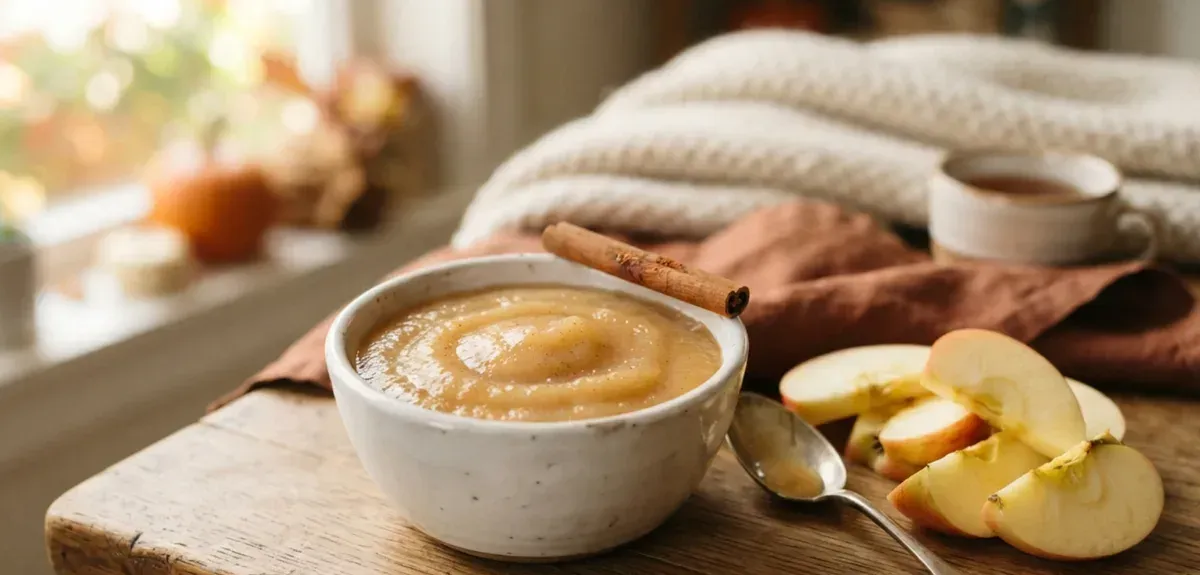
Apple sauce was the thing I made most often once my daughter started on solids — soft, mild, no added sugar, and a good way to use up apples that were a little past their best for eating raw. I still make a batch most weeks, now mostly for myself, stirred into porridge.
Why this recipe works
Unlike homemade apple juice, which gets strained and loses most of its fibre in the process, apple sauce keeps the whole fruit — pulp, skin, and all — just broken down and softened rather than separated out. If you’re choosing between the two for any nutritional reason rather than just texture preference, sauce is the better pick; it’s essentially the same fruit in a different form rather than a stripped-down version of it.
Cooking the apples with the peel on is deliberate, not an oversight — a good share of an apple’s fibre and polyphenols sit in and just under the skin, and blending breaks the peel down finely enough that most people don’t notice the texture once it’s puréed. For the fuller picture on apple nutrition itself, see our apple nutrition guide.
Ingredients and how to make it
Follow the checklist and steps above. Use less water than you might expect — a half cup is usually enough to keep the apples from scorching before they soften, and a thinner sauce is easy to fix by simmering it a little longer, while a too-thin sauce from excess water is harder to correct without over-cooking it.
A mix of sweet and tart apple varieties gives a more balanced flavour than one variety alone, the same principle as in our apple pie and apple jam.
My tip: Taste before adding any sweetener at all. Most apples, especially once cooked down, are sweet enough on their own — and it’s much easier to add a spoonful of honey afterward than to fix an oversweetened batch.
Variations
Baby-friendly version. Skip the lemon juice, cinnamon, and any sweetener entirely, and blend until completely smooth — this is the plain version I made most often early on, before introducing spices.
Spiced. Cinnamon is the classic addition, but a pinch of nutmeg or allspice works well too, especially in a batch destined for porridge or pancakes rather than eaten on its own.
Chunky vs. smooth. Mash with a fork for texture, or blend fully for a smooth purée — both are the same recipe, just stopped at different points.
Storage
Keep refrigerated in an airtight container for up to a week. It also freezes well for up to 6 months — portion it into small containers or an ice cube tray first if you’re using it for baby food, so you can thaw only what you need.
Frequently asked questions
Do I need to peel the apples first?
No — leaving the peel on is what keeps more of the fibre in the finished sauce, and it blends in finely enough that most people don’t notice it once puréed.
Can I make this without any added sugar?
Yes, and I’d encourage it — most ripe apples are sweet enough on their own once cooked down. Taste before adding anything.
Is homemade apple sauce good for babies?
It’s a common early food thanks to its soft texture and mild flavour, made without added sugar or preservatives. Talk to your pediatrician about timing and texture for your baby specifically, and skip the lemon juice and spices for the earliest introductions.
How is this different from apple juice nutritionally?
Apple sauce keeps the pulp and peel, so it retains meaningfully more fibre than clear, strained apple juice made from the same fruit — see our apple juice recipe for the fuller comparison.
Can I use apple sauce as a baking substitute?
Yes — it’s a common swap for butter or oil in baking to reduce fat, though it will make the result slightly denser and moister rather than an exact like-for-like replacement.
Source: USDA FoodData Central
Found this helpful?